Arabic in Cards

Made in Arabic

Instruments made in Arabic, what is written on them in Arabic, and the words that went out from them into the world's languages.

29 cards
alidade almucantar sine

Why these cards?

Each card shows an instrument, photographed in the Imam University museum or taken from museums that open their collections, with the source and licence under each photograph. An instrument comes in only with an Arabic word on it that entered other languages, or with Arabic writing visible in the photograph.

Showing 29 of 29

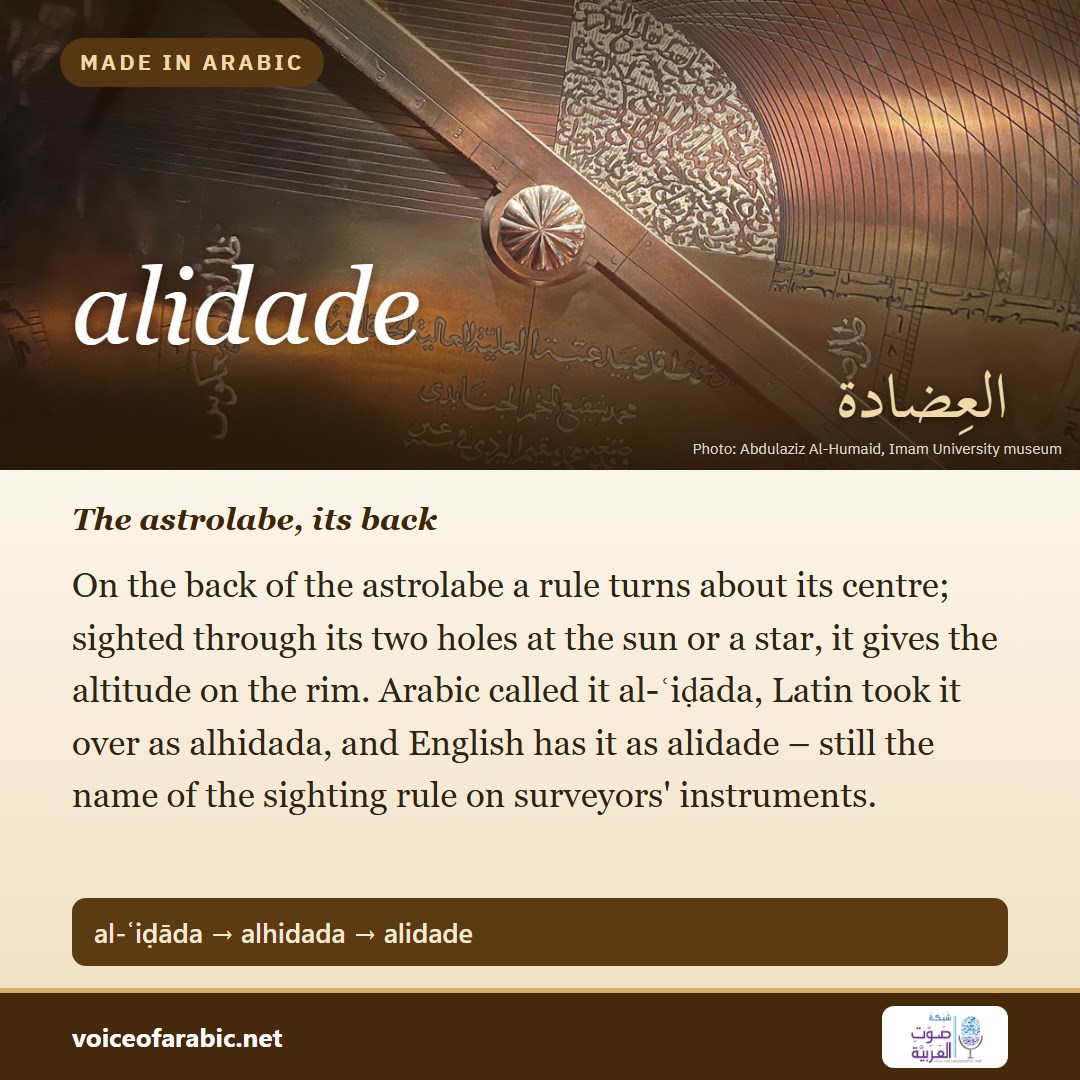
alidade
the astrolabe, its back
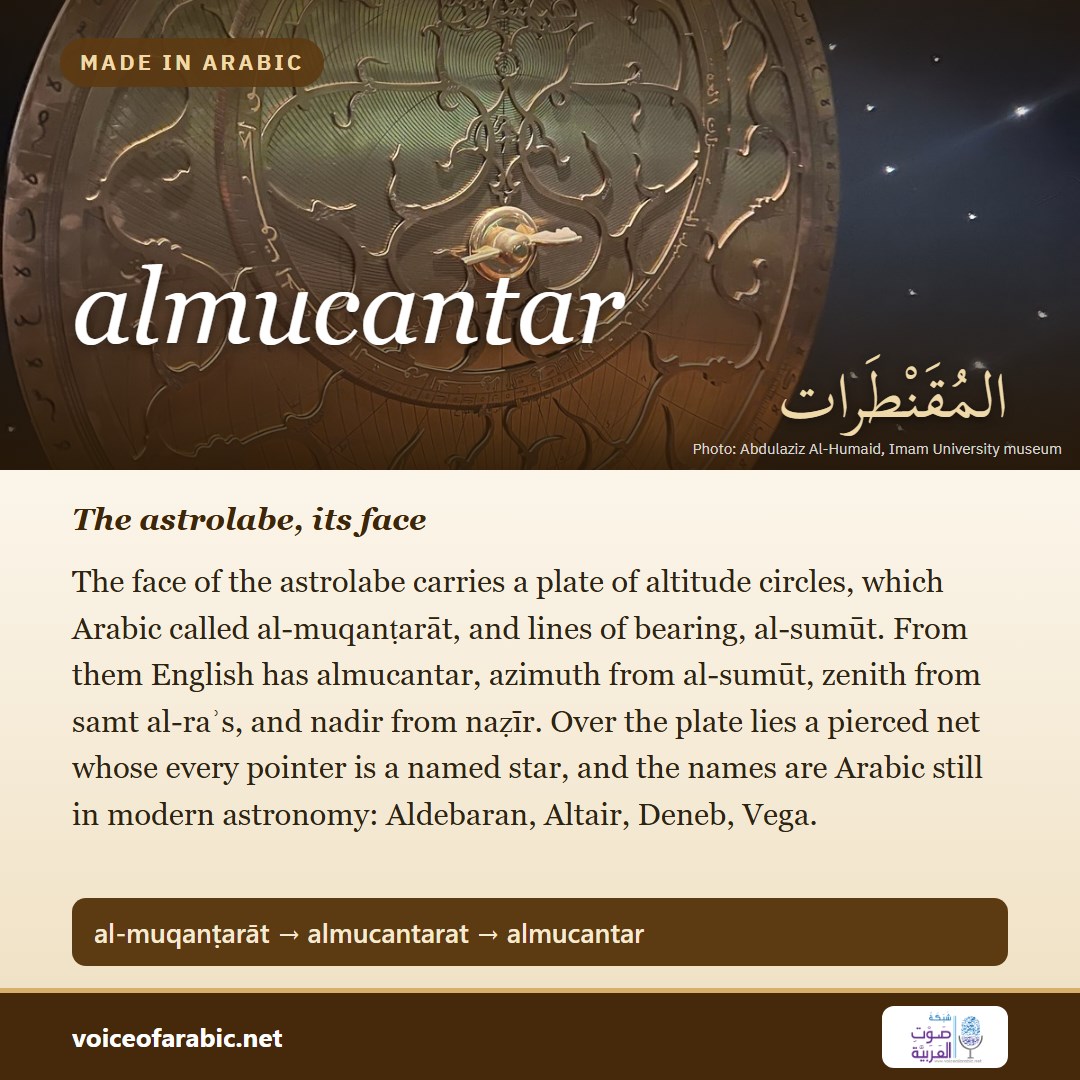
almucantar
the astrolabe, its face
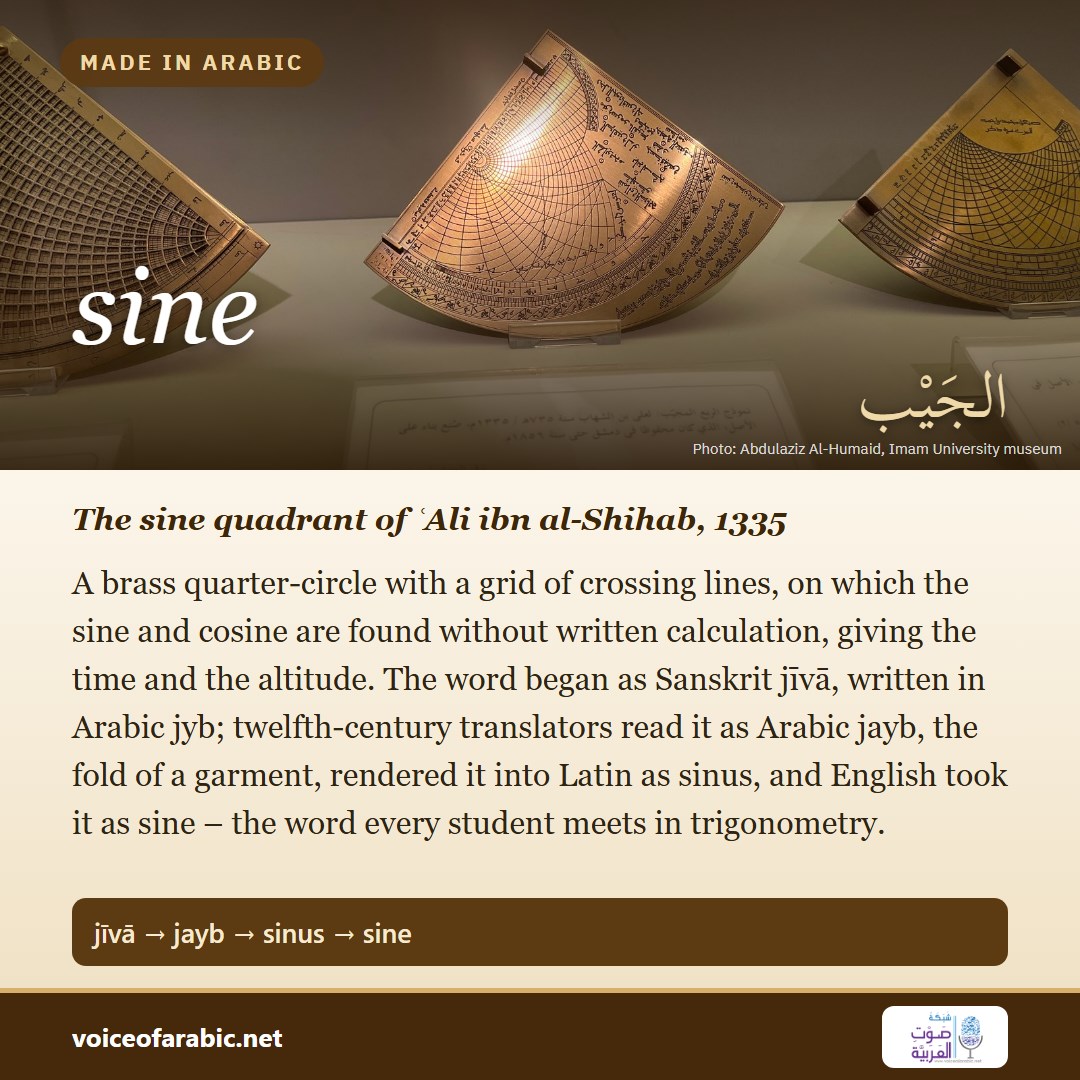
sine
the sine quadrant of ʿAli ibn al-Shihab, 1335
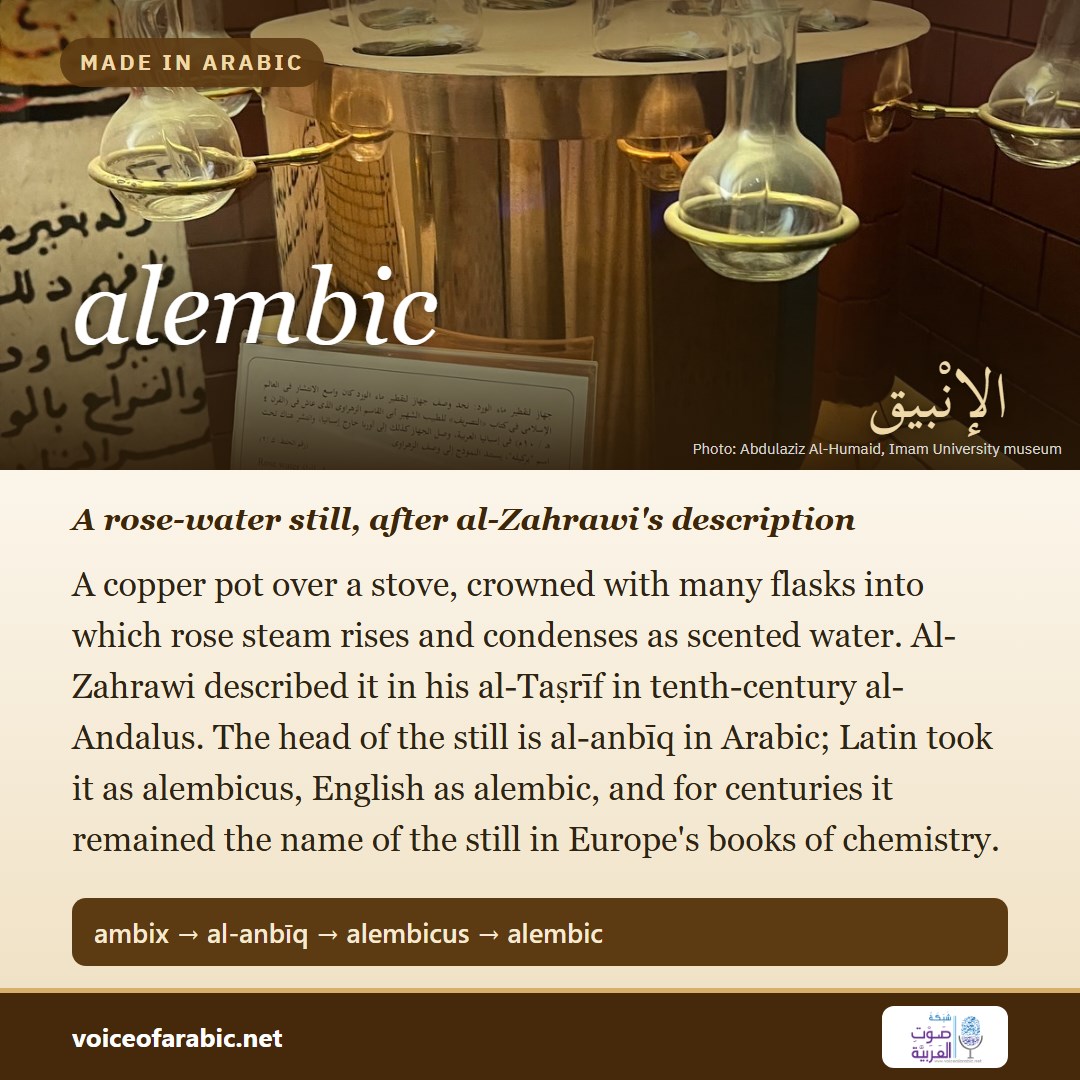
alembic
a rose-water still, after al-Zahrawi's description
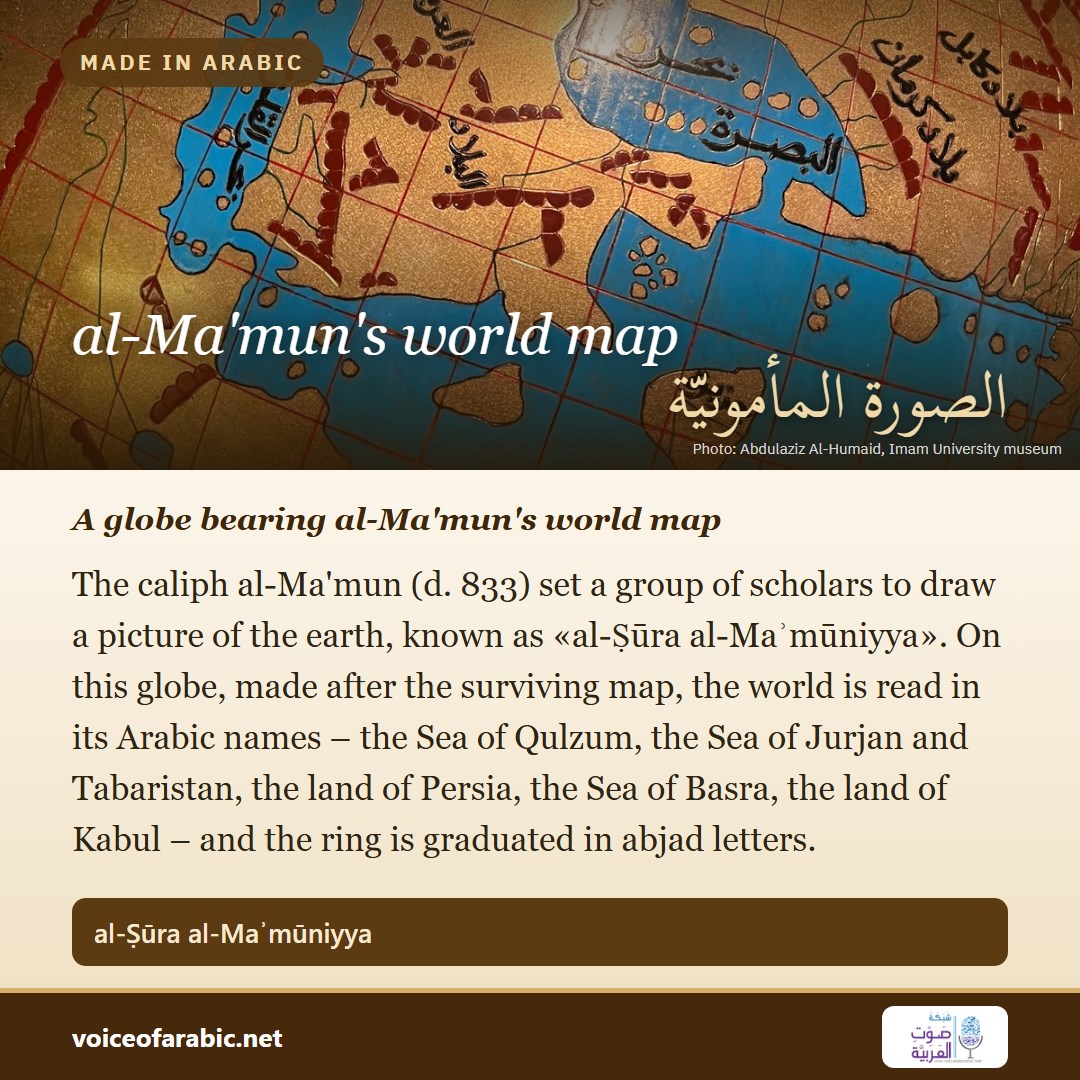
al-Ma'mun's world map
a globe bearing al-Ma'mun's world map
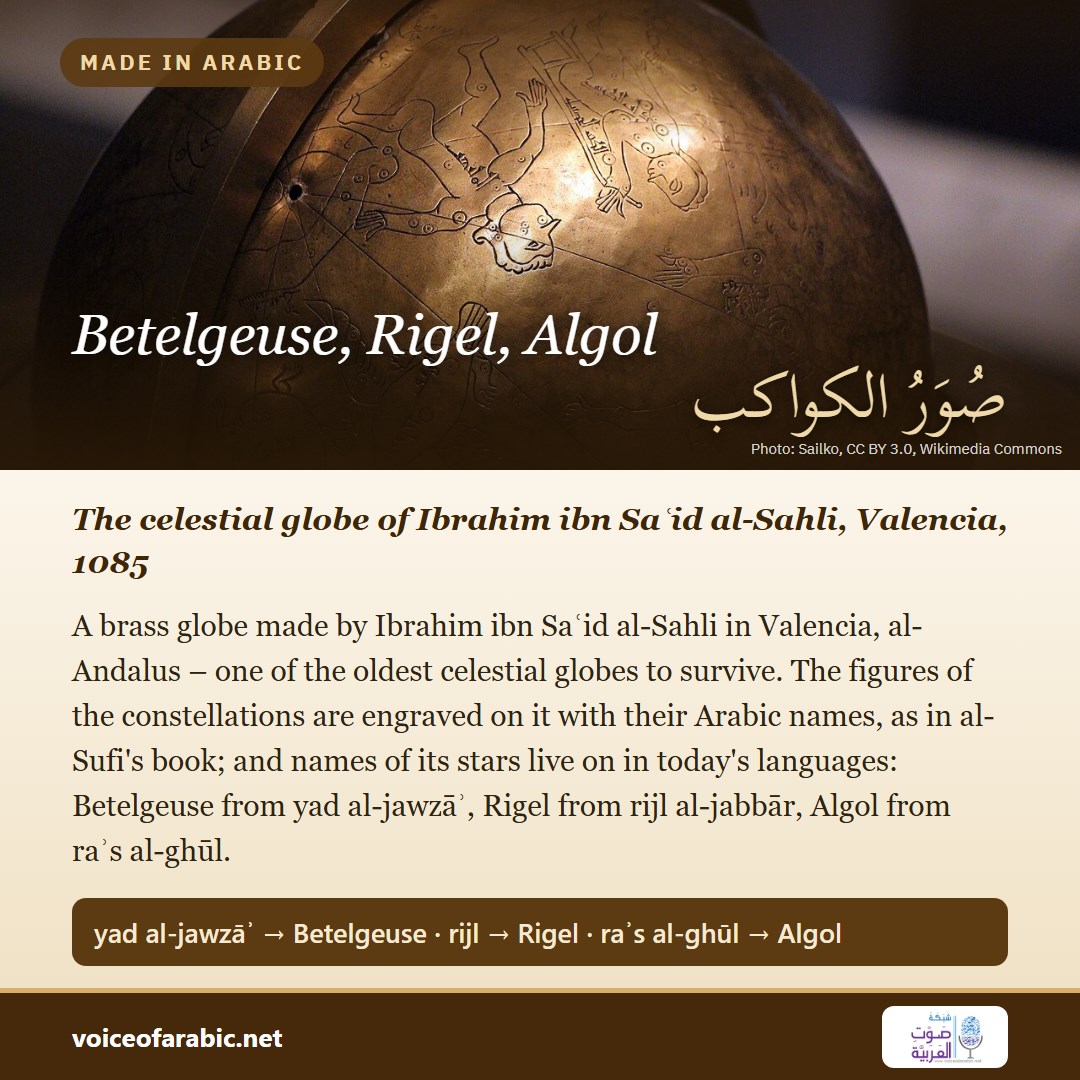
Betelgeuse, Rigel, Algol
the celestial globe of Ibrahim ibn Saʿid al-Sahli, Valencia, 1085
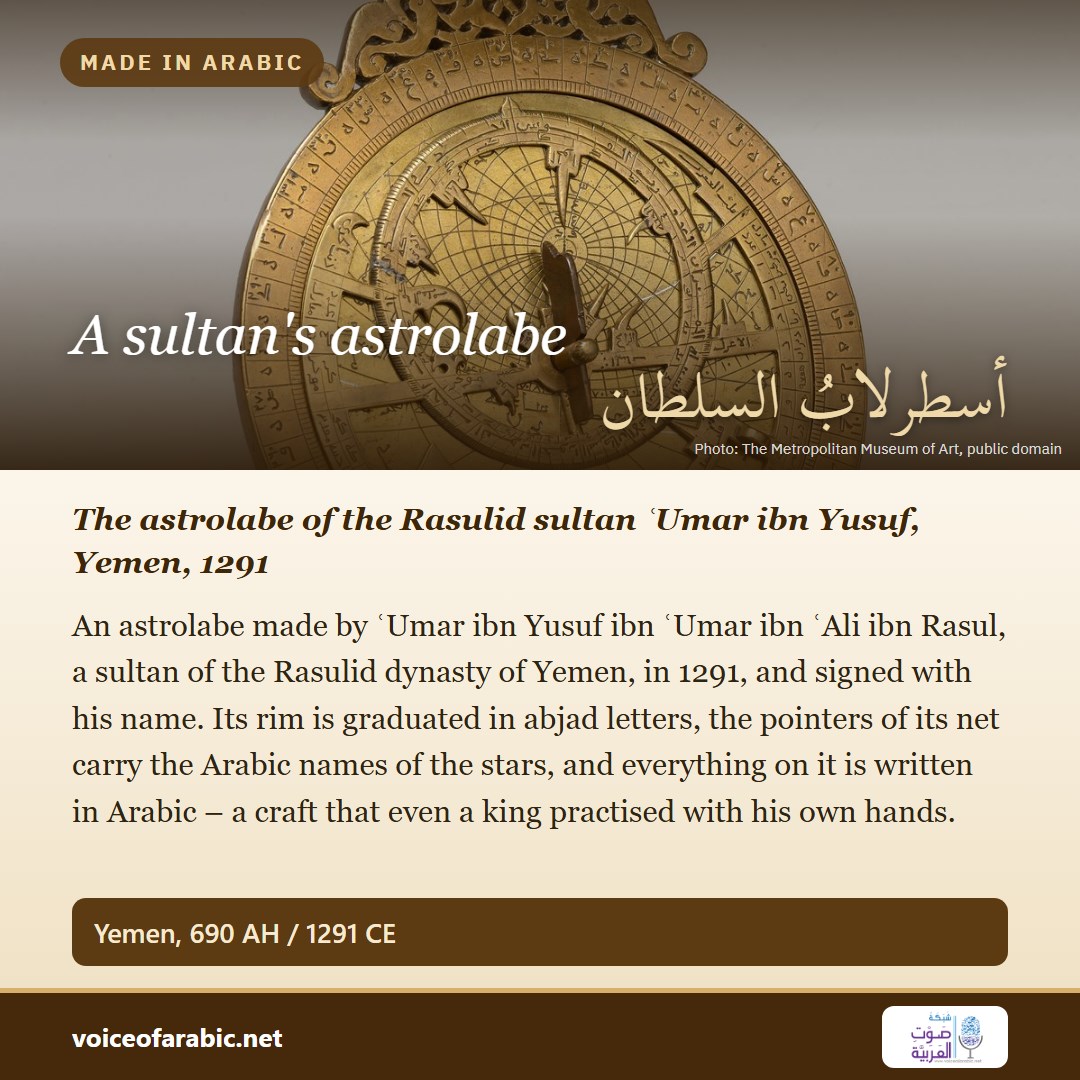
A sultan's astrolabe
the astrolabe of the Rasulid sultan ʿUmar ibn Yusuf, Yemen, 1291
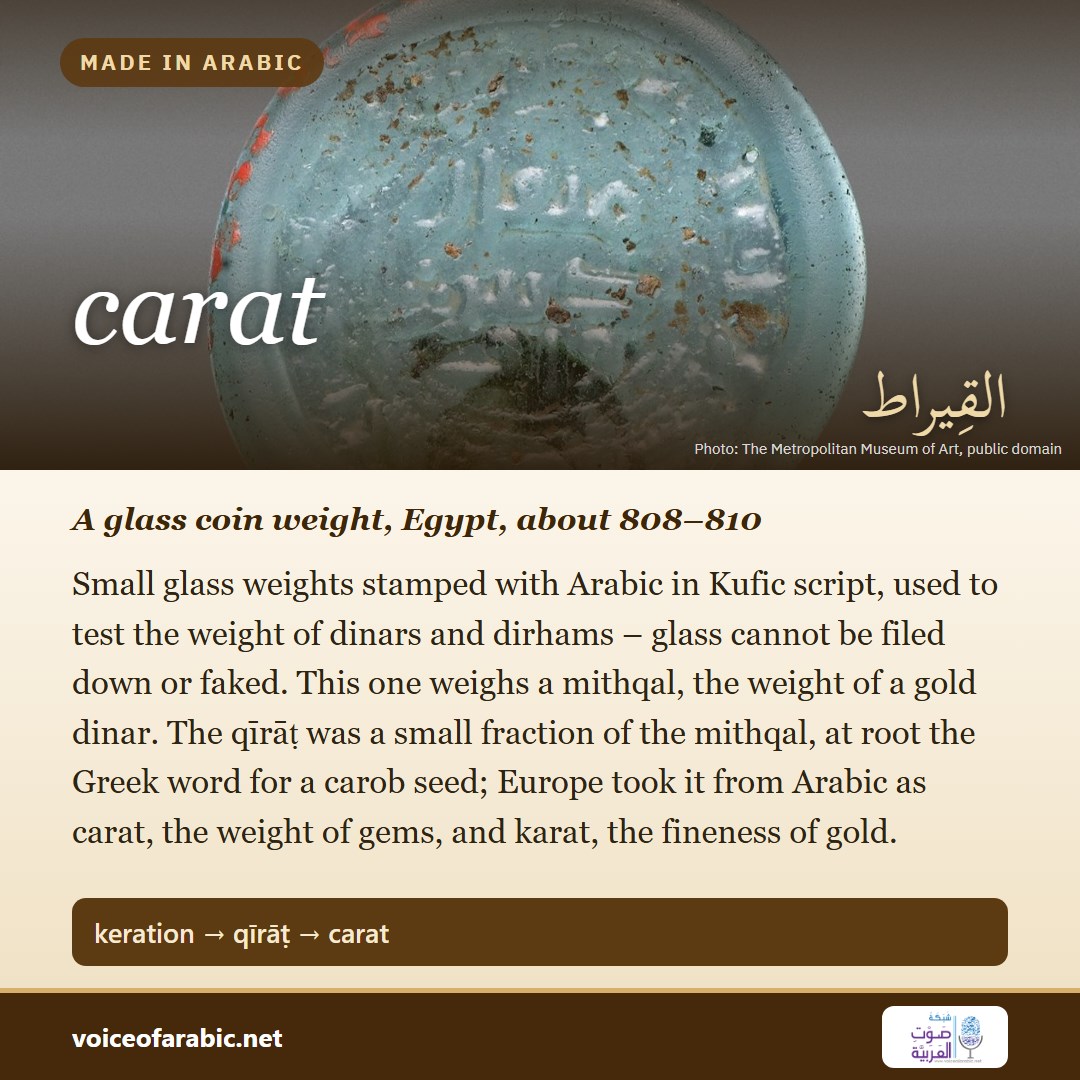
carat
a glass coin weight, Egypt, about 808–810
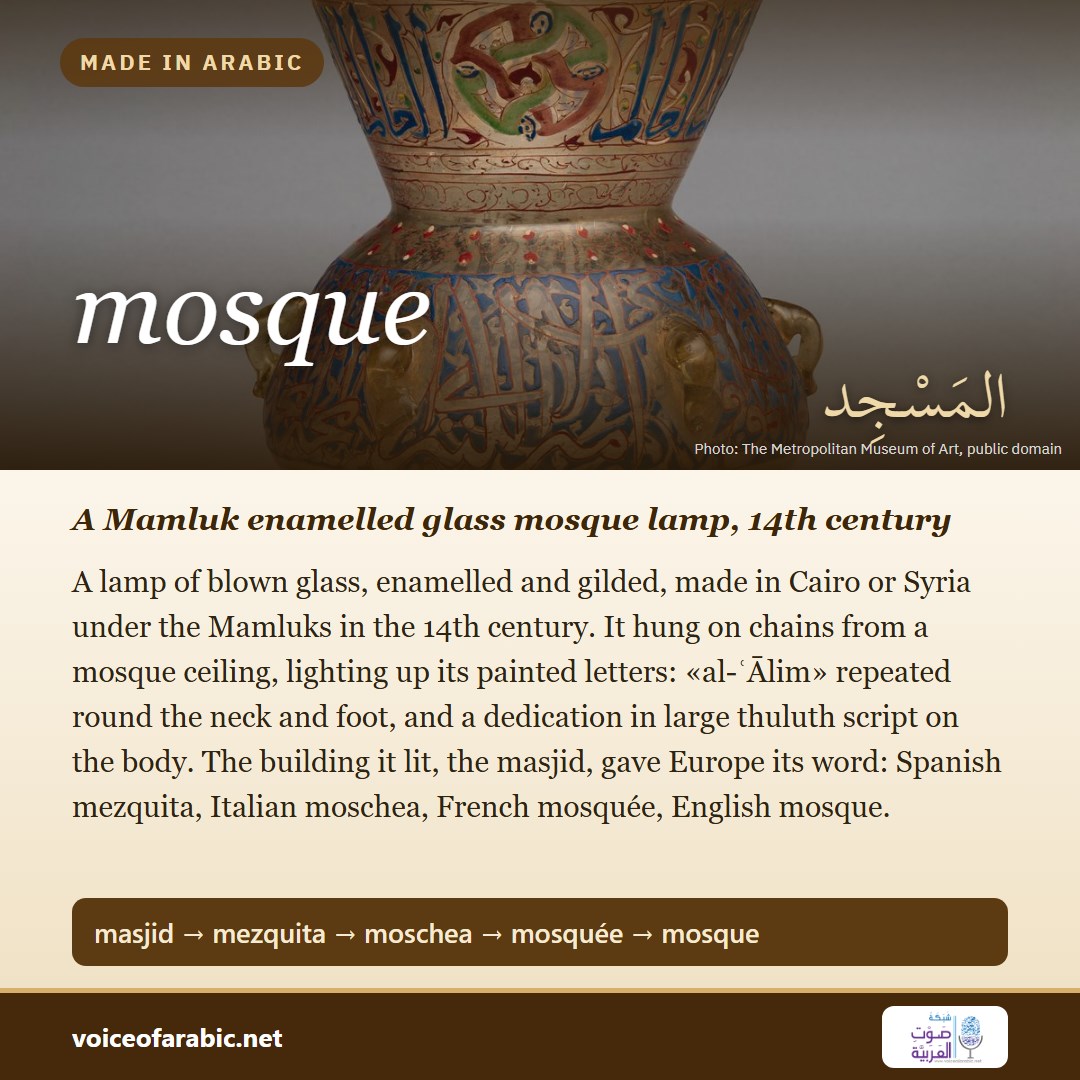
mosque
a Mamluk enamelled glass mosque lamp, 14th century
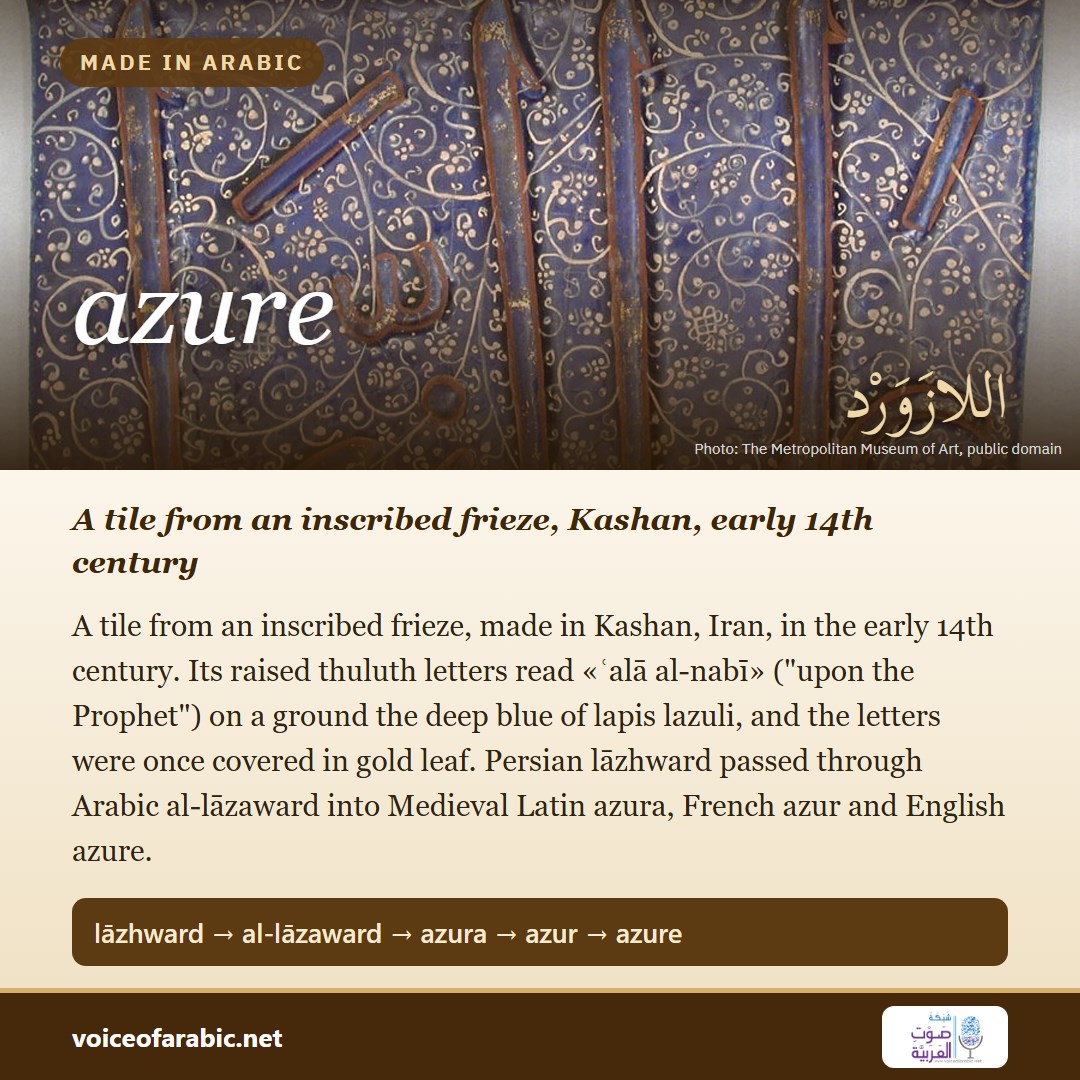
azure
a tile from an inscribed frieze, Kashan, early 14th century
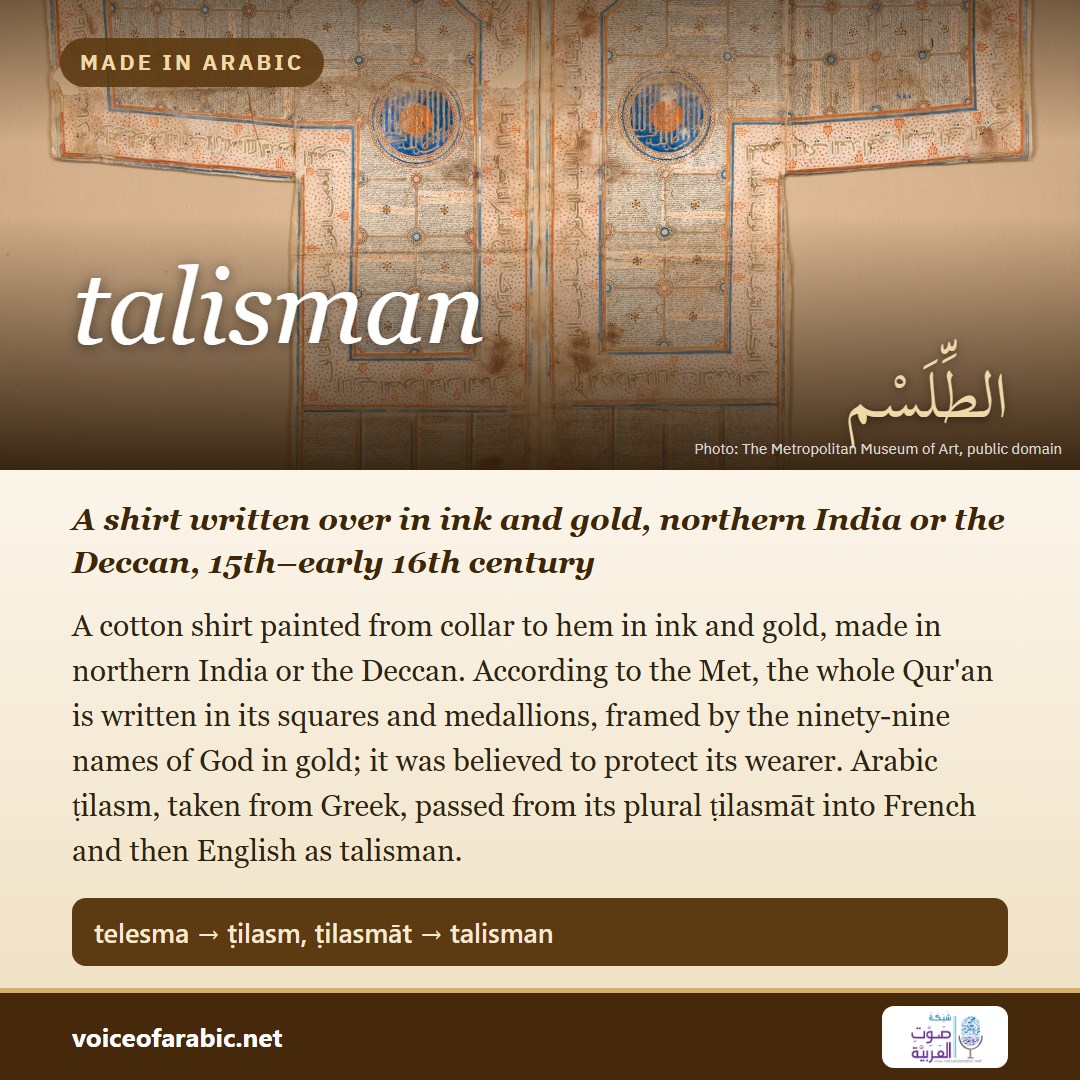
talisman
a shirt written over in ink and gold, northern India or the Deccan, 15th–early 16th century
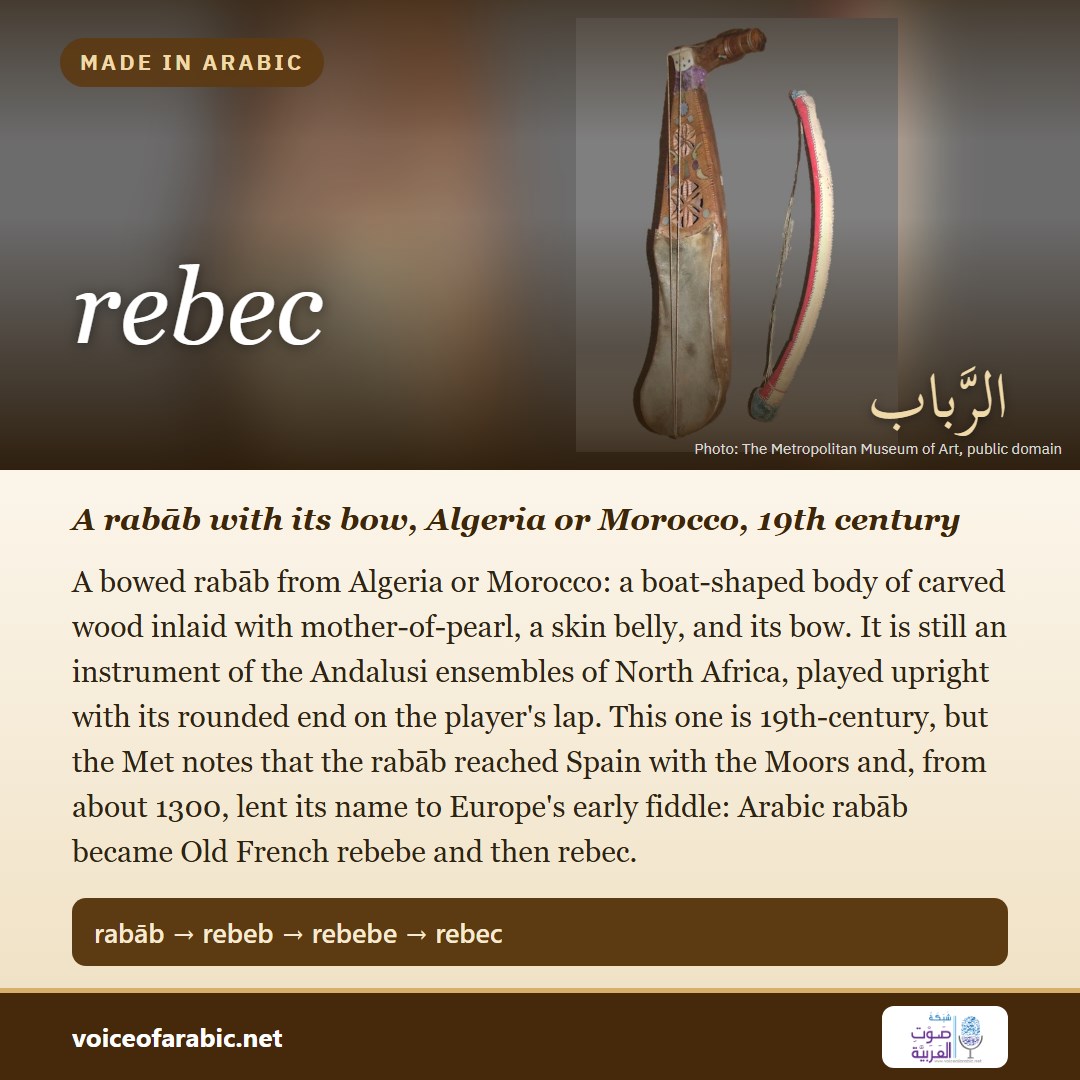
rebec
a rabāb with its bow, Algeria or Morocco, 19th century
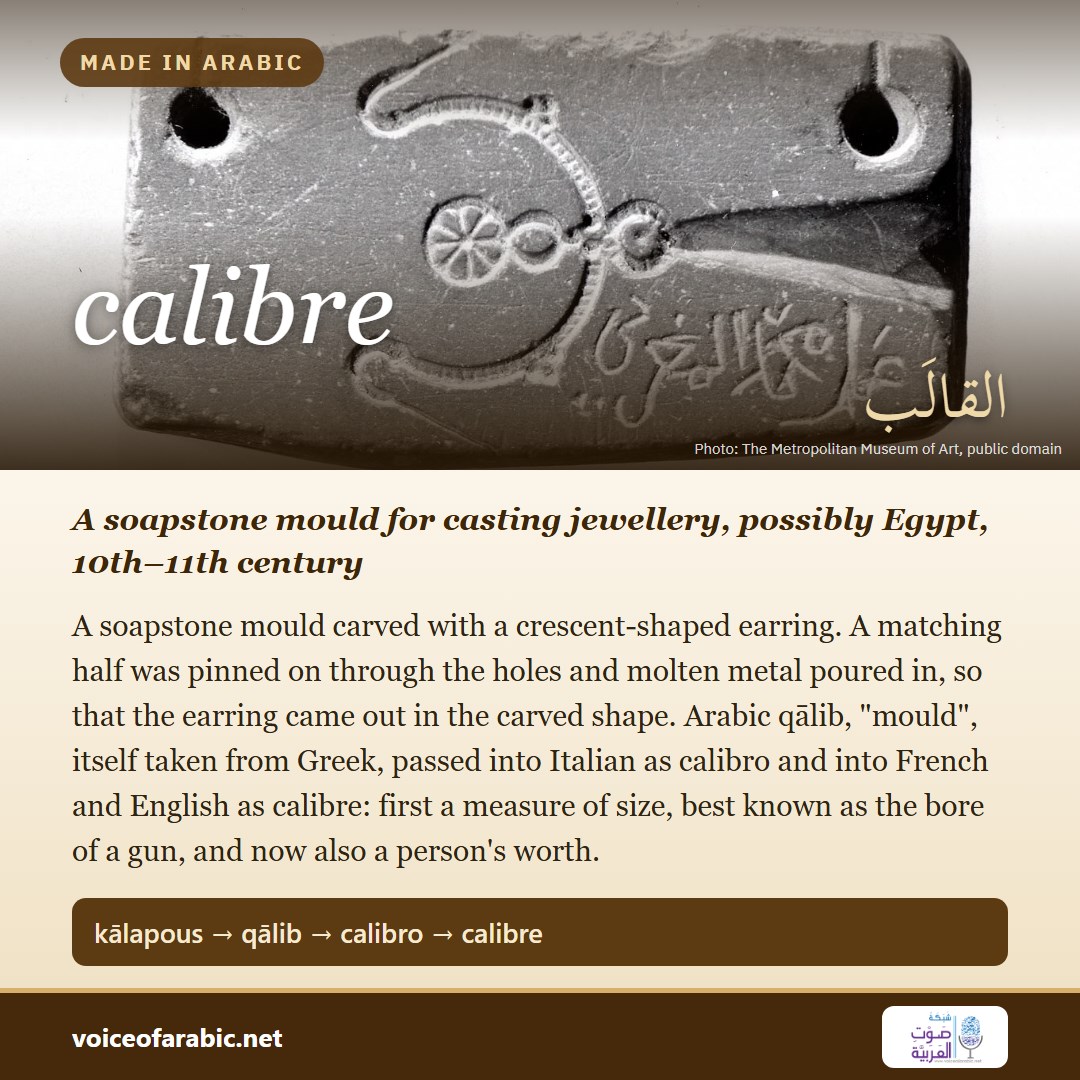
calibre
a soapstone mould for casting jewellery, possibly Egypt, 10th–11th century
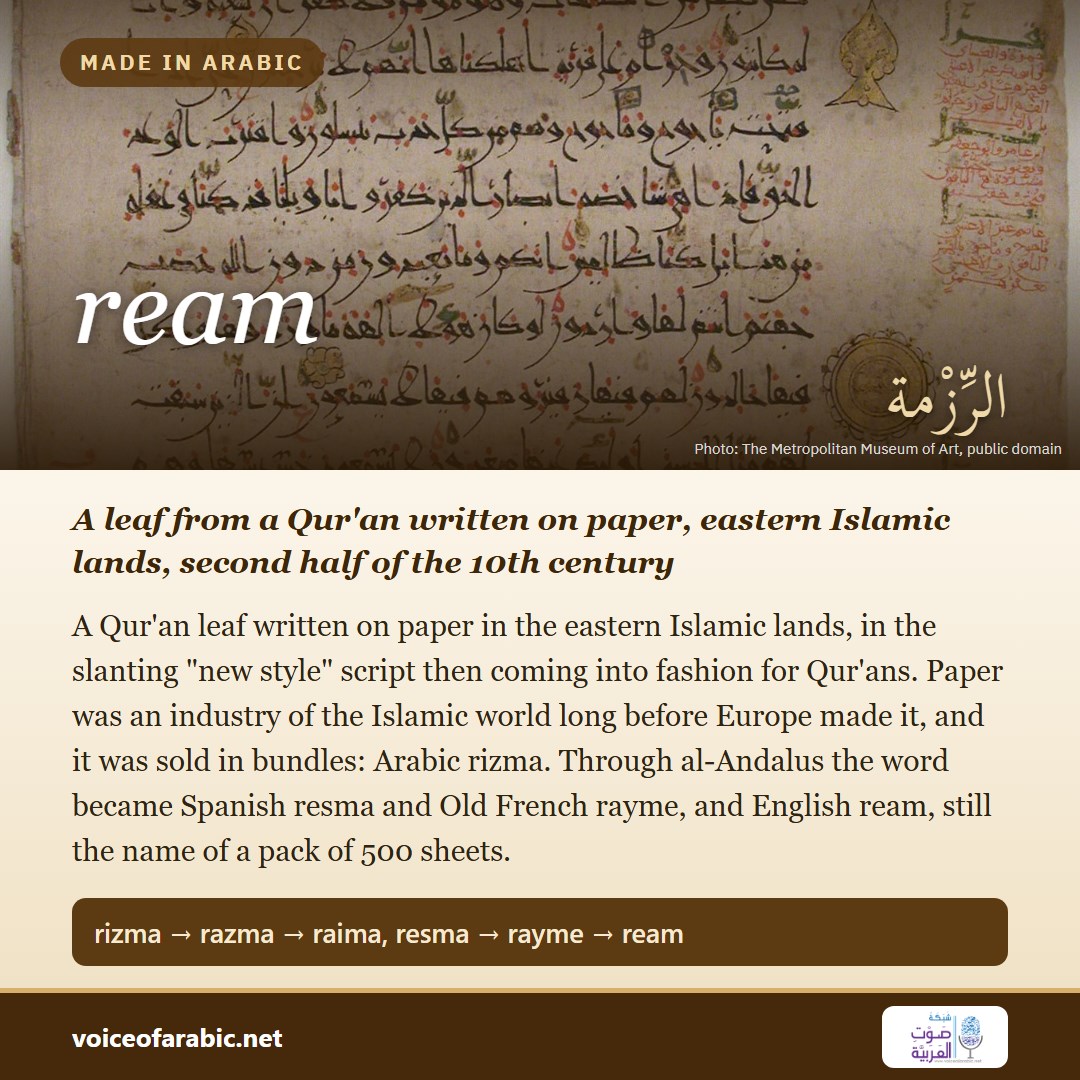
ream
a leaf from a Qur'an written on paper, eastern Islamic lands, second half of the 10th century
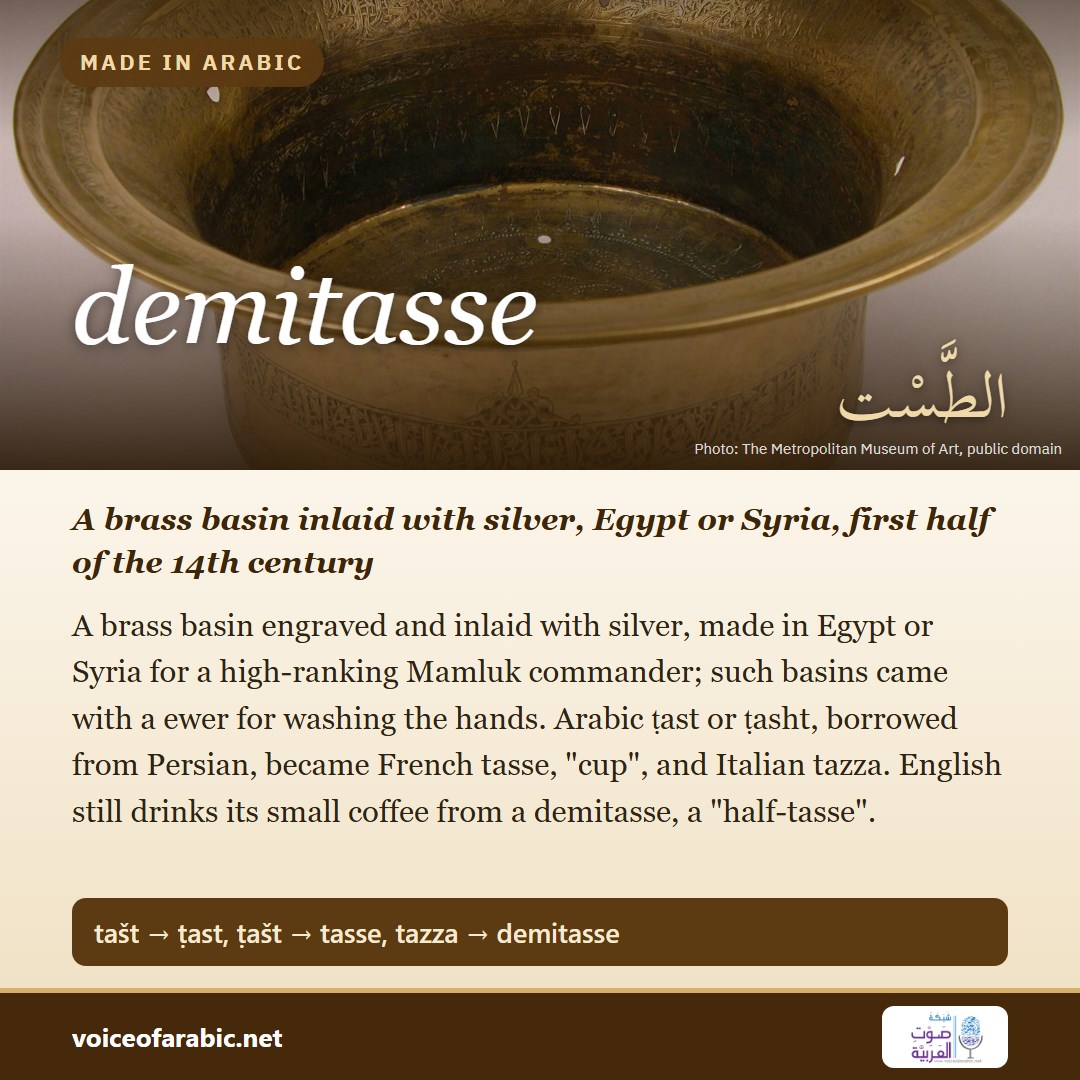
demitasse
a brass basin inlaid with silver, Egypt or Syria, first half of the 14th century
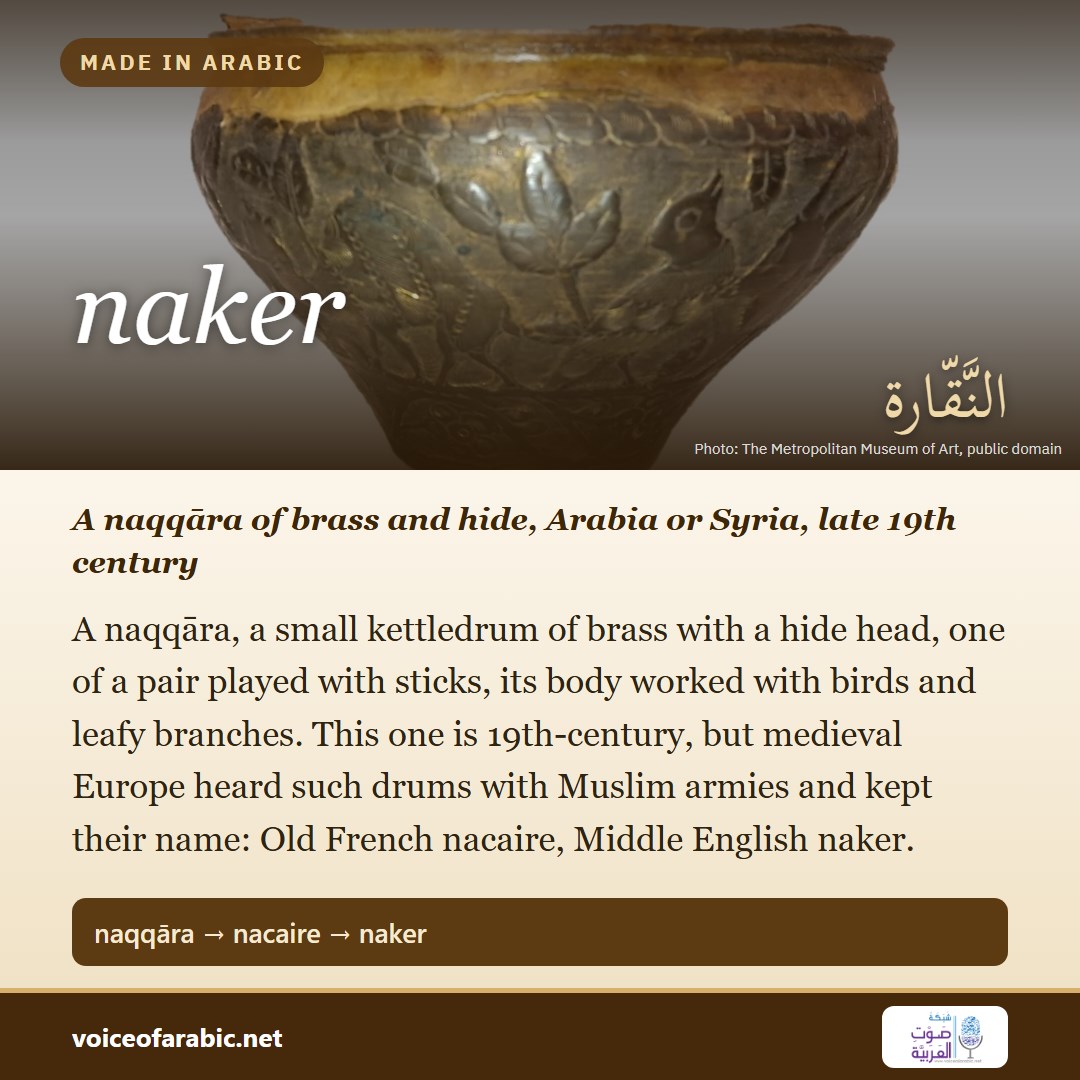
naker
a naqqāra of brass and hide, Arabia or Syria, late 19th century
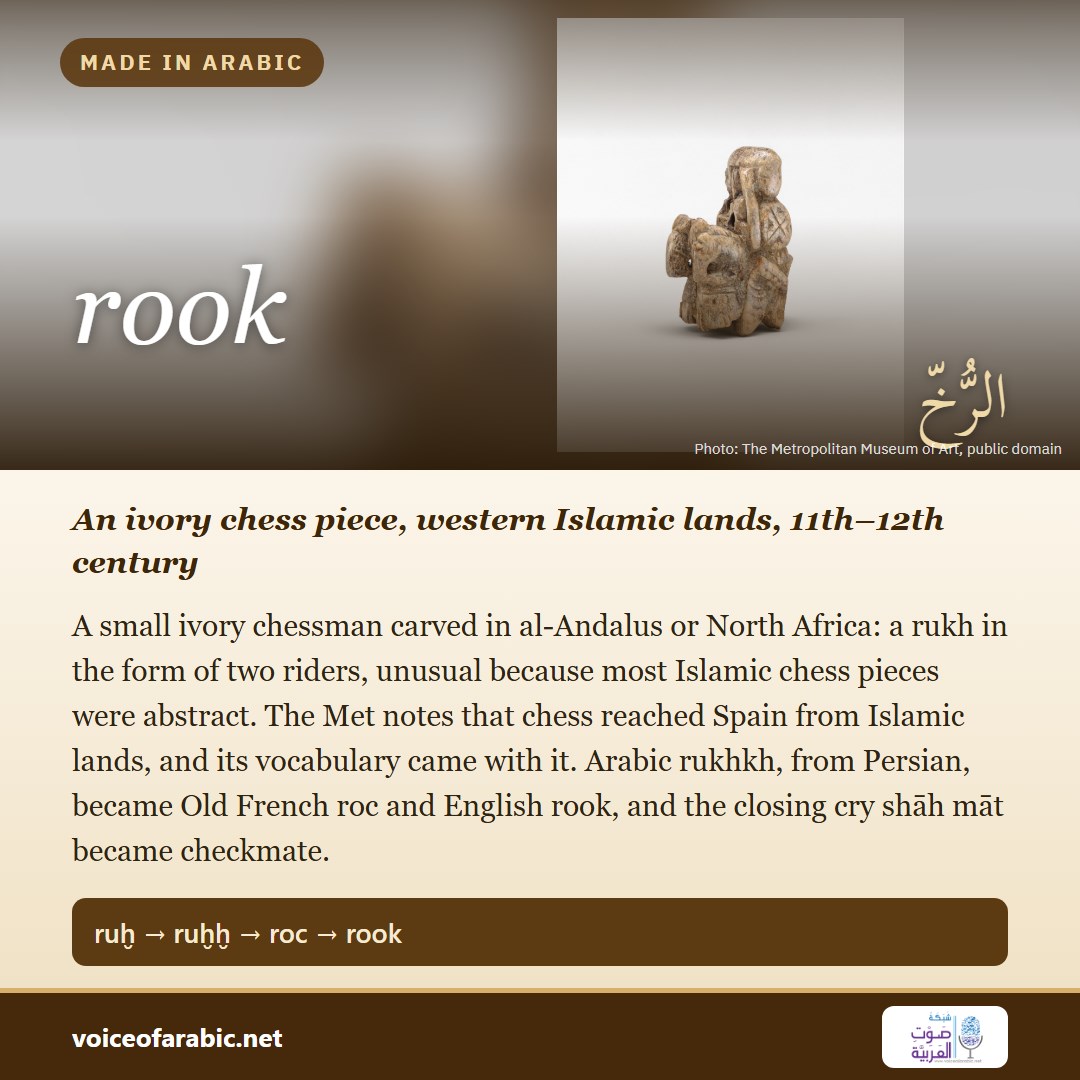
rook
an ivory chess piece, western Islamic lands, 11th–12th century
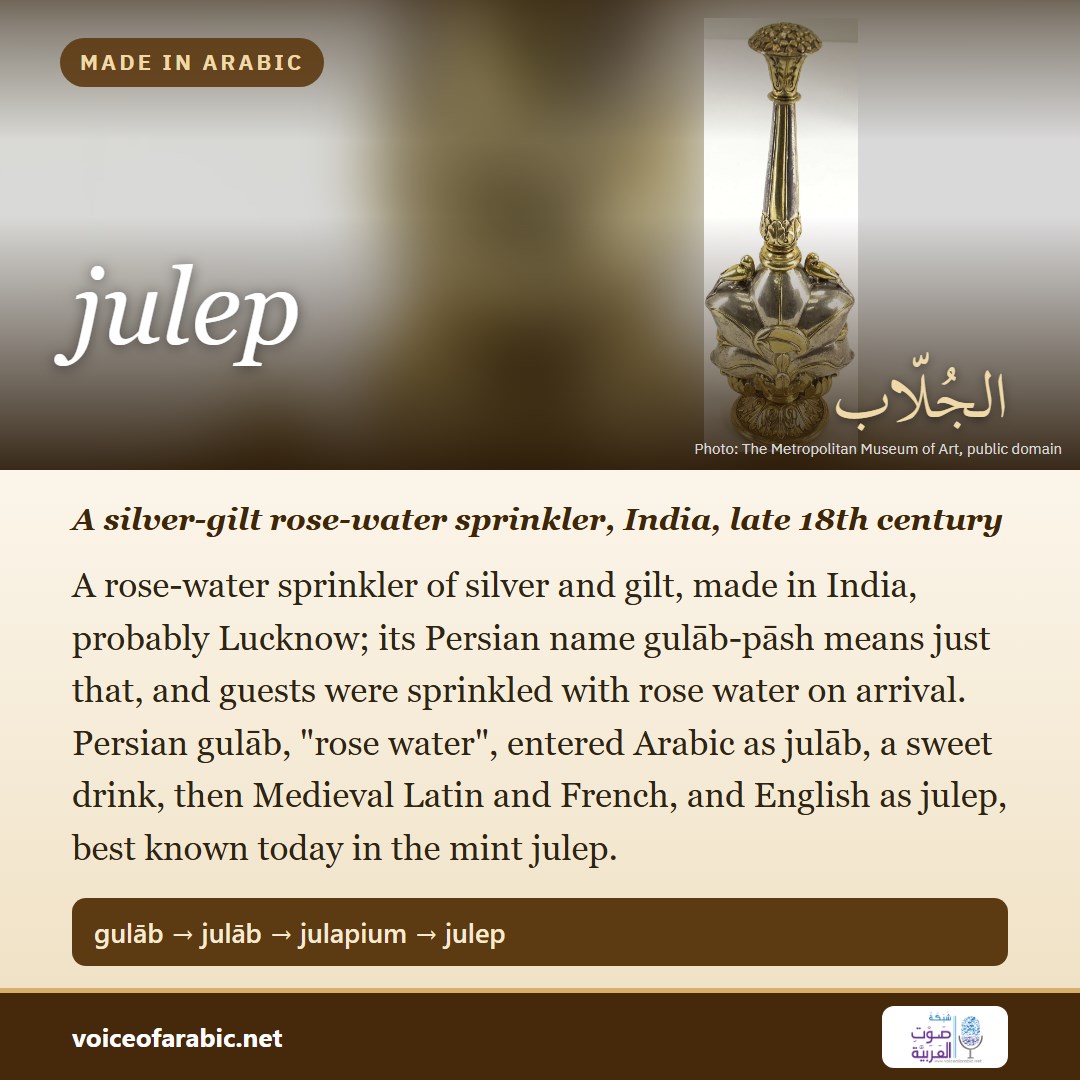
julep
a silver-gilt rose-water sprinkler, India, late 18th century
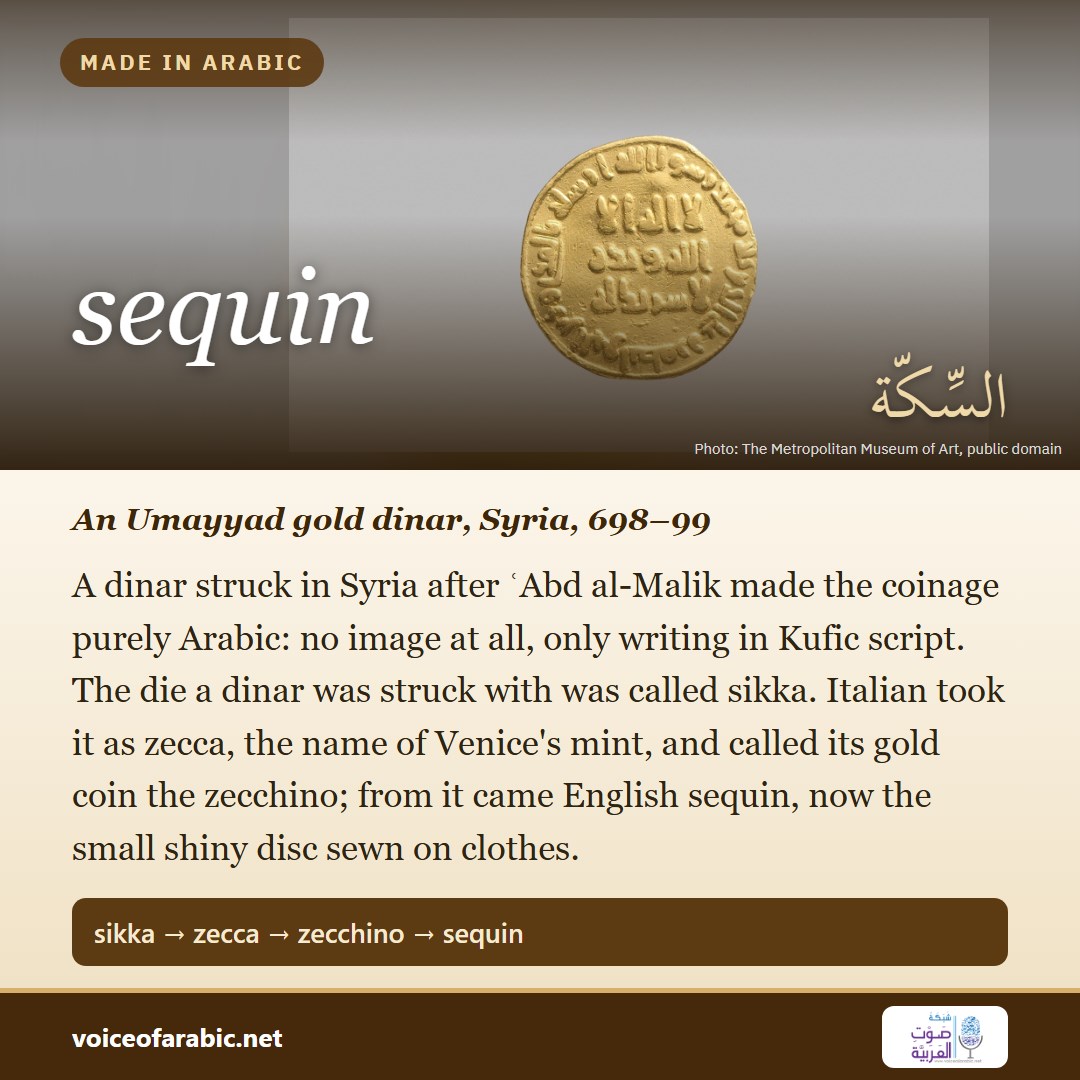
sequin
an Umayyad gold dinar, Syria, 698–99
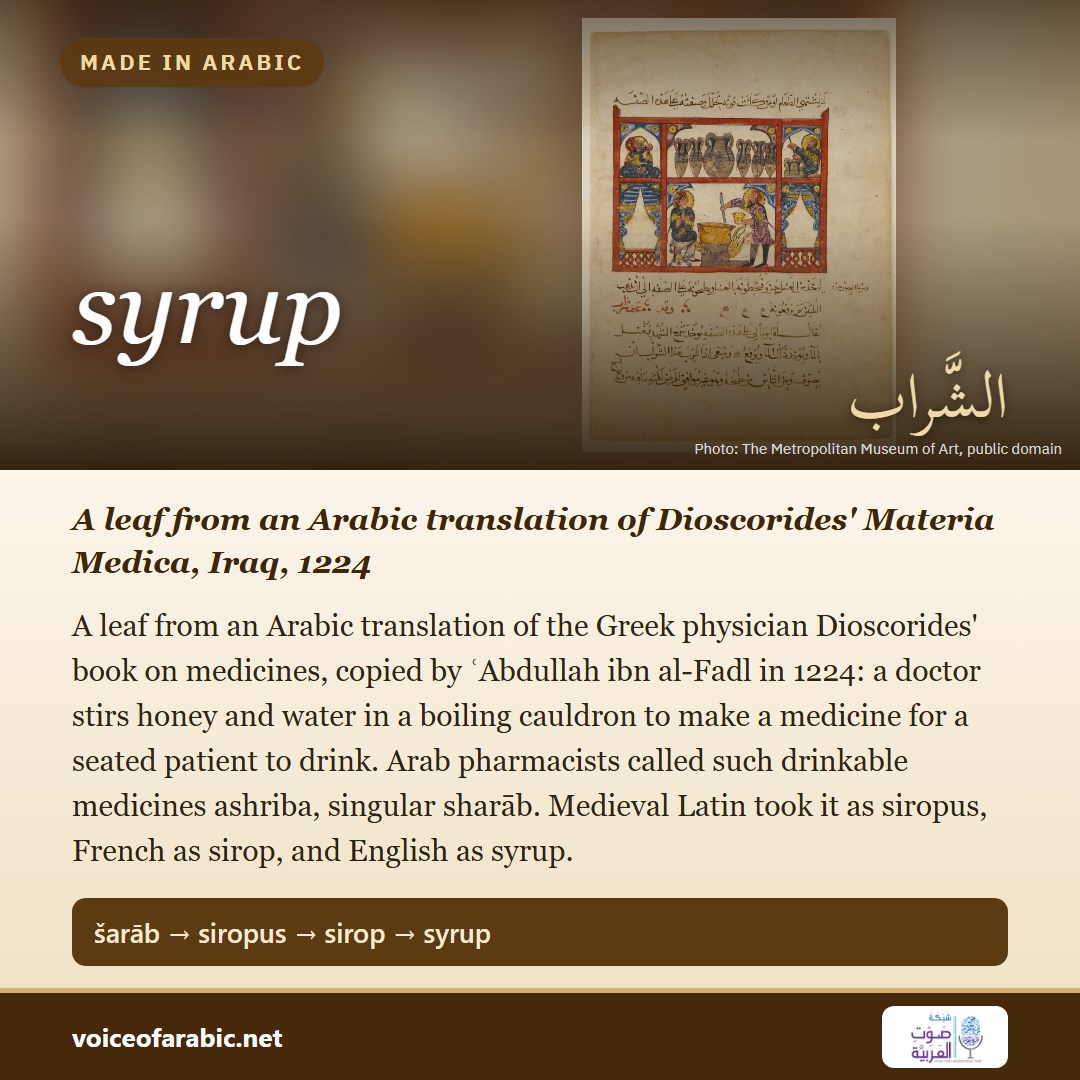
syrup
a leaf from an Arabic translation of Dioscorides' Materia Medica, Iraq, 1224
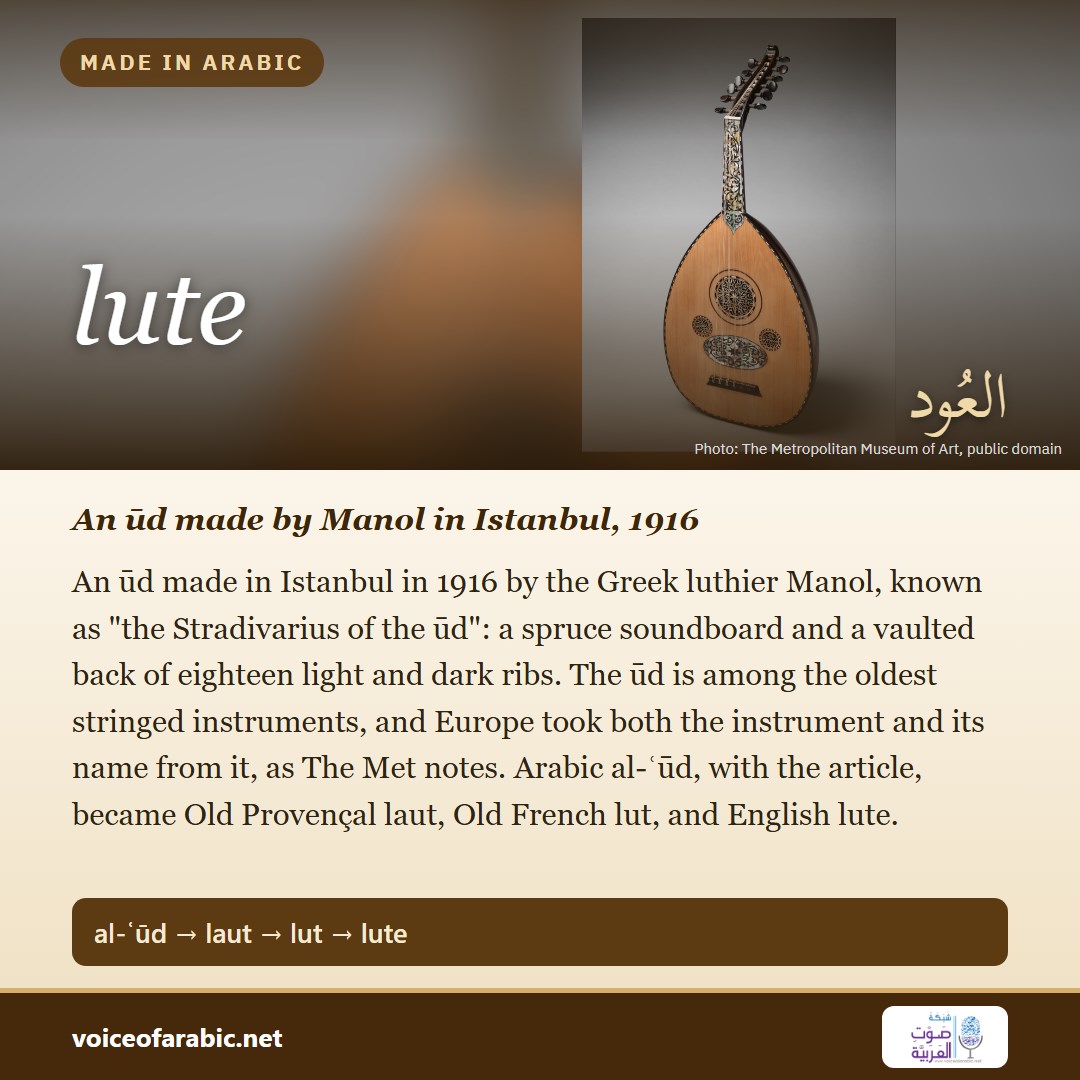
lute
an ūd made by Manol in Istanbul, 1916
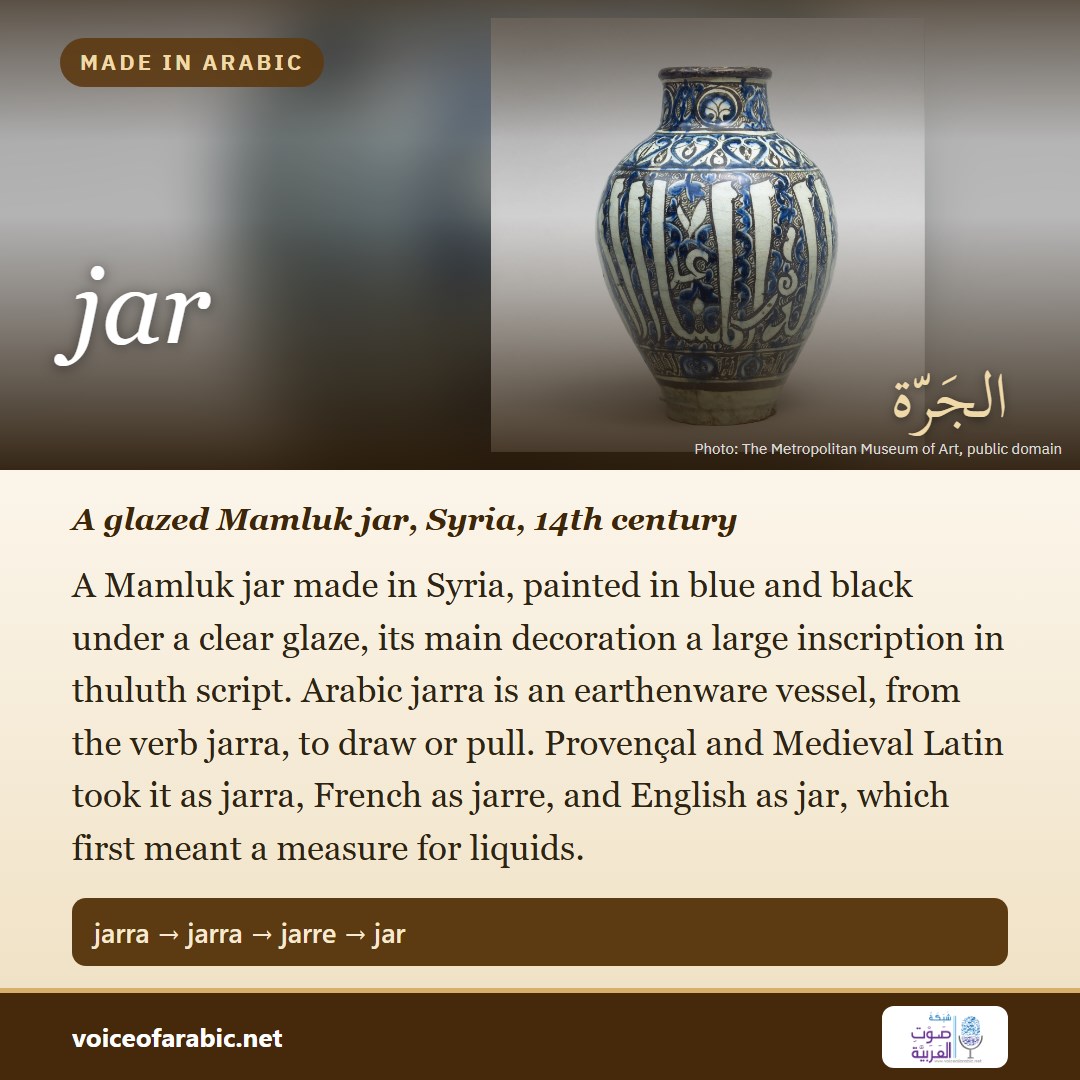
jar
a glazed Mamluk jar, Syria, 14th century
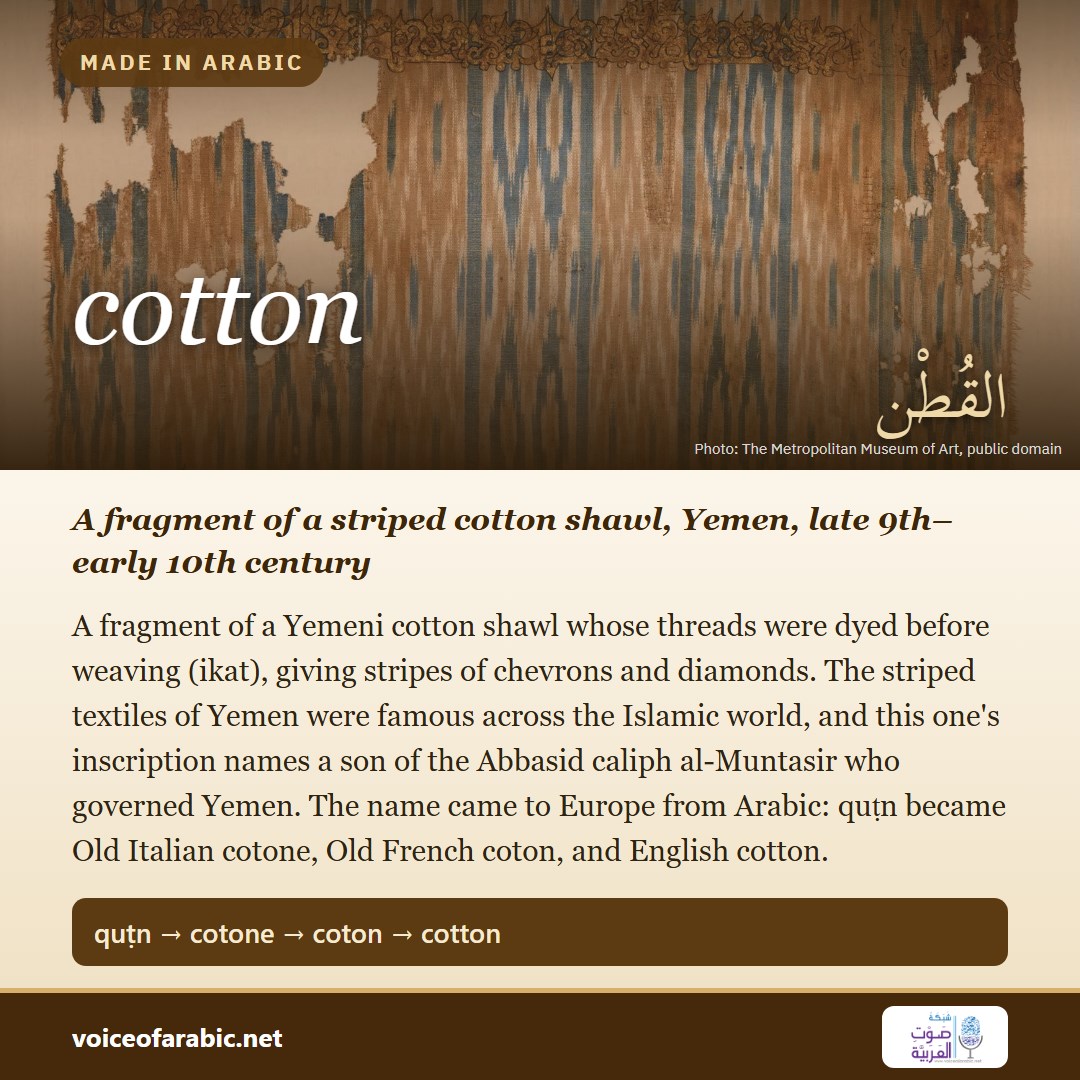
cotton
a fragment of a striped cotton shawl, Yemen, late 9th–early 10th century
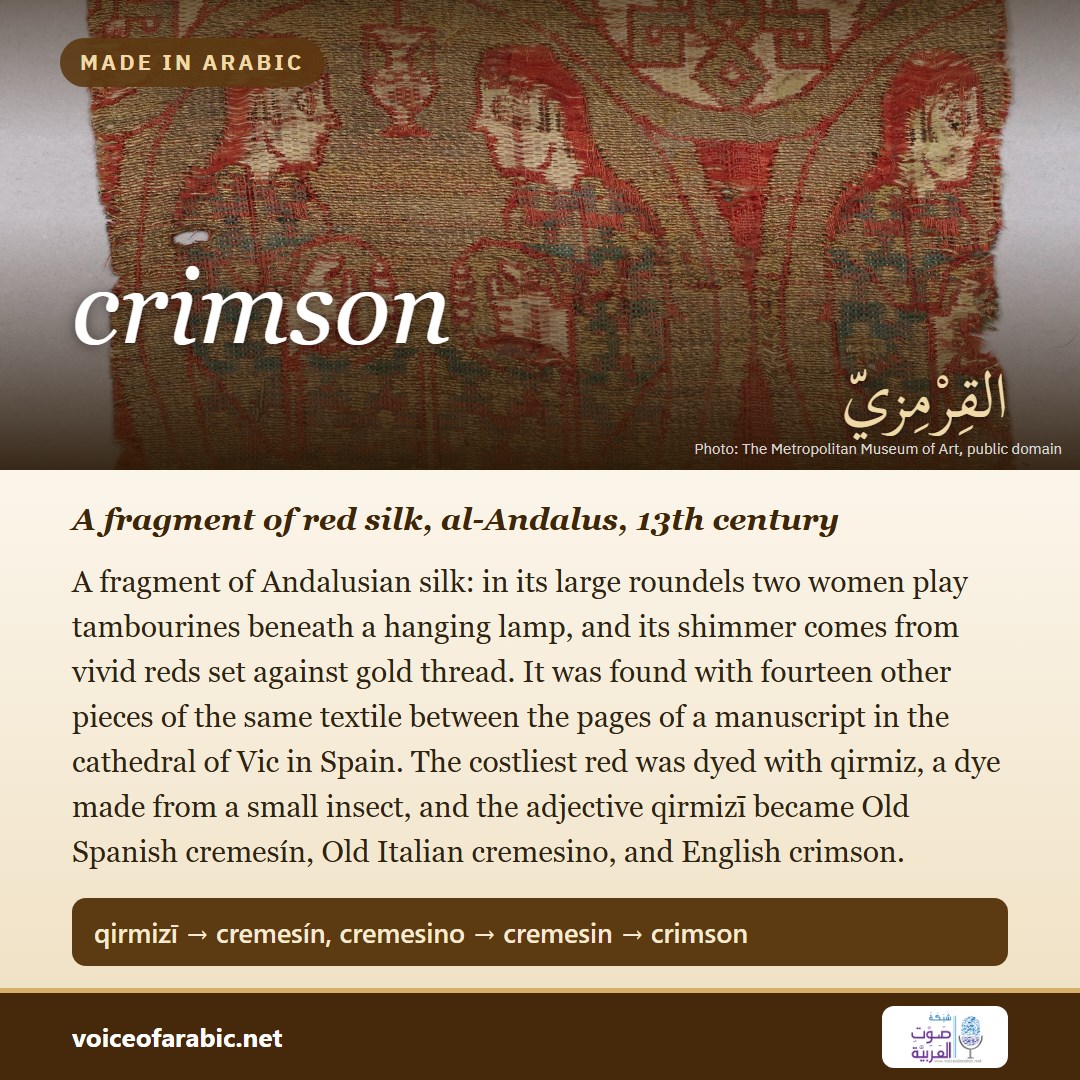
crimson
a fragment of red silk, al-Andalus, 13th century
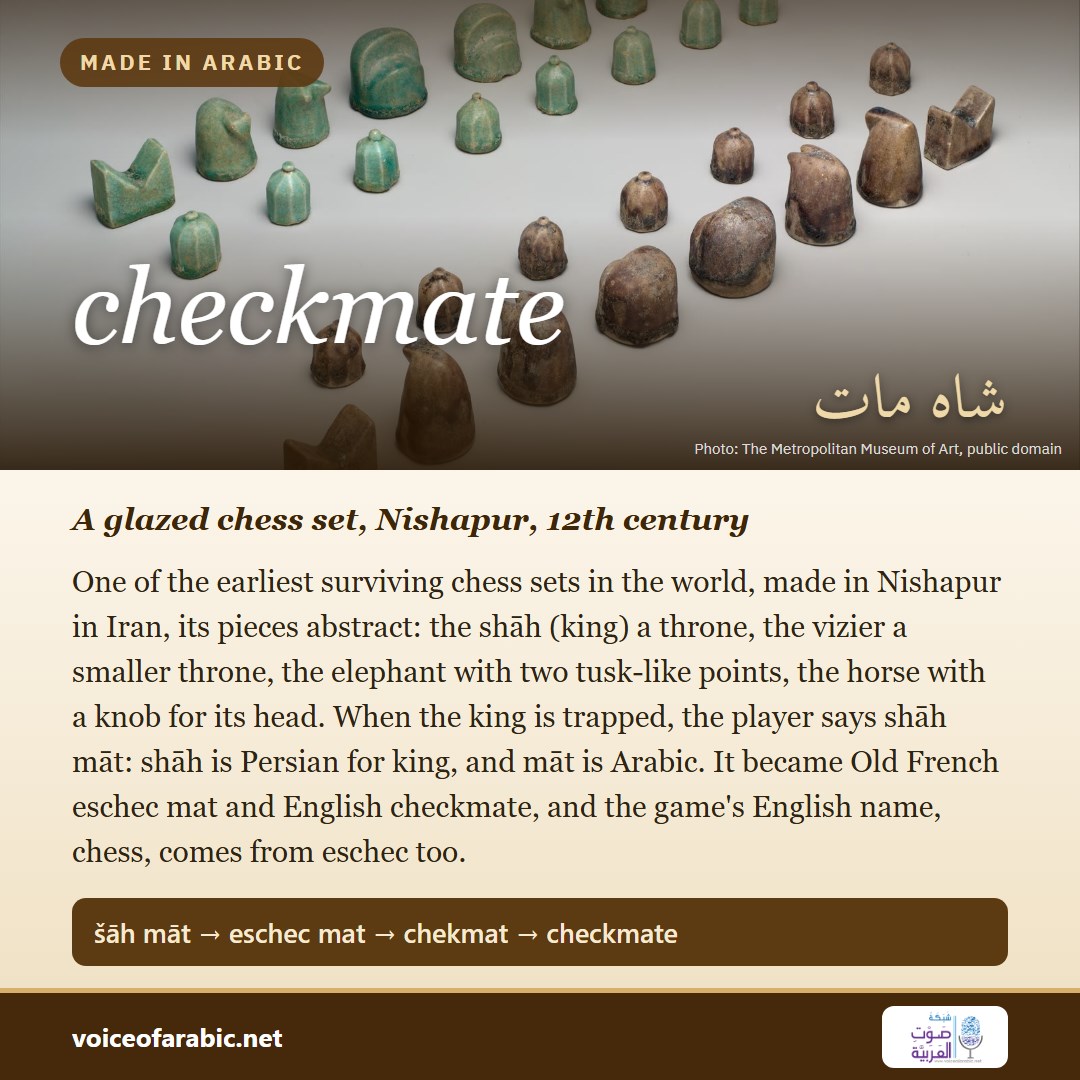
checkmate
a glazed chess set, Nishapur, 12th century
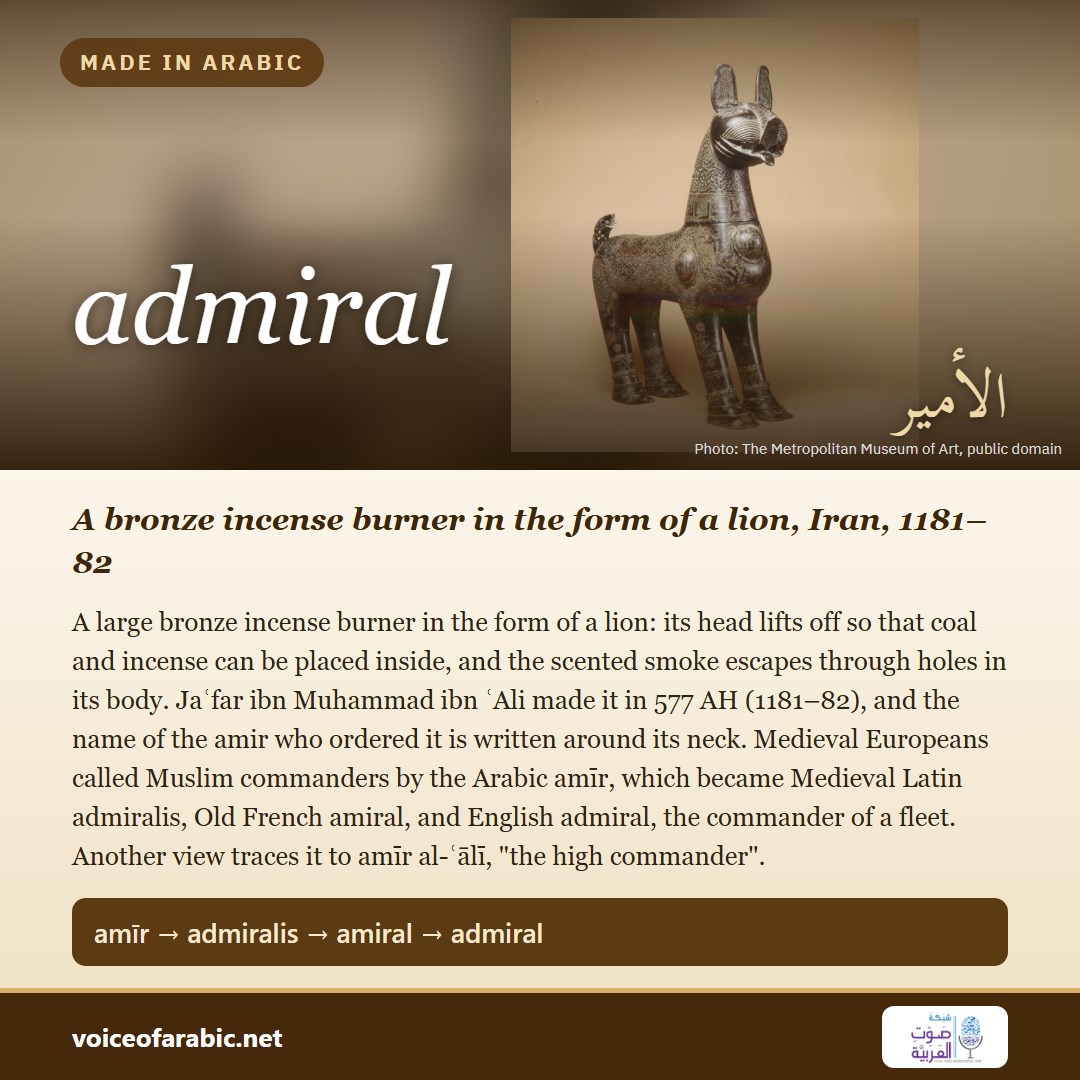
admiral
a bronze incense burner in the form of a lion, Iran, 1181–82
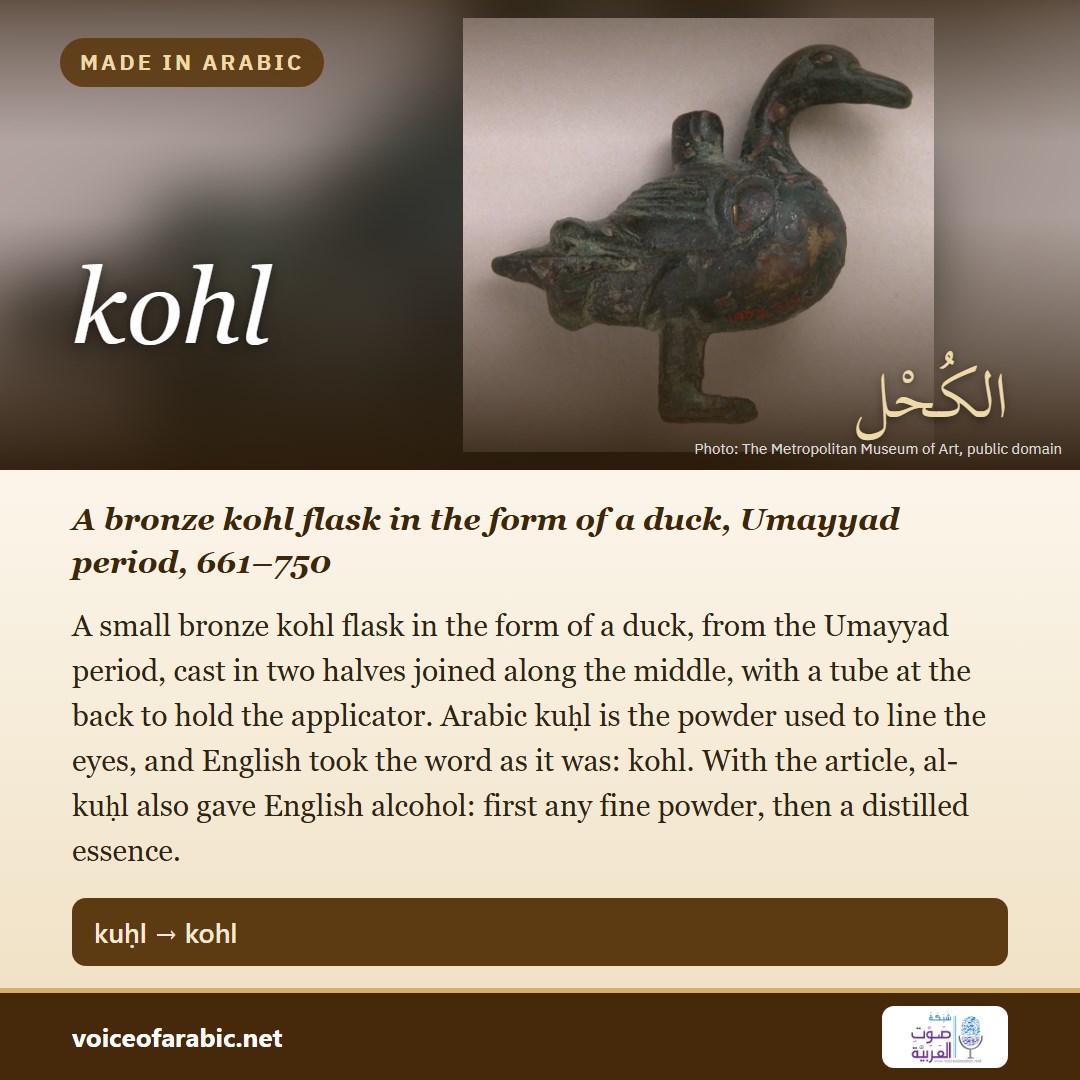
kohl
a bronze kohl flask in the form of a duck, Umayyad period, 661–750
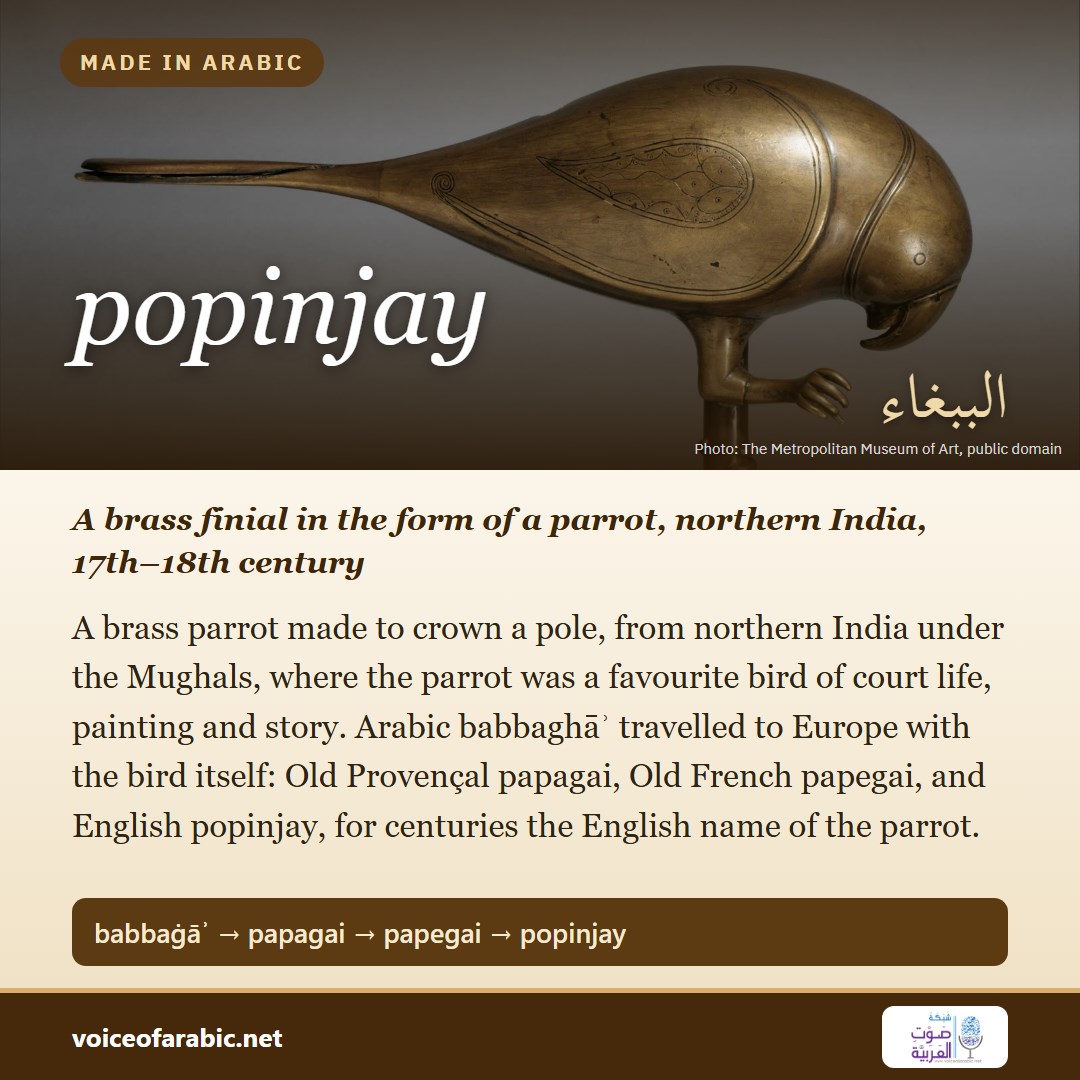
popinjay
a brass finial in the form of a parrot, northern India, 17th–18th century
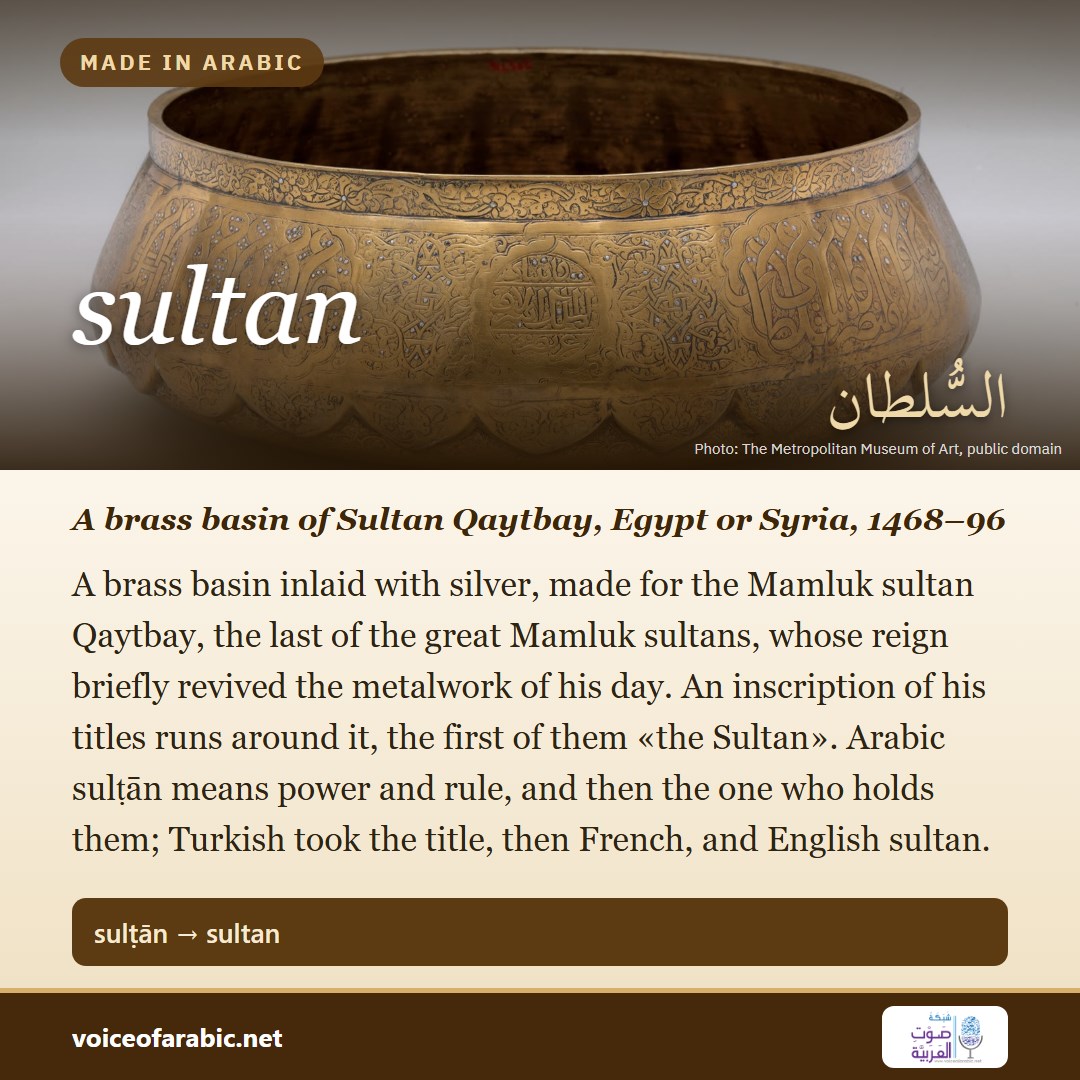
sultan
a brass basin of Sultan Qaytbay, Egypt or Syria, 1468–96