Made in Arabic
sine
الجَيْب
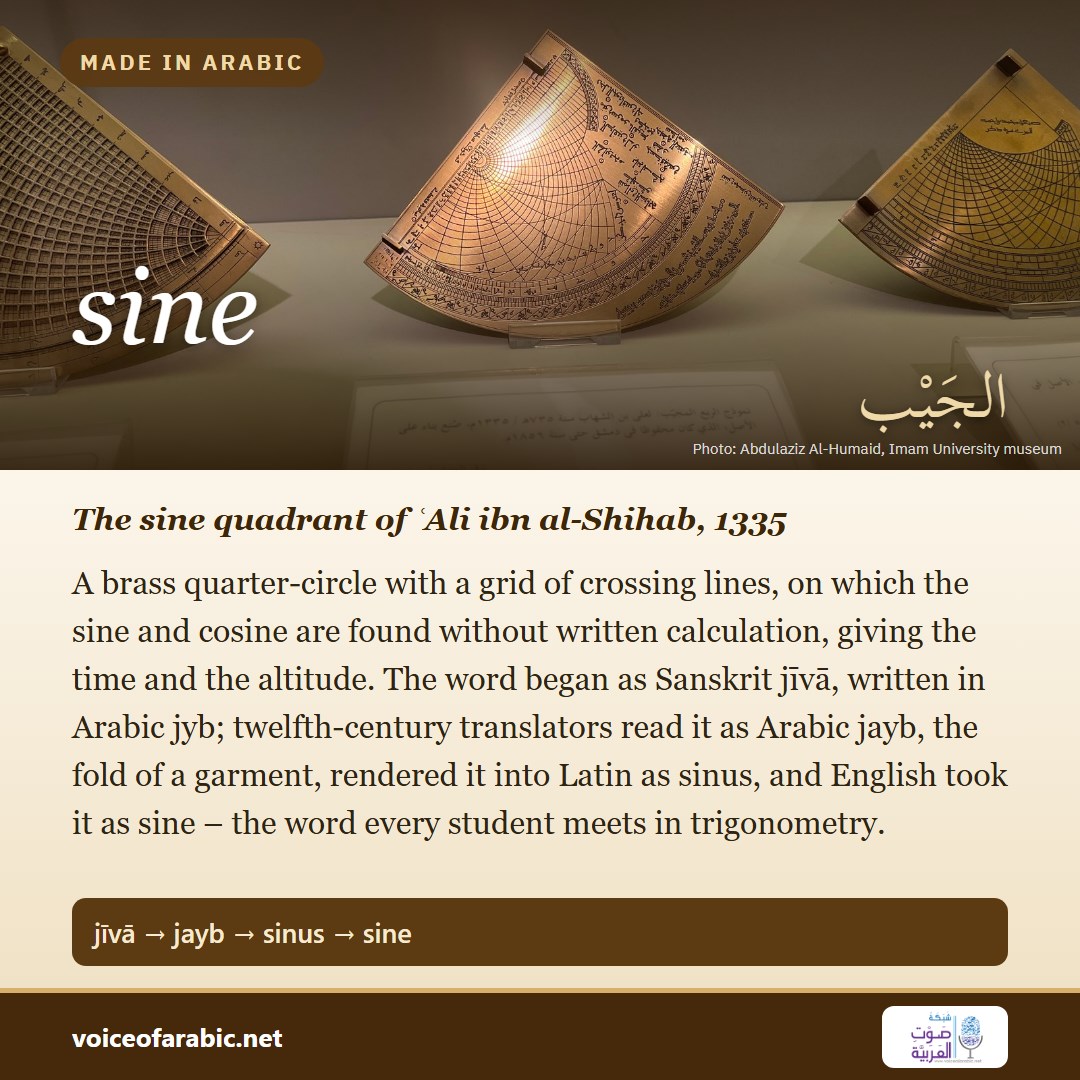
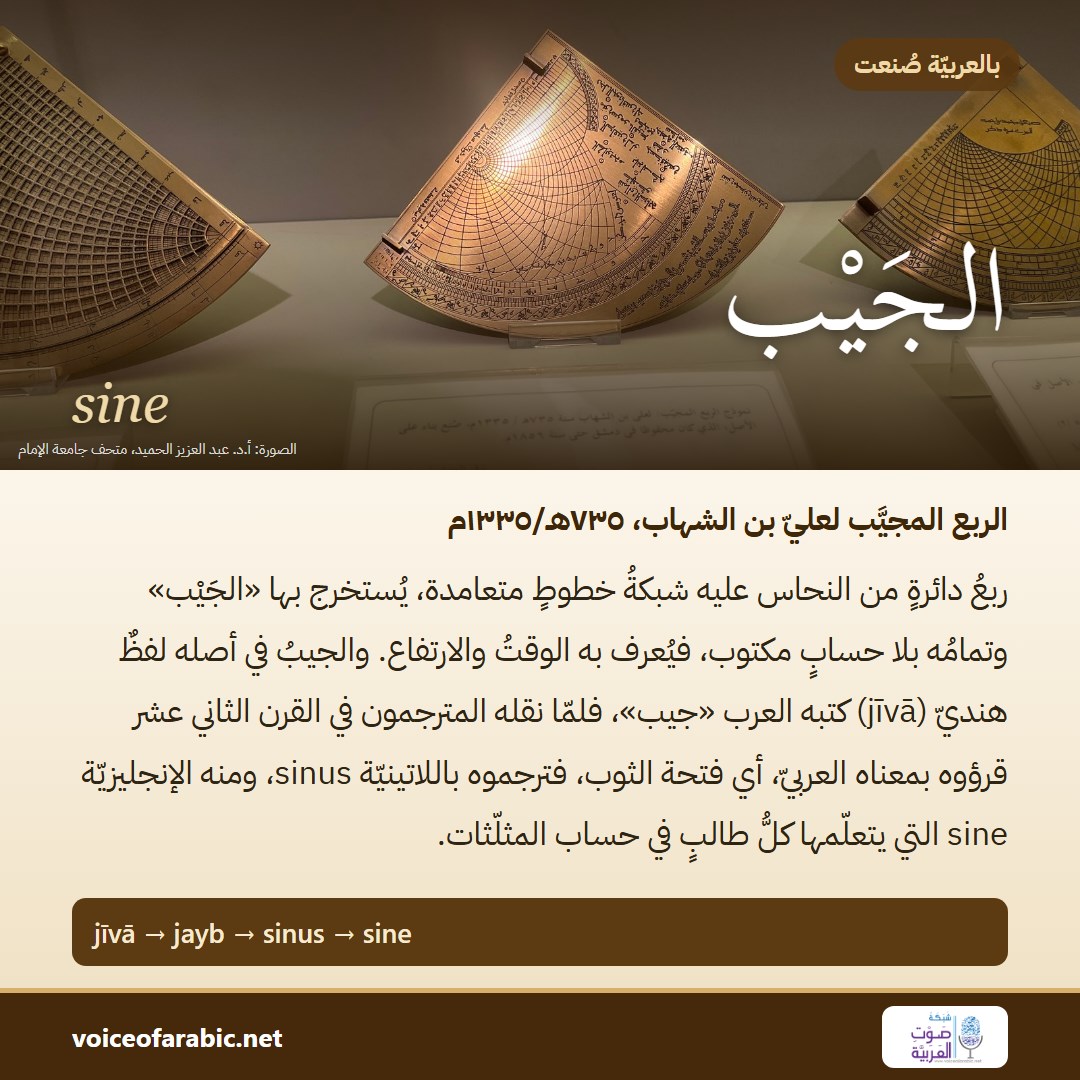
A brass quarter-circle with a grid of crossing lines, on which the sine and cosine are found without written calculation, giving the time and the altitude. The word began as Sanskrit jīvā, written in Arabic jyb; twelfth-century translators read it as Arabic jayb, the fold of a garment, rendered it into Latin as sinus, and English took it as sine – the word every student meets in trigonometry.
- Instrument
- the sine quadrant of ʿAli ibn al-Shihab, 1335
- Written on it in Arabic
- On the quadrant itself: «made by ʿAli ibn al-Shihab», the names of the zodiac signs, and numbers written in abjad letters.
The path between languagesjīvā → jayb → sinus → sine
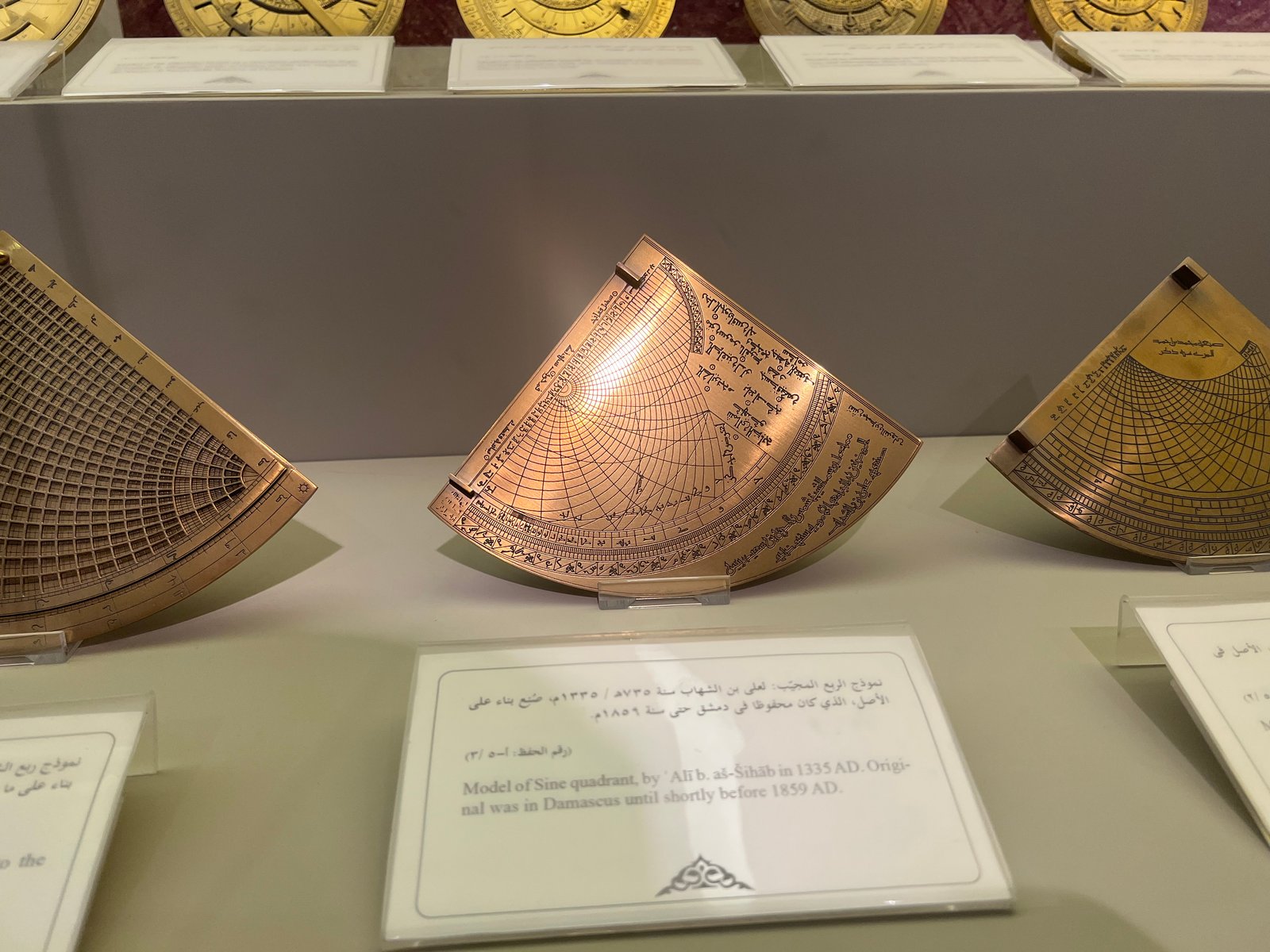
أ.د. عبد العزيز الحميد، متحف جامعة الإمام
Click a card to see it full size; each has a download button for sharing.
Sources
- Merriam-Webster: sine, from Medieval Latin sinus, translation of Arabic jayb
- Fuat Sezgin, Science and Technology in Islam (Frankfurt), the instruments catalogue
Spotted a mistake, or have something to add?
Your note comes to us only; it is not published here. We read it, and if it holds we correct the card.