Made in Arabic
admiral
الأمير
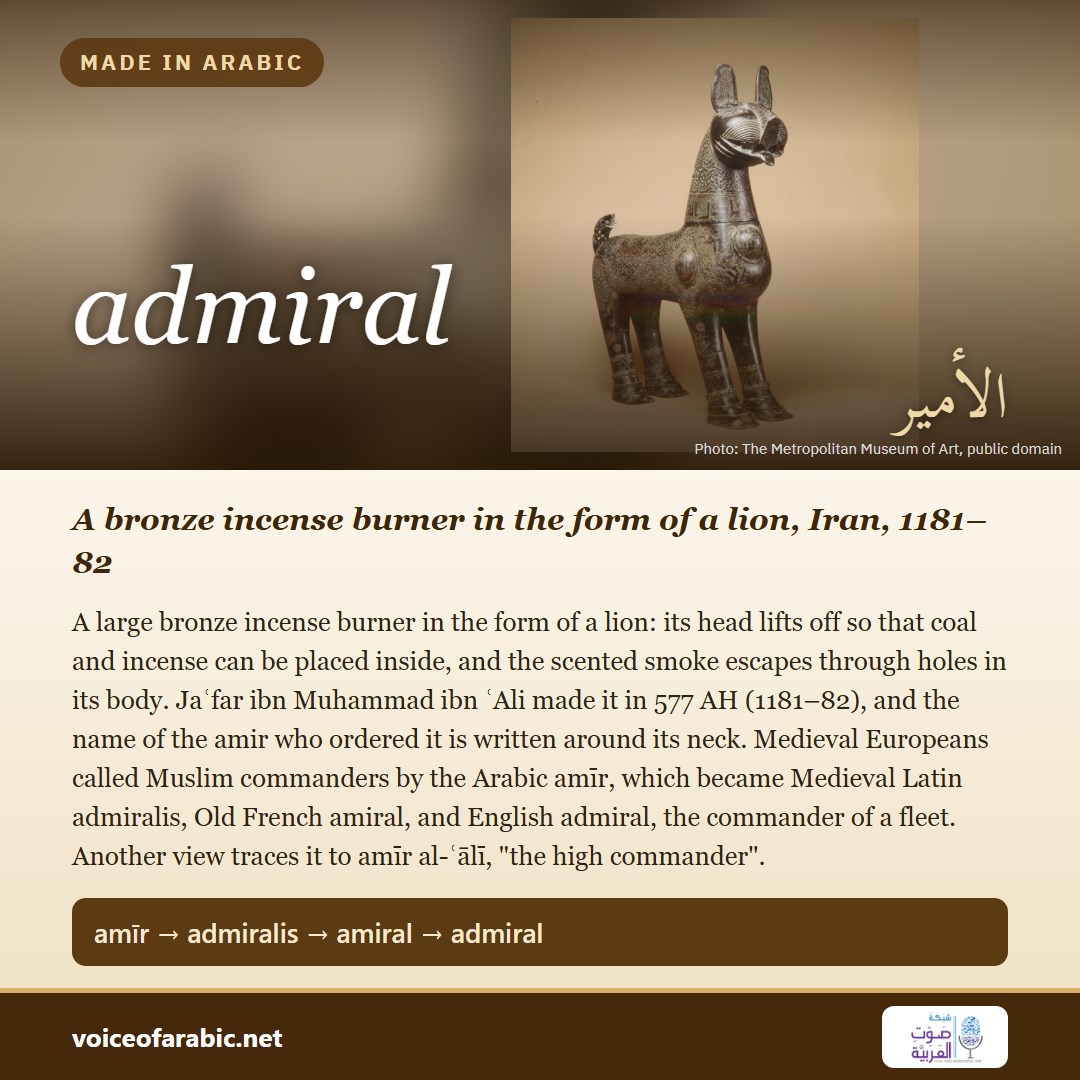
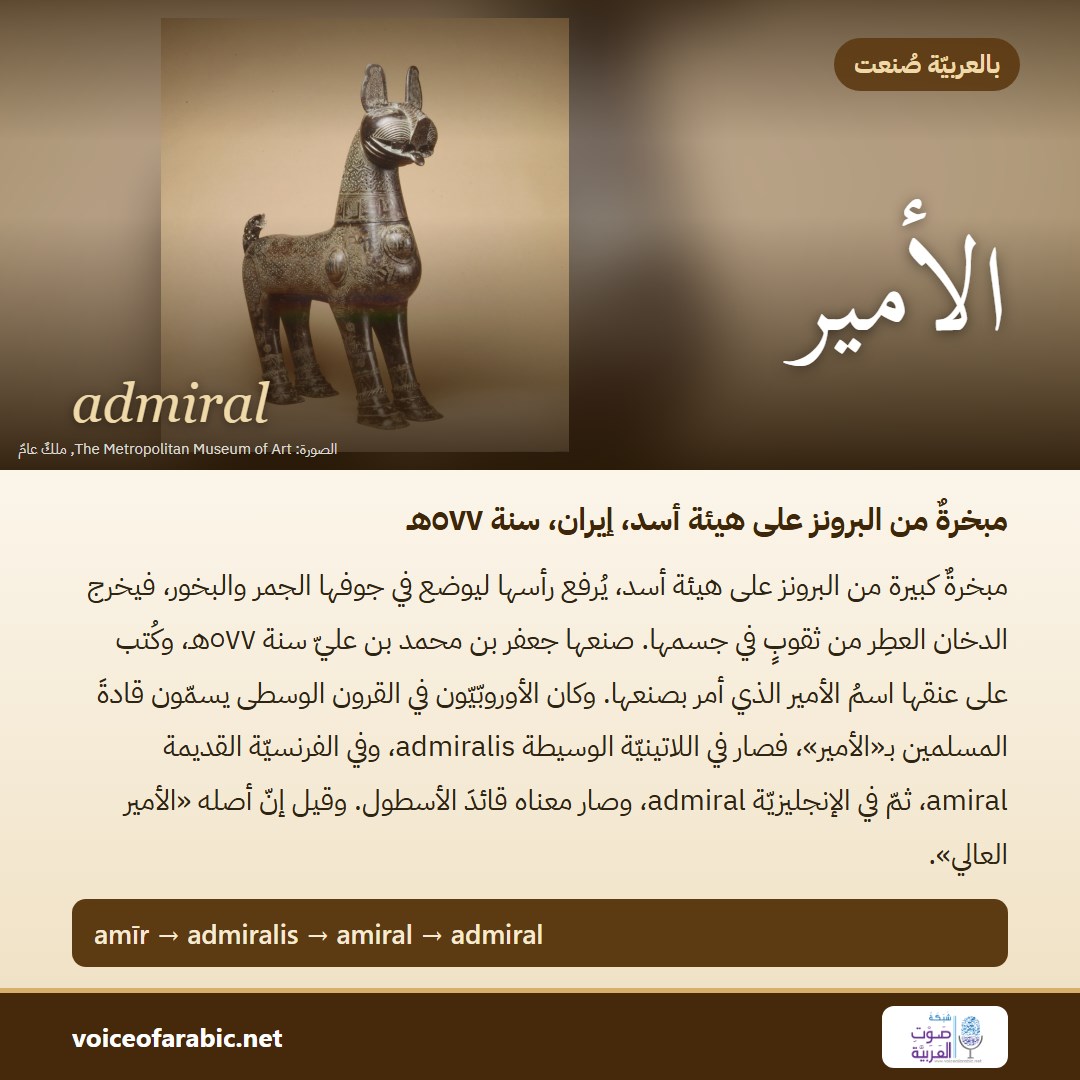
A large bronze incense burner in the form of a lion: its head lifts off so that coal and incense can be placed inside, and the scented smoke escapes through holes in its body. Jaʿfar ibn Muhammad ibn ʿAli made it in 577 AH (1181–82), and the name of the amir who ordered it is written around its neck. Medieval Europeans called Muslim commanders by the Arabic amīr, which became Medieval Latin admiralis, Old French amiral, and English admiral, the commander of a fleet. Another view traces it to amīr al-ʿālī, "the high commander".
- Instrument
- a bronze incense burner in the form of a lion, Iran, 1181–82
- Written on it in Arabic
- Around its neck and on its chest, in kufic: «Ordered by the Amir, the just, the wise, Saif al-Dunya wa'l-Din ibn Muhammad al-Mawardi».
The path between languagesamīr → admiralis → amiral → admiral
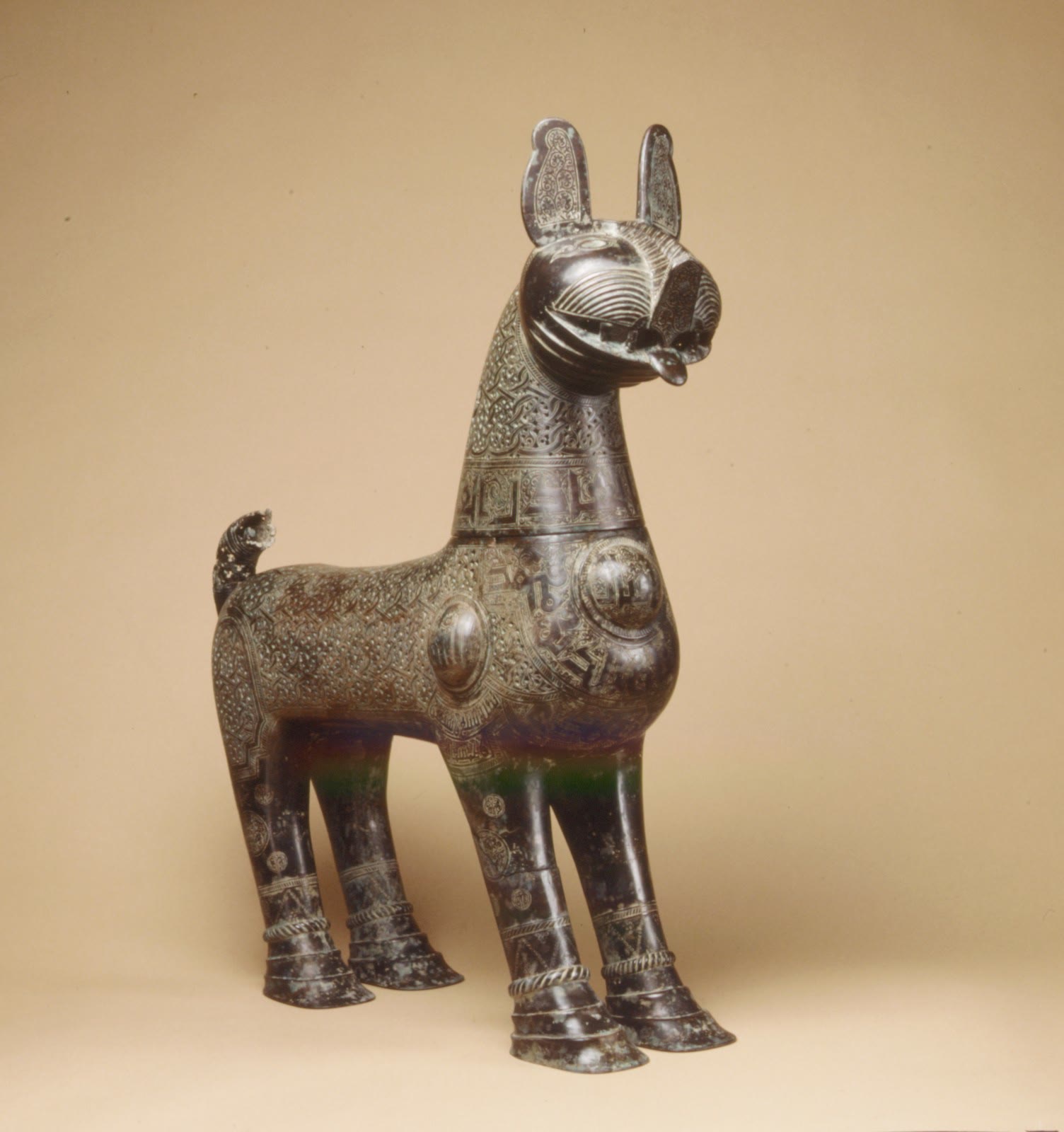
The Metropolitan Museum of Art, ملكٌ عامّ
Click a card to see it full size; each has a download button for sharing.
Sources
- American Heritage Dictionary: admiral, Middle English amiral, Muslim military commander, emir, via Old French amiral and Medieval Latin admīrālis, from Arabic ʾamīr, commander
- The Metropolitan Museum of Art, 51.56: Incense Burner of Amir Saif al-Dunya wa'l-Din ibn Muhammad al-Mawardi, dated 577 AH/1181–82 CE (Open Access, public domain)
Spotted a mistake, or have something to add?
Your note comes to us only; it is not published here. We read it, and if it holds we correct the card.