Made in Arabic
checkmate
شاه مات
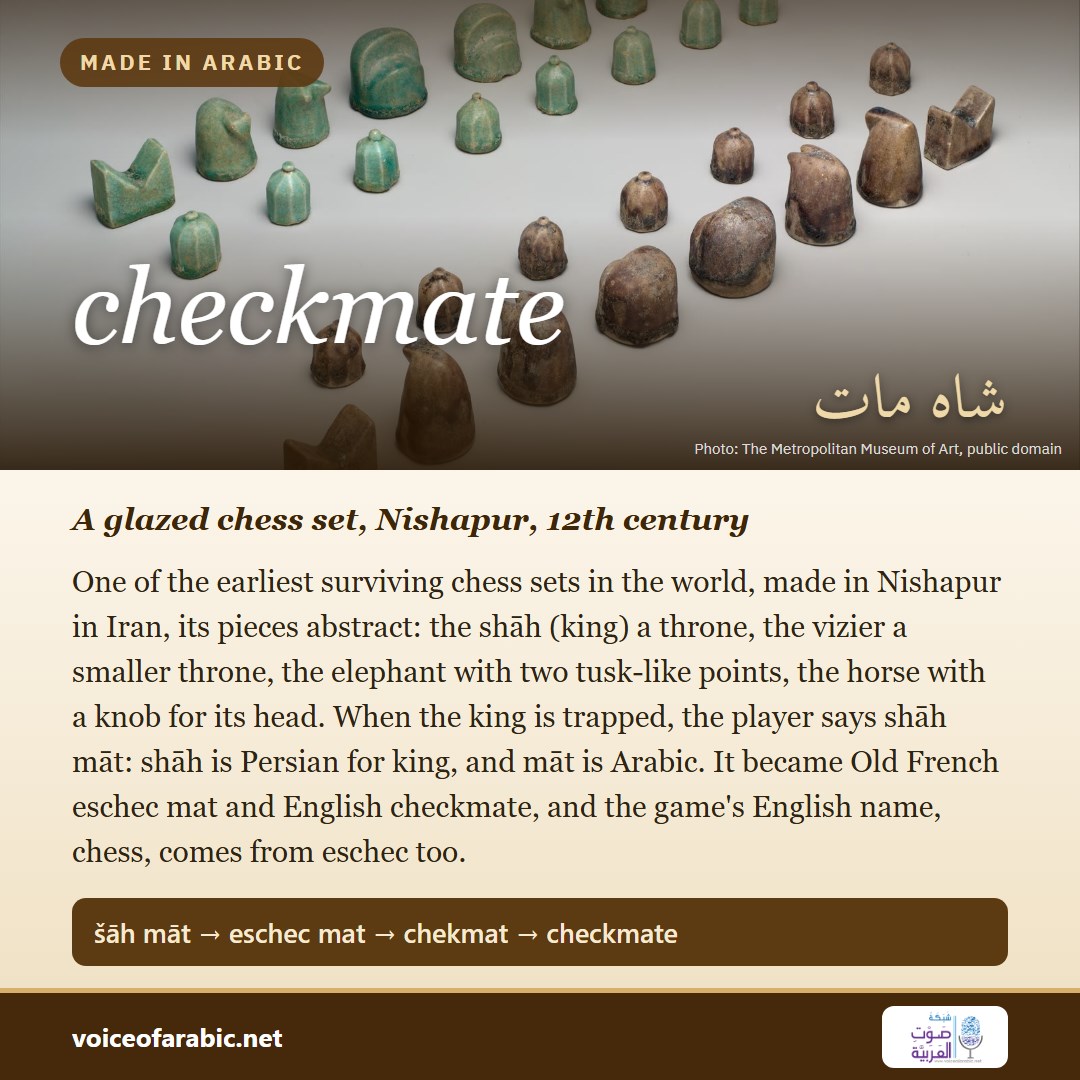
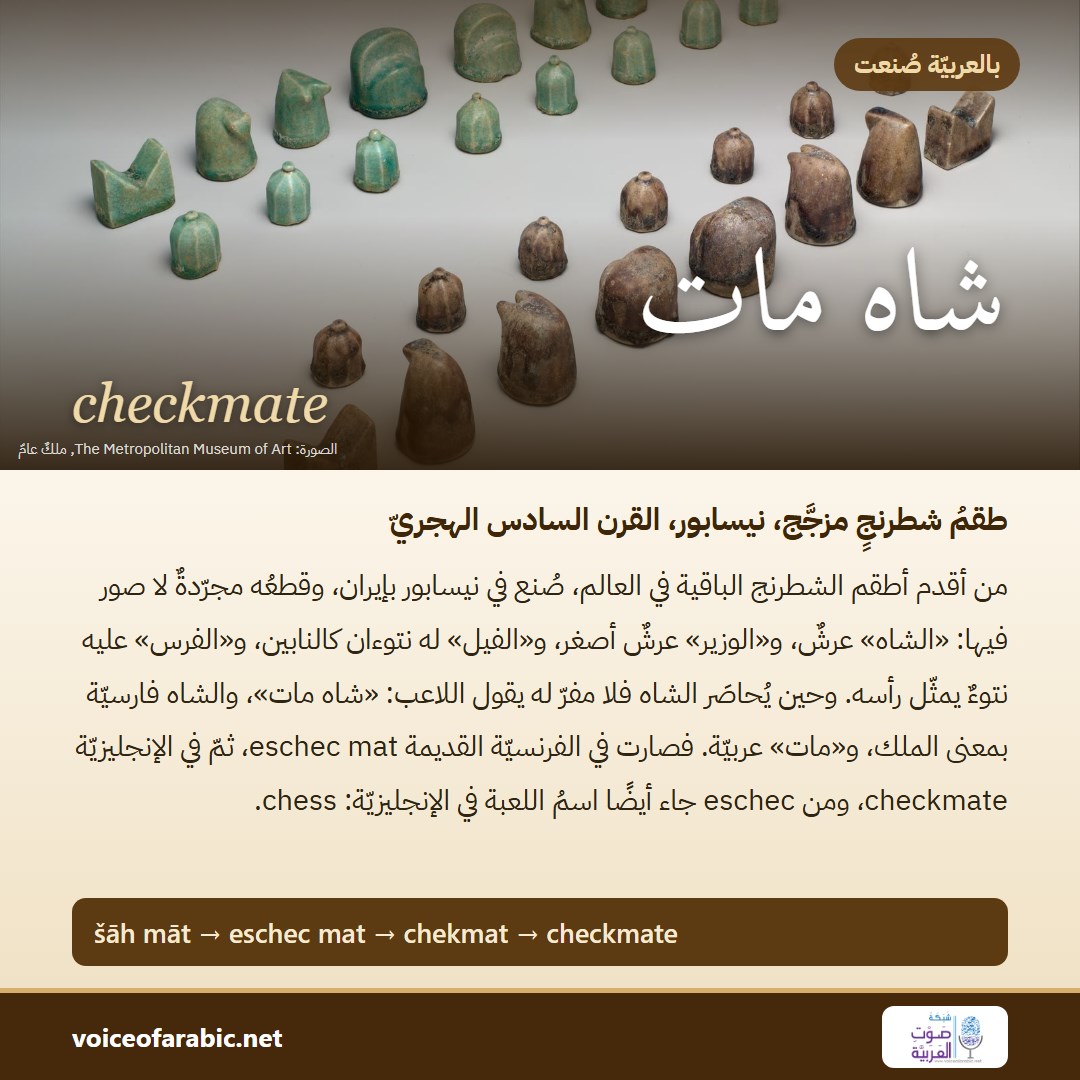
One of the earliest surviving chess sets in the world, made in Nishapur in Iran, its pieces abstract: the shāh (king) a throne, the vizier a smaller throne, the elephant with two tusk-like points, the horse with a knob for its head. When the king is trapped, the player says shāh māt: shāh is Persian for king, and māt is Arabic. It became Old French eschec mat and English checkmate, and the game's English name, chess, comes from eschec too.
- Instrument
- a glazed chess set, Nishapur, 12th century
The path between languagesšāh māt → eschec mat → chekmat → checkmate
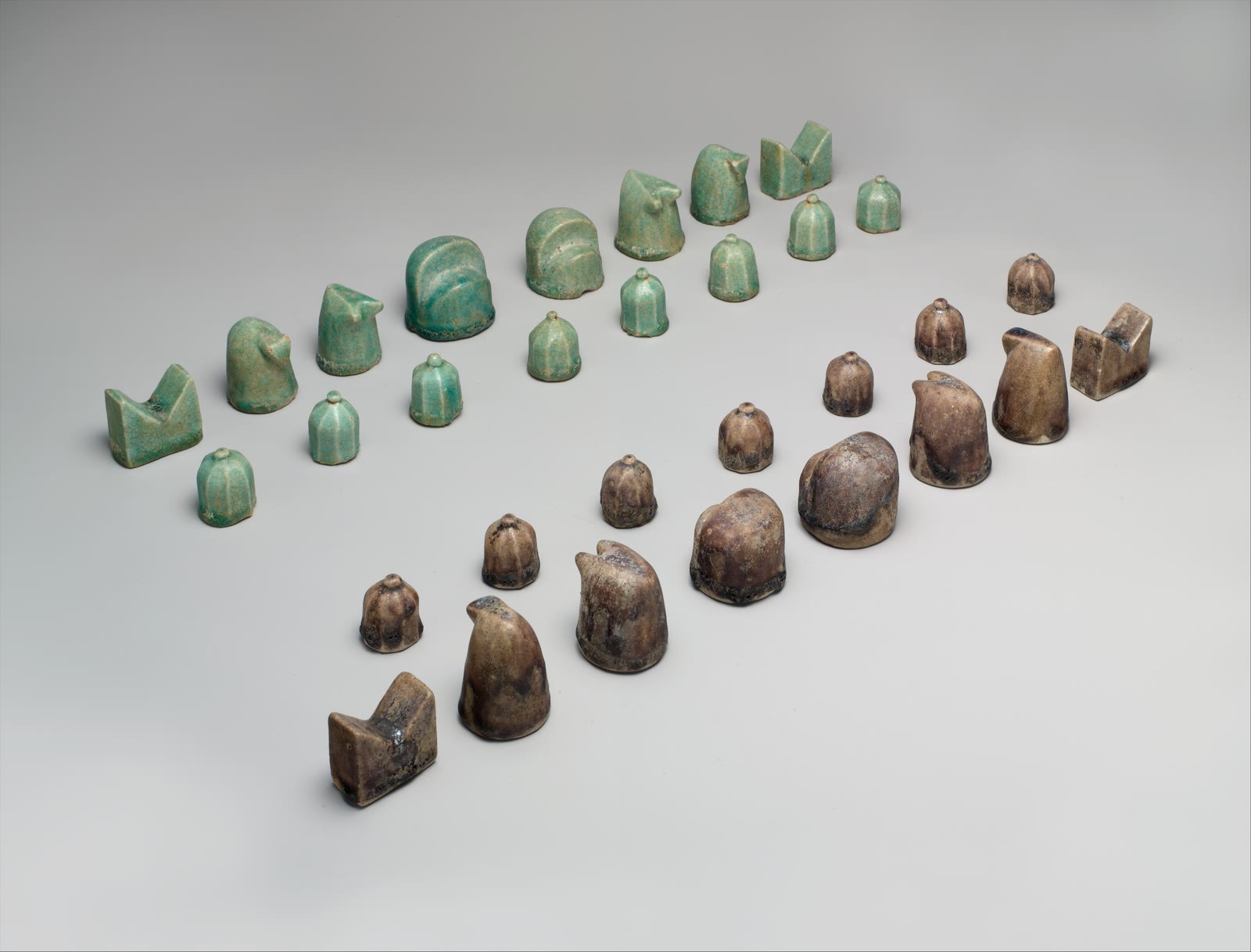
The Metropolitan Museum of Art, ملكٌ عامّ
Click a card to see it full size; each has a download button for sharing.
Sources
- American Heritage Dictionary: checkmate, from Old French eschec mat, from Arabic šāh māt, the king is dead
- American Heritage Dictionary: chess, short for Old French esches, plural of eschec, check in chess
- The Metropolitan Museum of Art, 1971.193a–ff: Chess Set, Nishapur, 12th century (Open Access, public domain)
Spotted a mistake, or have something to add?
Your note comes to us only; it is not published here. We read it, and if it holds we correct the card.