What others said about Arabic Read in the original
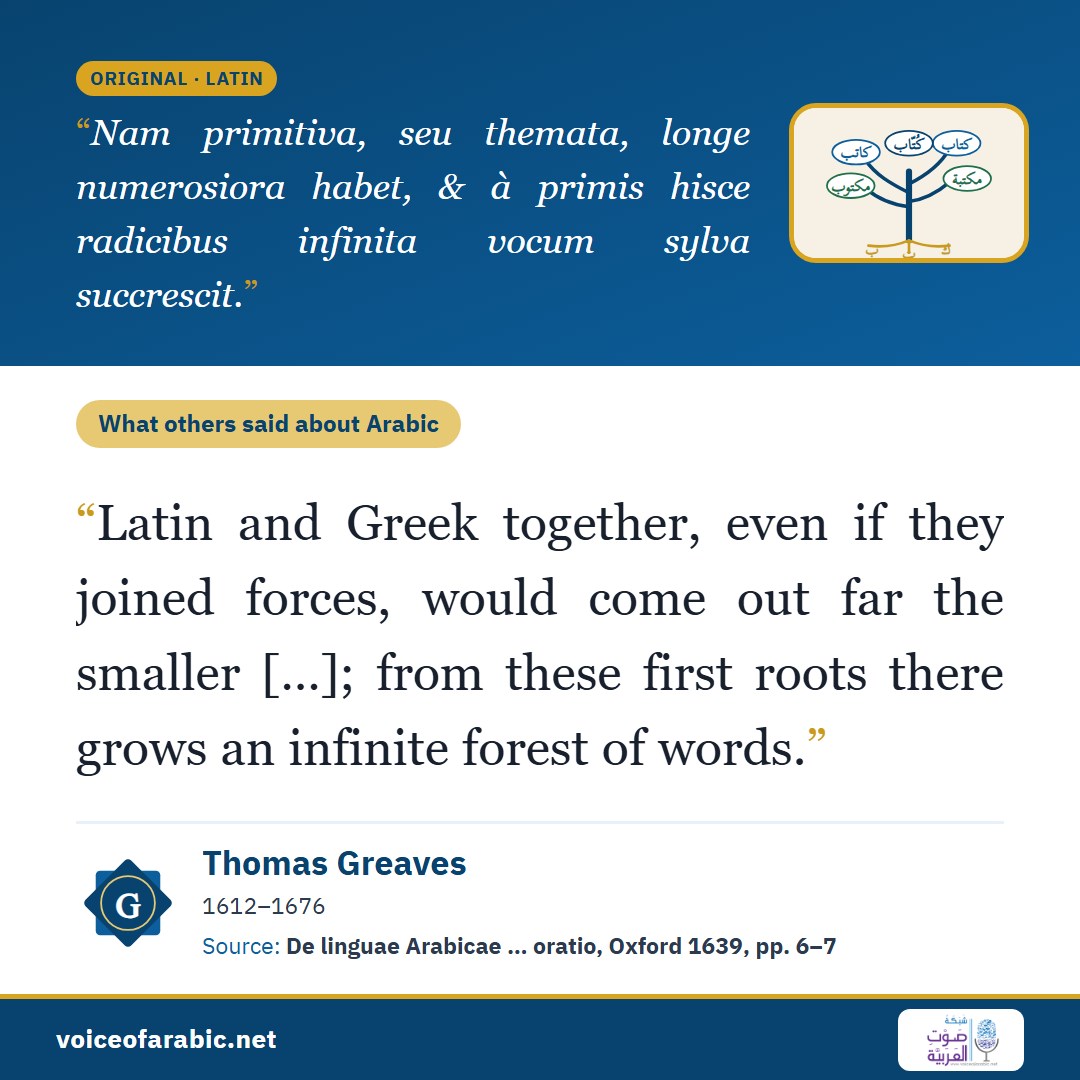
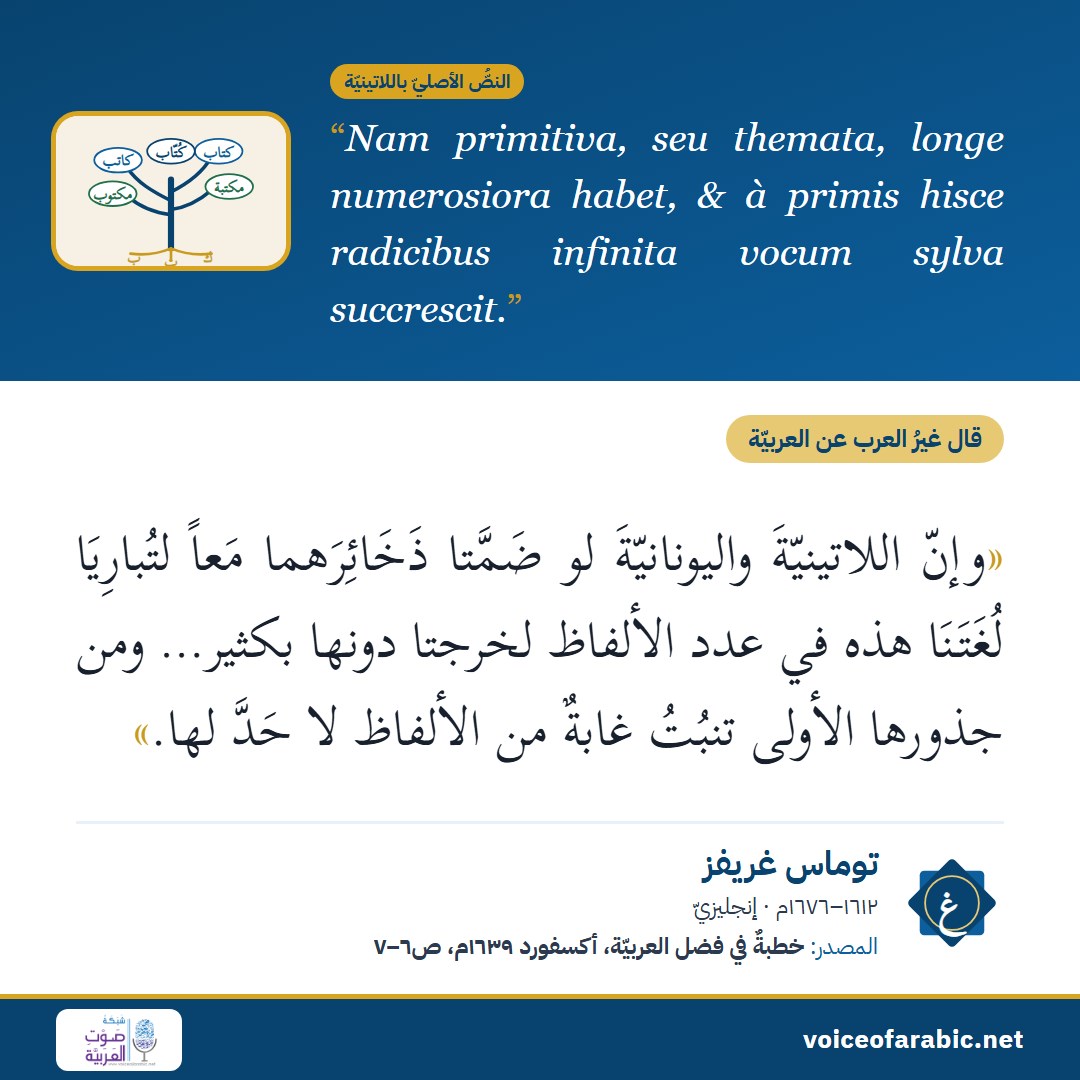
“This I would confidently assert: that Latin and Greek together, even if they joined forces to contend with ours over the number of words, would come out far the smaller, so far has this one tongue surpassed them both in fruitfulness of speech. For it has far more numerous primitives, or themes, and from these first roots there grows an infinite forest of words; so that not without reason the most celebrated lexicographer among them called his work al-Qāmūs, that is, the abyss, or Ocean.”
Thomas Greaves
1612–1676
English orientalist, deputy professor of Arabic at Oxford.
Original text — Latin
Illud fidenter asseruerim Latinam simul, & Græcam, etiamsi junctis copijs cum nostrâ de verborum numero decernerent, minores multò evasuras, adeo sermonis fœcunditate una utramq; supergressa est. Nam primitiva, seu themata, longe numerosiora habet, & à primis hisce radicibus infinita vocum sylva succrescit. Ut non sine causâ omnium celeberrimus apud ipsos Lexicographus opus suum «al-Qāmūs», hoc est, abyssum, seu Oceanum, appellârit.
In Arabic
وإنّي لأقطعُ واثقاً بأنّ اللاتينيّة واليونانيّة، لو ضمّتا ذخائرَهما معاً لتُباريا لغتَنا هذه في عدد الألفاظ، لخرجتا دونها بكثير؛ فقد فاقتهما كلتيهما وحدَها بخِصبِ الكلام. ذلك أنّ لها من الأصول — أي الموادّ — ما هو أكثرُ عدداً بكثير، ومن هذه الجذور الأولى تنبُتُ غابةٌ من الألفاظ لا حدَّ لها؛ حتى إنّ أشهرَ معجميّيهم جميعاً لم يُسمِّ كتابه «القاموس» — أي اللُّجّة أو المحيط — من غير سبب.
Source
De linguae Arabicae utilitate et praestantia oratio, Oxonii habita Jul. 19. 1637, Oxford: Leonard Lichfield, 1639, p. 6–7
The English translation is Voice of Arabic's, made from the original.
'Ours' is Arabic, which Greaves is championing before his university; the printer, lacking Arabic type, set «al-Qāmūs» in Hebrew letters.
Tap a card to see it full size; each has a download button below it for sharing.