What others said about Arabic Read in the original
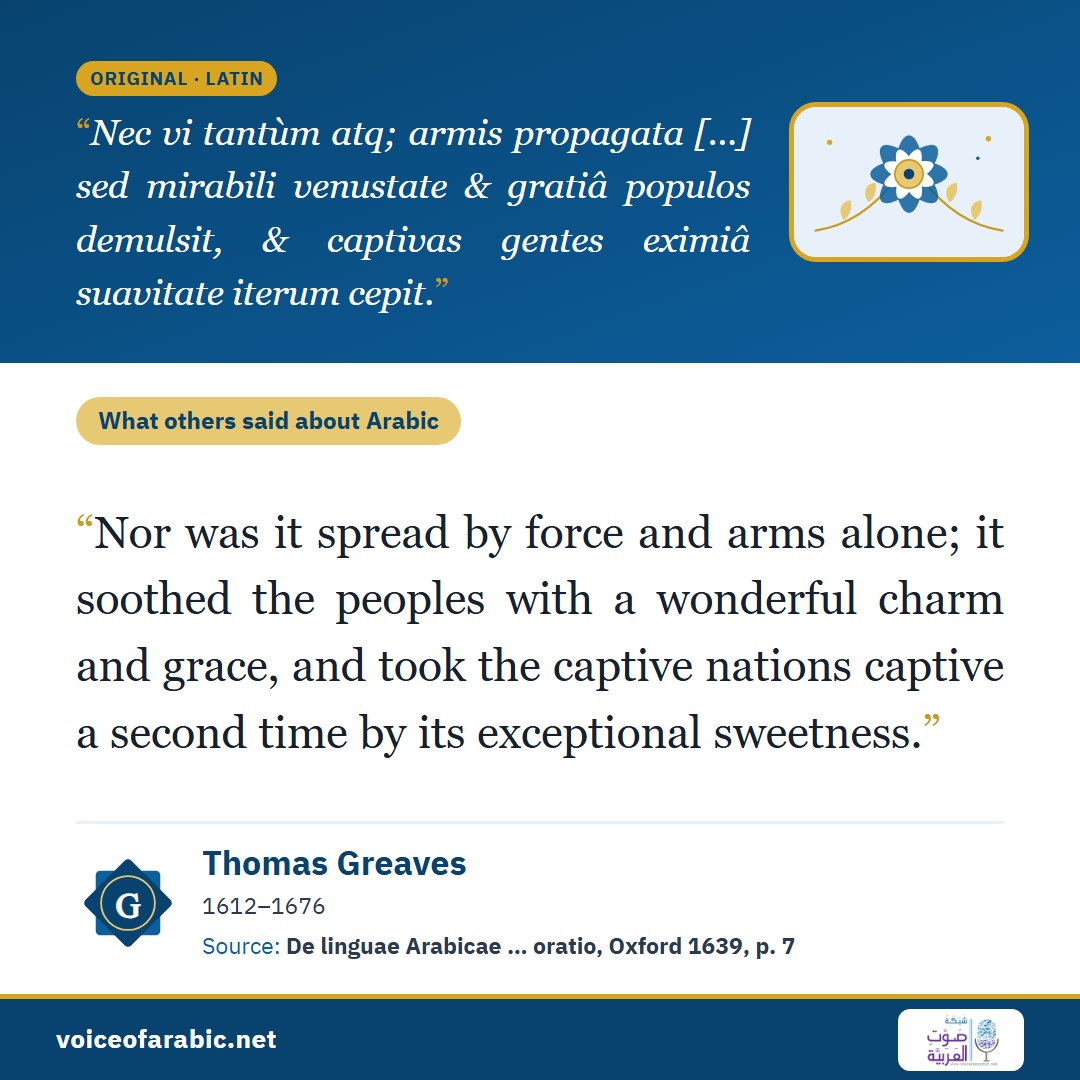
“Nor, I think, was it spread by force and arms alone that it came to rule so widely; it soothed the peoples with a wonderful charm and grace, and took the captive nations captive a second time by its exceptional sweetness. For it not only expresses the conceptions of the mind aptly, roundly, and in the closest fit to the things themselves, but has also drawn to itself every ornament of speech that can be devised, its elegances, all the graces and allurements of discourse.”
Thomas Greaves
1612–1676
English orientalist, deputy professor of Arabic at Oxford.
Original text — Latin
Nec vi tantùm, ut opinor, atq; armis propagata, latè adeo dominata est, sed mirabili venustate & gratiâ populos demulsit, & captivas gentes eximiâ suavitate iterum cepit. Non enim animi conceptus aptè tantùm, rotundéq;, & rebus ipsis accommodatissimè exprimit, sed & omnia ascivit, quotquot excogitari possunt, dicendi lumina, & elegantias, cunctas orationis veneres, & lenocinia.
In Arabic
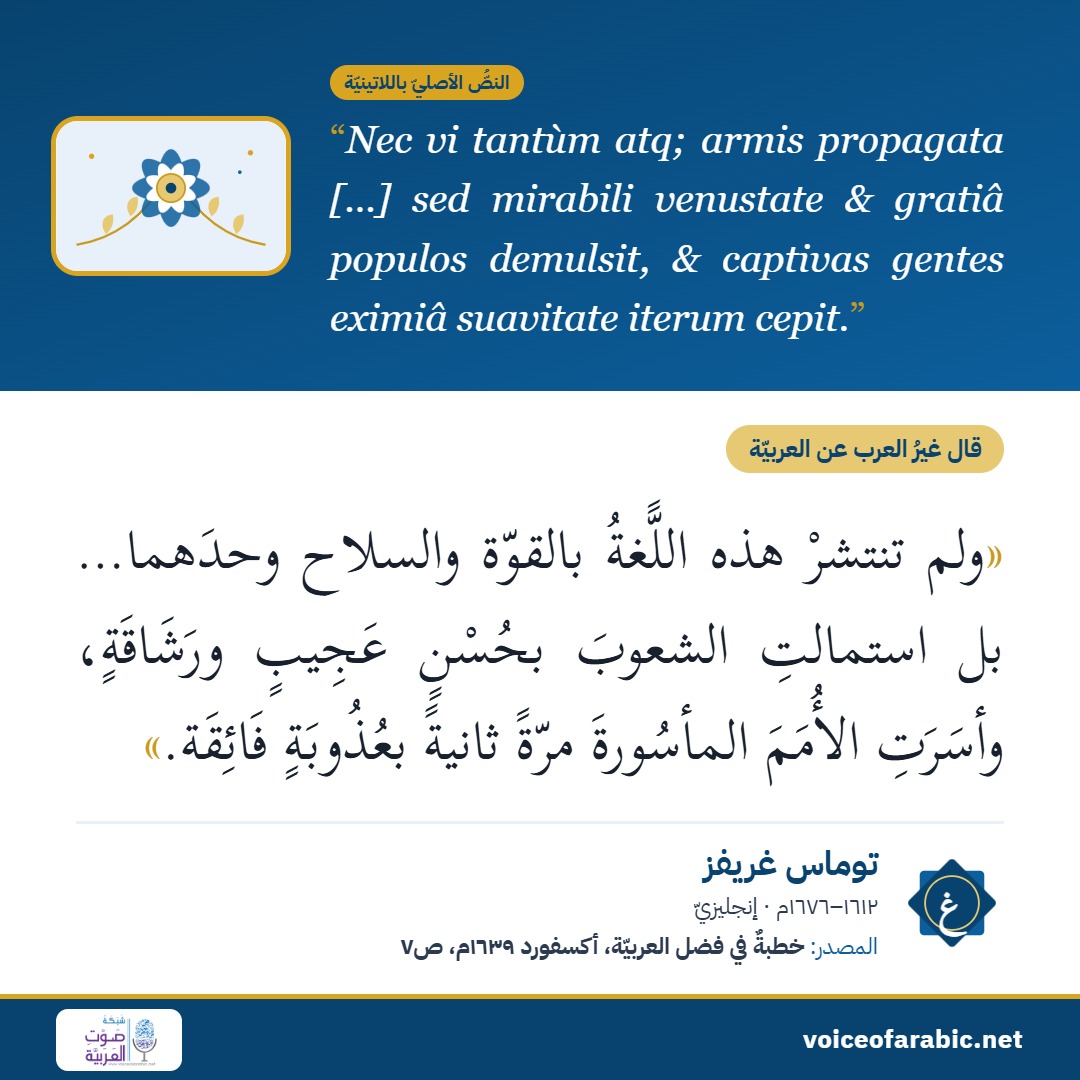
ولم تنتشر هذه اللغةُ، فيما أرى، بالقوّة والسلاح وحدَهما حتى سادت هذه السيادةَ الواسعة، بل استمالت الشعوبَ بحُسنٍ عجيبٍ ورشاقة، وأسَرَت الأممَ المأسورةَ مرّةً ثانيةً بعذوبةٍ فائقة. فهي لا تُعبّر عن خواطرِ النفس تعبيراً ملائماً مسبوكاً مطابقاً للأشياء نفسها أتمَّ المطابقة فحسب، بل اجتلبت كلَّ ما يمكن أن يُتصوَّر من أنوار البيان ومحاسنه، وجميعَ زينةِ الكلام ومفاتنه.
Source
De linguae Arabicae utilitate et praestantia oratio, Oxonii habita Jul. 19. 1637, Oxford: Leonard Lichfield, 1639, p. 7
The English translation is Voice of Arabic's, made from the original.
Tap a card to see it full size; each has a download button below it for sharing.