Plants with Arabic Names
Alkanna
الكَحْلاء
Alkanna tinctoria
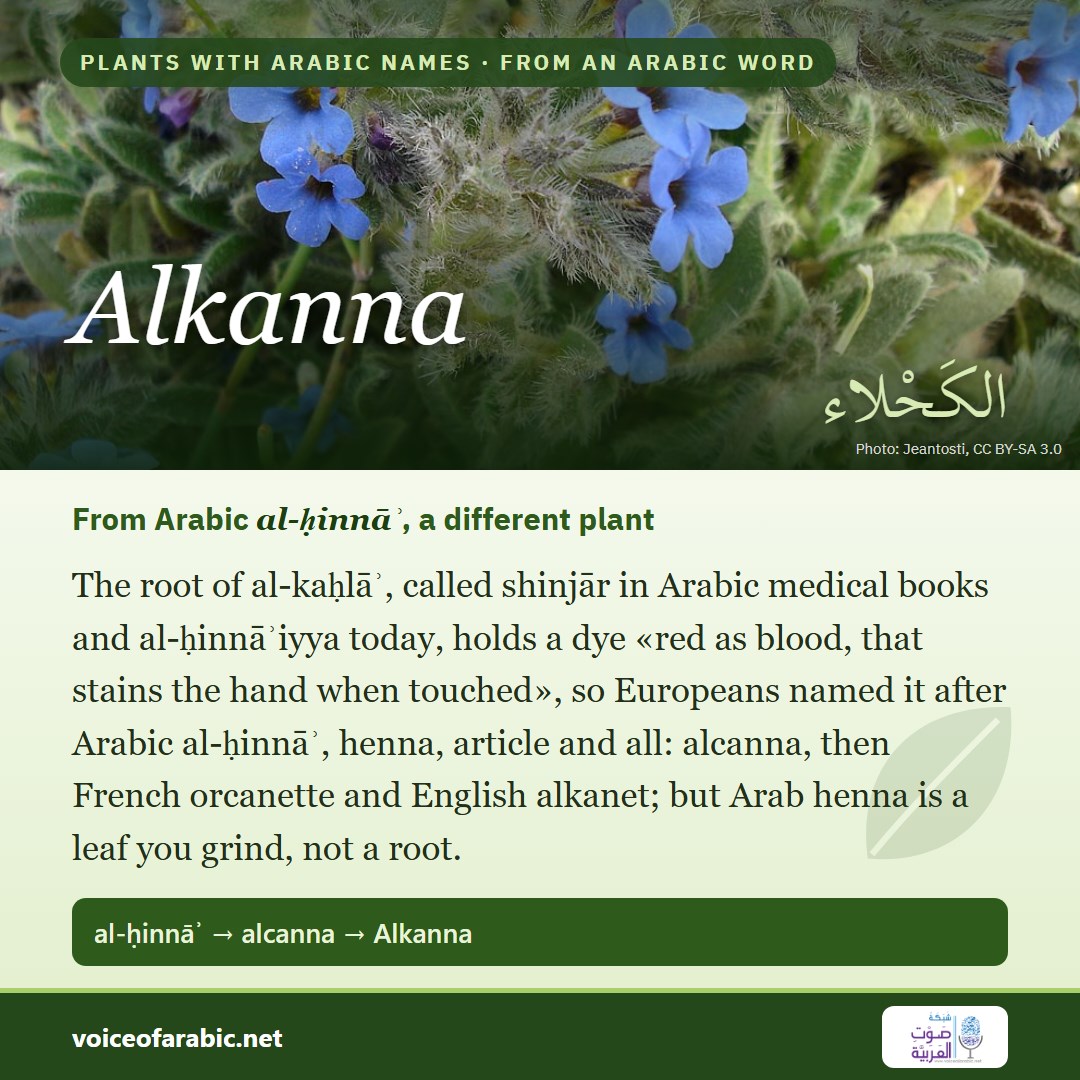
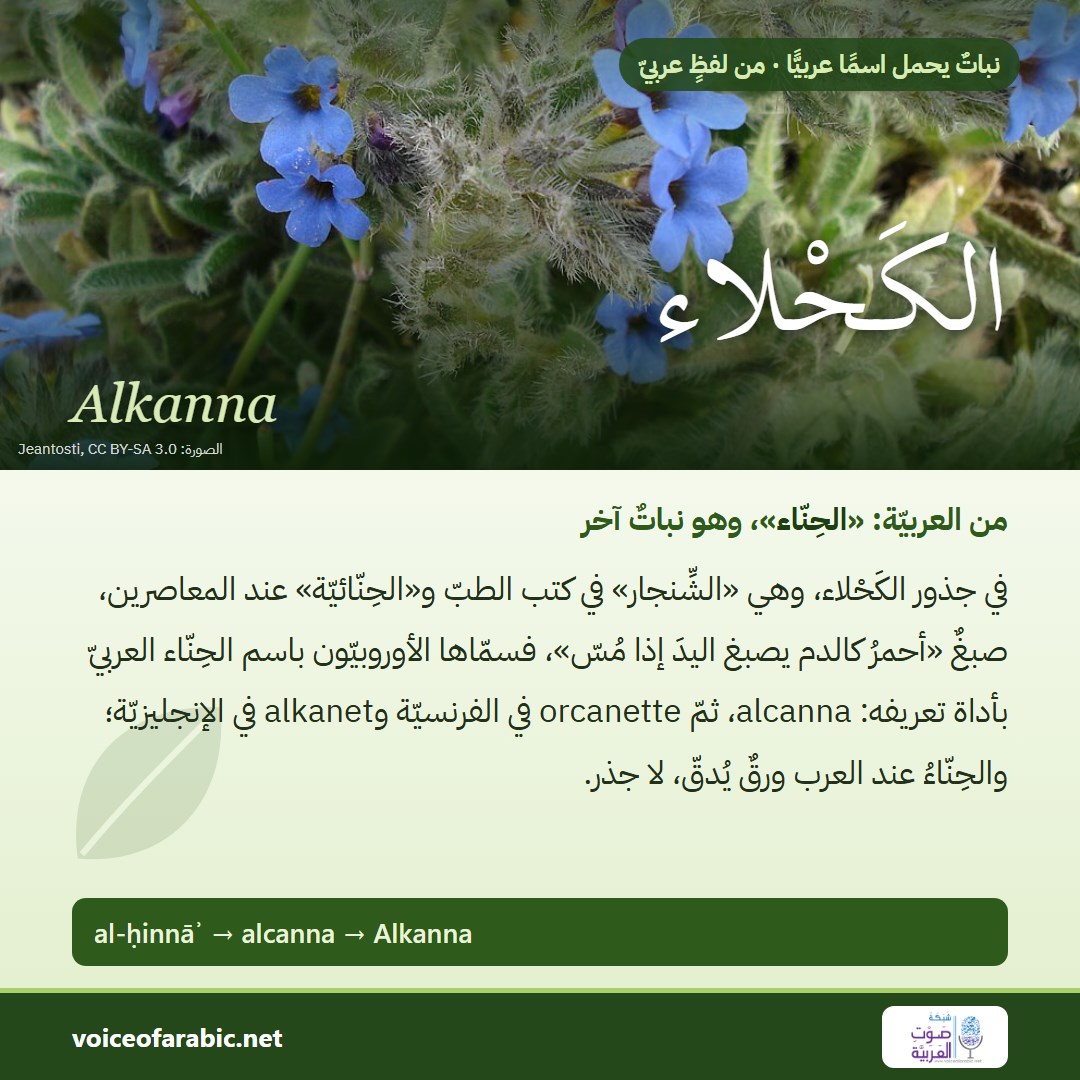
The root of al-kaḥlāʾ, called shinjār in Arabic medical books and al-ḥinnāʾiyya today, holds a dye «red as blood, that stains the hand when touched», so Europeans named it after Arabic al-ḥinnāʾ, henna, article and all: alcanna, then French orcanette and English alkanet; but Arab henna is a leaf you grind, not a root.
- Source of the name
- From an Arabic word
- From the Arabic word
- al-ḥinnāʾ, a different plant
- Genus
- Alkanna
- Species shown
- Alkanna tinctoria
«الشِّنْجارُ، بالكسر: مُعَرَّبُ شِنْكار، وهو خَسُّ الحِمارِ، ويُسَمَّى الكَحْلاءَ، والحُمَيْراءَ، ورِجْلَ الحَمَامَةِ، وهو نباتٌ لاصِقٌ بالأرضِ مُشَوِّكٌ، له أصلٌ في غِلَظِ إصْبَعٍ، أحْمَرُ كالدَّمِ، يَصْبُغُ اليَدَ إذا مُسَّ.»
Modern Arabic calls it al-ḥinnāʾiyya, after the very name botanists gave it (Arabic Wikipedia). Its best-known name in Arabic books is shinjār; Ibn Sina's Canon calls it «donkey's lettuce» whose stem «turns blood-red in summer, so that it stains the hand». Al-Qamus adds al-kaḥlāʾ, al-ḥumayrāʾ and «dove's foot»; colloquially it was also «ghoul's henna» (Dozy, Supplément).
Wadghiri (2/233): orcanette comes from Old French alcanne/alchane, 'taken directly from Arabic al-ḥinnāʾ, or through medieval scientific Latin alchanna', and entered English in 1548. It is a Mediterranean plant with dark red roots that yield a dye.
He adds (2/234) that the henna of the Arabs and of Arabic botany is a leaf ground to give the red henna colour, not a root: 'perhaps these roots were something else, likened to henna for the colour'.
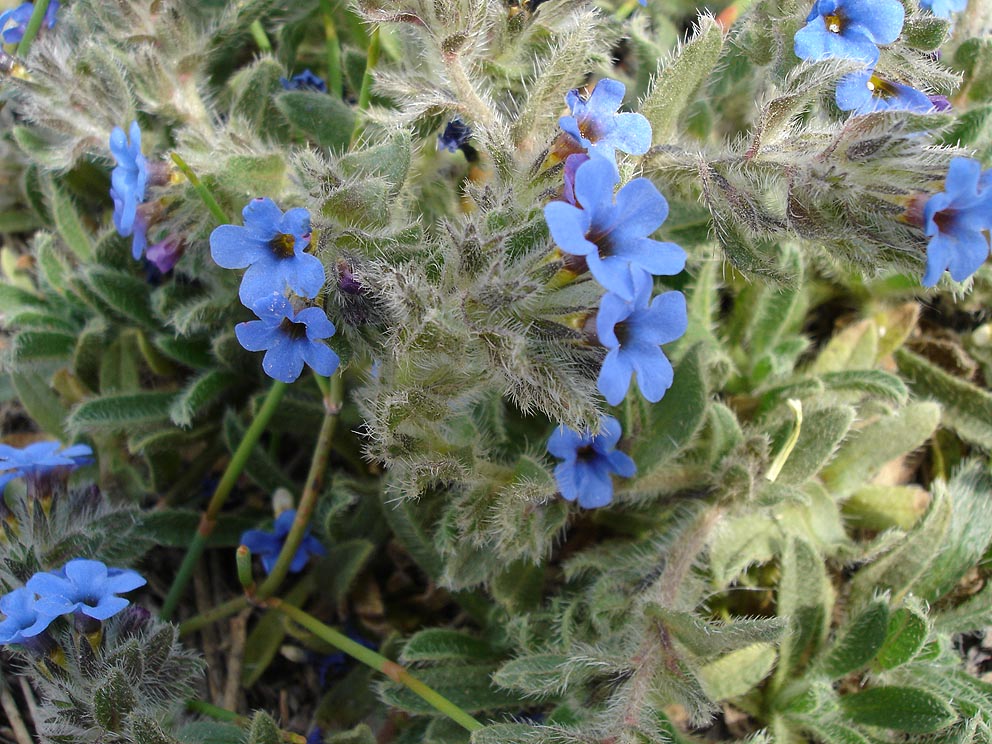
Jeantosti, CC BY-SA 3.0
Click a card to see it full size; each has a download button for sharing.
Sources
- الفيروزآباديّ، القاموس المحيط، ص٤٢٠
- ابن سينا، القانون في الطبّ ١/٦٧٤ (شنجار)
- دوزي، تكملة المعاجم العربيّة ٣/٣٤٢ (حنّا الغول)
- عبد العلي الودغيري، العربيّات المغتربات ١/٦٦، و٢/٢٣٣–٢٣٤
- Wiktionary: alkanet
- CNRTL (TLFi): orcanette
- ويكيبيديا: الحنّائيّة (Alkanna)، وفيها أسماؤها العربيّة
Spotted a mistake, or have something to add?
Your note comes to us only; it is not published here. We read it, and if it holds we correct the card.