What others said about Arabic Read in the original
On the vocabulary of the Arabs within their narrow desert world:
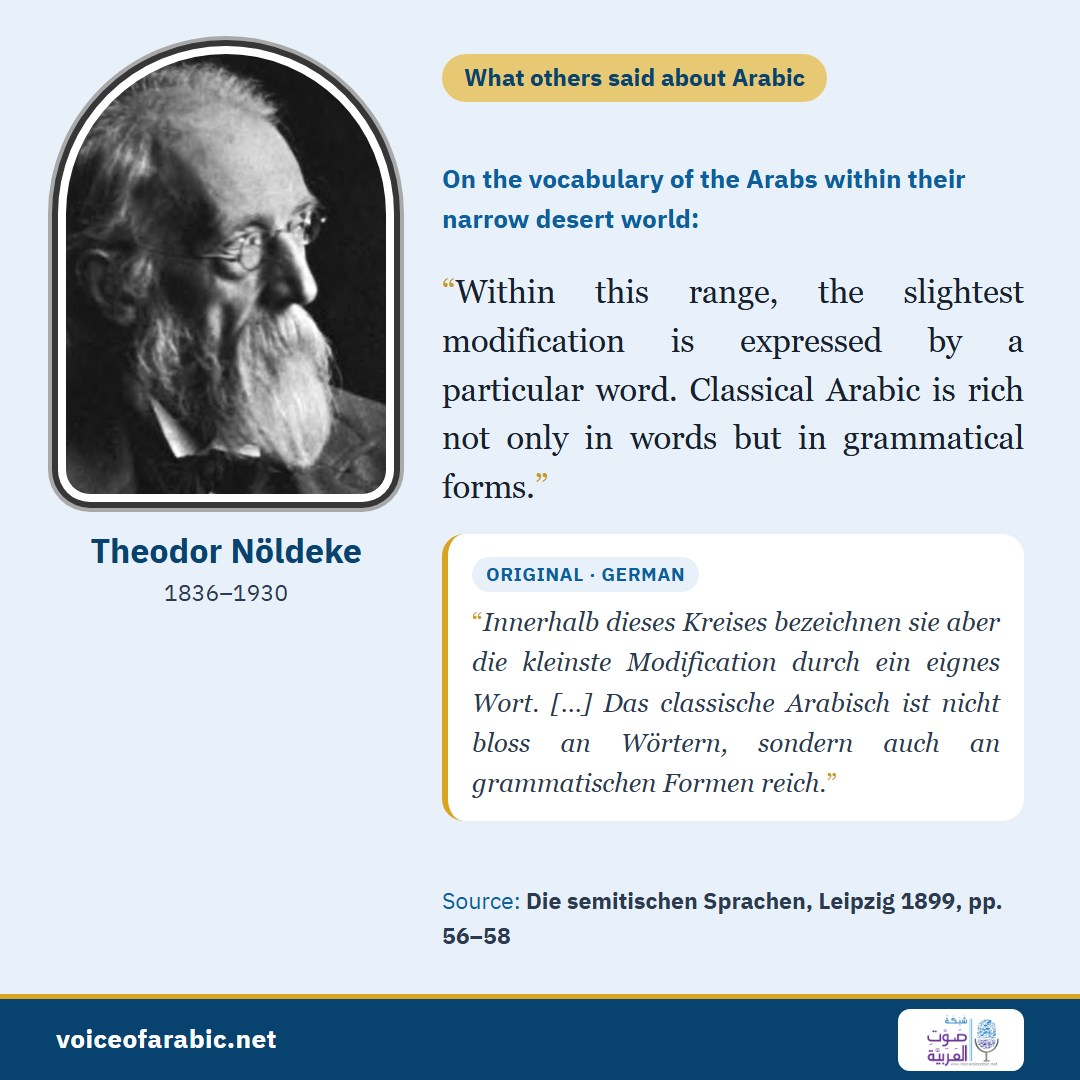
“The Koran and Islam raised Arabic to the position of one of the principal languages of the world. […] Through the industry of Arabic philologists we are able to make ourselves intimately acquainted with the system, and still more with the vocabulary of the language. […] We should be all the more disposed to admire the richness of the ancient Arabic vocabulary when we remember how simple are the conditions of life amongst the Arabs […] Within this range, however, the slightest modification is expressed by a particular word. […] Classical Arabic is rich not only in words but in grammatical forms.”
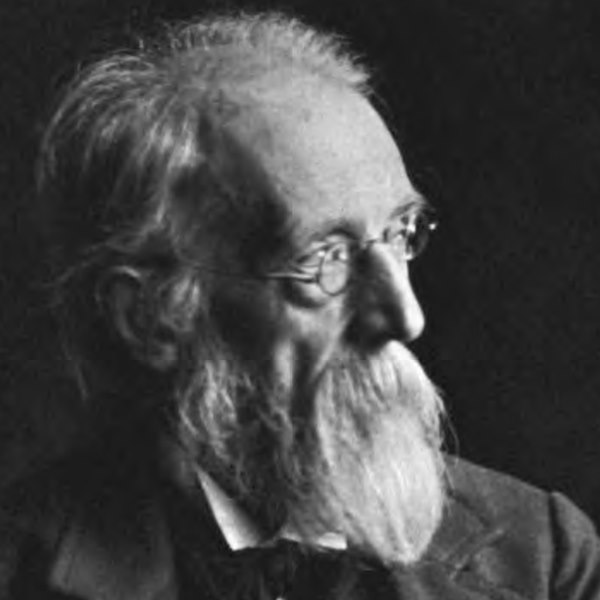
Theodor Nöldeke
1836–1930
Leading German Semitist (Strasbourg), author of the Geschichte des Qorāns.
Original text — German
Aber allerdings wurde erst durch den Korān und den Islām das Arabische eine Weltsprache. […] Der Fleiss der arabischen Philologen hat uns den Bau und noch mehr den Wortschatz der classischen Sprache in grosser Vollständigkeit vorgelegt. […] Den Wortreichthum des Altarabischen muss man um so mehr bewundern, wenn man bedenkt, dass die Lebensverhältnisse der Araber überaus einfach […] ihr Anschauungskreis mithin sehr beschränkt ist. Innerhalb dieses Kreises bezeichnen sie aber die kleinste Modification durch ein eignes Wort. […] Das classische Arabisch ist nicht bloss an Wörtern, sondern auch an grammatischen Formen reich.
In Arabic
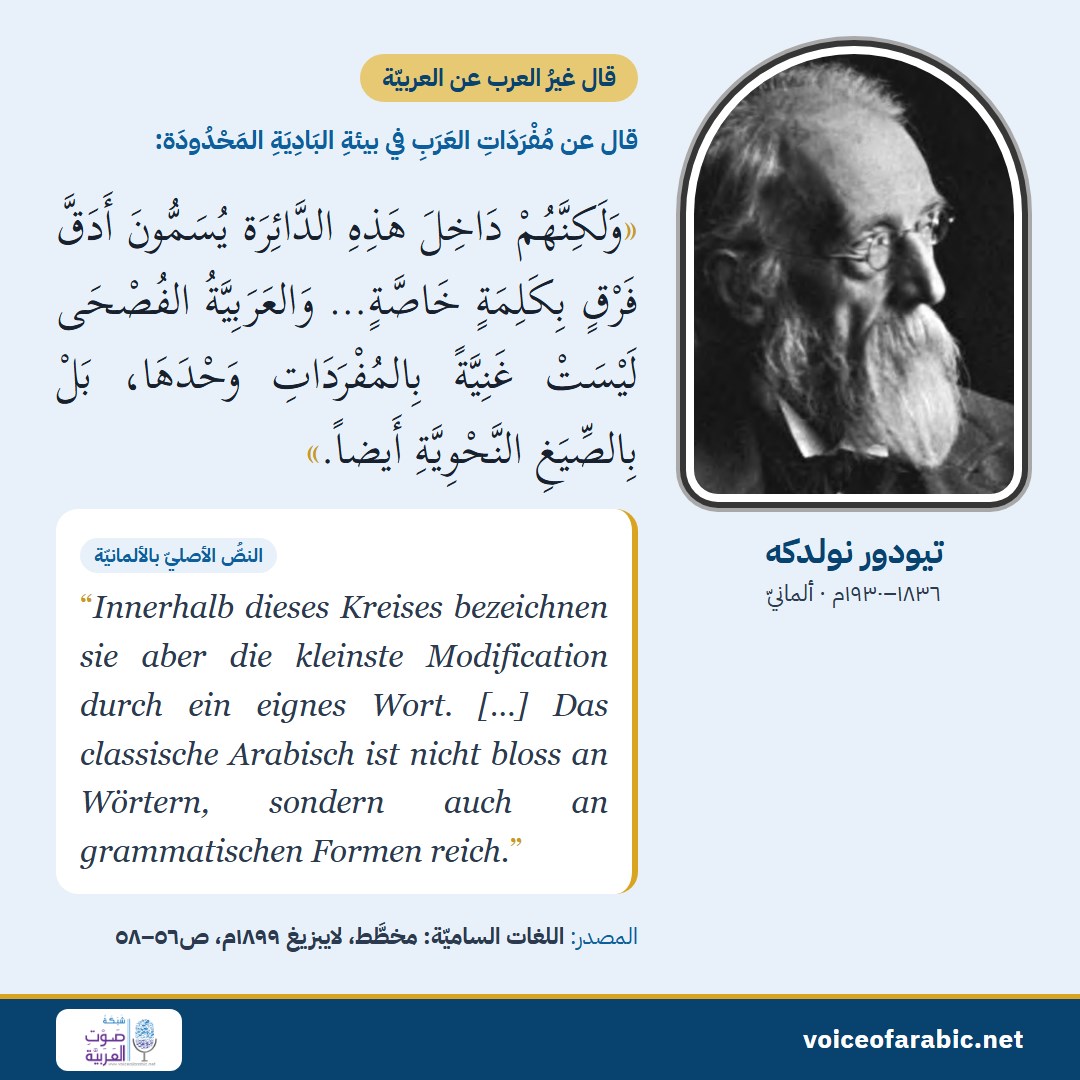
على أنّ العربيّةَ لم تصِر لغةً عالميّةً إلّا بالقرآن والإسلام… وقد حفظ لنا اجتهادُ اللغويّين العرب بناءَ اللغة الفصحى، ومعجمَها أكثرَ منه، تامّاً إلى حدٍّ كبير… وإنّ ثروةَ العربيّة القديمة في المفردات لأدعى إلى الإعجاب إذا تذكّرنا أنّ معيشةَ العرب بسيطةٌ غايةَ البساطة، وأنّ دائرةَ ما يرَونه لذلك محدودة؛ ولكنّهم داخلَ هذه الدائرة يُسمّون أدقَّ فرقٍ بكلمةٍ خاصّة… والعربيّةُ الفصحى ليست غنيّةً بالمفردات وحدَها، بل بالصيغ النحويّة أيضاً.
Source
Die semitischen Sprachen. Eine Skizze, Leipzig: Chr. Herm. Tauchnitz, 1899, p. 56–58
The English text is the author's own: Encyclopædia Britannica, 11th ed. (1911), vol. 24, art. "Semitic Languages", p. 627 — Nöldeke's own English version.
The version in circulation
إنّ اللغة العربيّة لم تصِر حقّاً عالميّةً إلّا بسبب القرآن والإسلام، وقد وضع أمامنا علماءُ اللغة العرب باجتهادهم أبنيةَ اللغة الكلاسيكيّة، وكذلك مفرداتها في حالة كمالٍ تامّ…
Usually cited from: نذير حمدان، اللغة العربيّة، ص١٣٣
How it differs from the original: The circulated version merges several passages, turns "in great completeness" into "complete perfection", and omits Nöldeke's reservations about the Arab philologists and the swollen lexicon.
Nöldeke adds reservations on the same pages; the praise published here is his own wording.
Tap a card to see it full size; each has a download button below it for sharing.