What others said about Arabic Read in the original
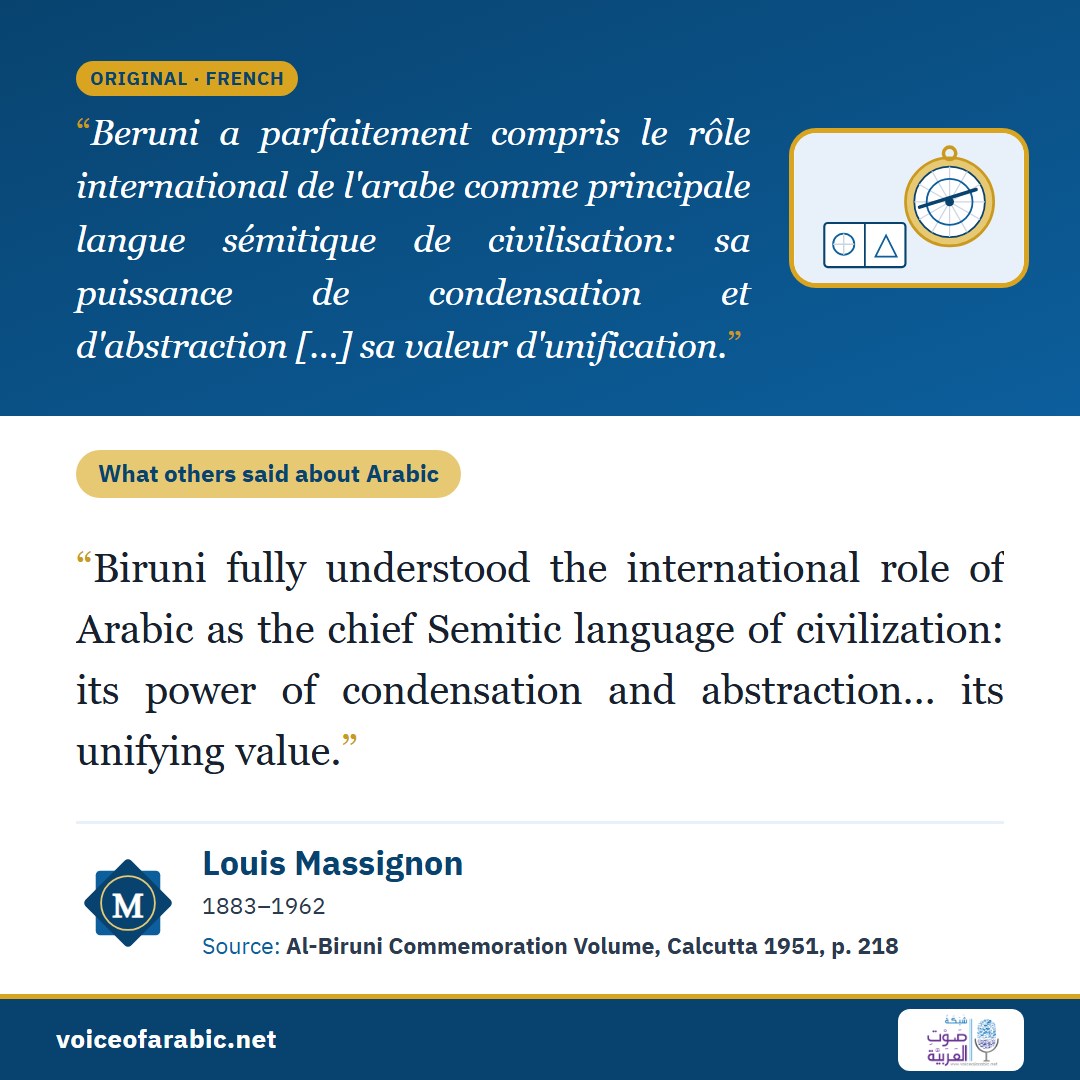
“Whereas Razi was rather severe on Arabic grammar, Biruni admires the power of abstraction of the Arabic language: for him, international science must be expressed in Arabic. […] Biruni fully understood the international role of Arabic as the chief Semitic language of civilization: its power of condensation and abstraction, its internal syntax by meaningful infixes rather than attached affixes; its unifying value, its dominating morphology.”
Louis Massignon
1883–1962
French Islamicist, Collège de France, member of the Arabic Language Academy in Cairo.
Original text — French
Alors que Razi s'est montré assez sévère pour la grammaire arabe, Beruni admire la puissance d'abstraction de la langue arabe: pour lui, la science internationale doit s'exprimer en arabe. […] Beruni a parfaitement compris le rôle international de l'arabe comme principale langue sémitique de civilisation: sa puissance de condensation et d'abstraction, sa syntaxe interne par infixes significatifs, non par affixes accolés; sa valeur d'unification, sa morphologie dominatrice.
In Arabic
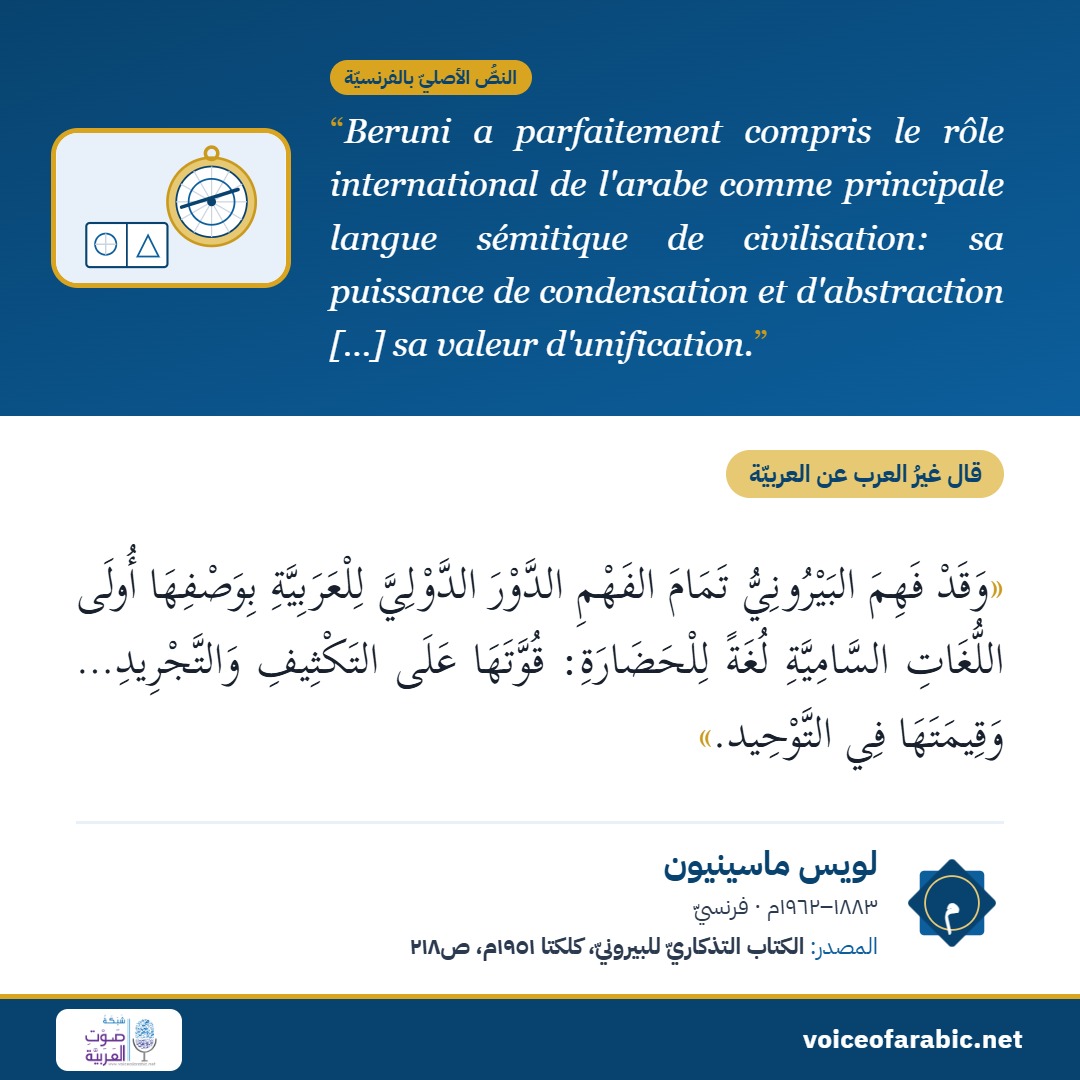
وإذا كان الرازيّ قد قسا على النحو العربيّ، فإنّ البيرونيّ يُعجَب بقدرة العربيّة على التجريد: فالعلمُ الدوليُّ عنده ينبغي أن يُكتب بالعربيّة… وقد فهم البيرونيُّ تمامَ الفهم الدورَ الدوليَّ للعربيّة بوصفها أُولى اللغات الساميّة لغةً للحضارة: قوّتَها على التكثيف والتجريد، وبناءَها الداخليَّ بالزوائد الدالّة في جوف الكلمة لا باللواصق المُلحَقة بها، وقيمتَها في التوحيد، وصرفَها المهيمن.
Source
« Al-Beruni et la valeur internationale de la science arabe », Al-Biruni Commemoration Volume, Calcutta: Iran Society, 1951, p. 217–218
The English translation is Voice of Arabic's, made from the original.
The version in circulation
استطاعت العربيّة أن تبرز طاقة الساميّين في معالجة التعبير عن أدقّ خلجات الفكر… والعربيّة من أنقى اللغات… ثمّ ذلك الإيجاز الذي تتّسم به اللغة العربيّة والذي لا شبيه له في سائر لغات العالم والذي يُعدّ معجزةً لغويّةً كما قال البيروني.
Usually cited from: أنور الجندي، الفصحى لغة القرآن، ص٣٠١–٣٠٢
How it differs from the original: The circulated passage was not found in Massignon's writings and looks compiled from several of his themes; the text above is his, verbatim, from a scanned page.
Massignon also called Arabic "the purest of the Semitic languages" in a 1957 essay; no scan of it was found, so it is not used here.
Tap a card to see it full size; each has a download button below it for sharing.