What others said about Arabic Read in the original
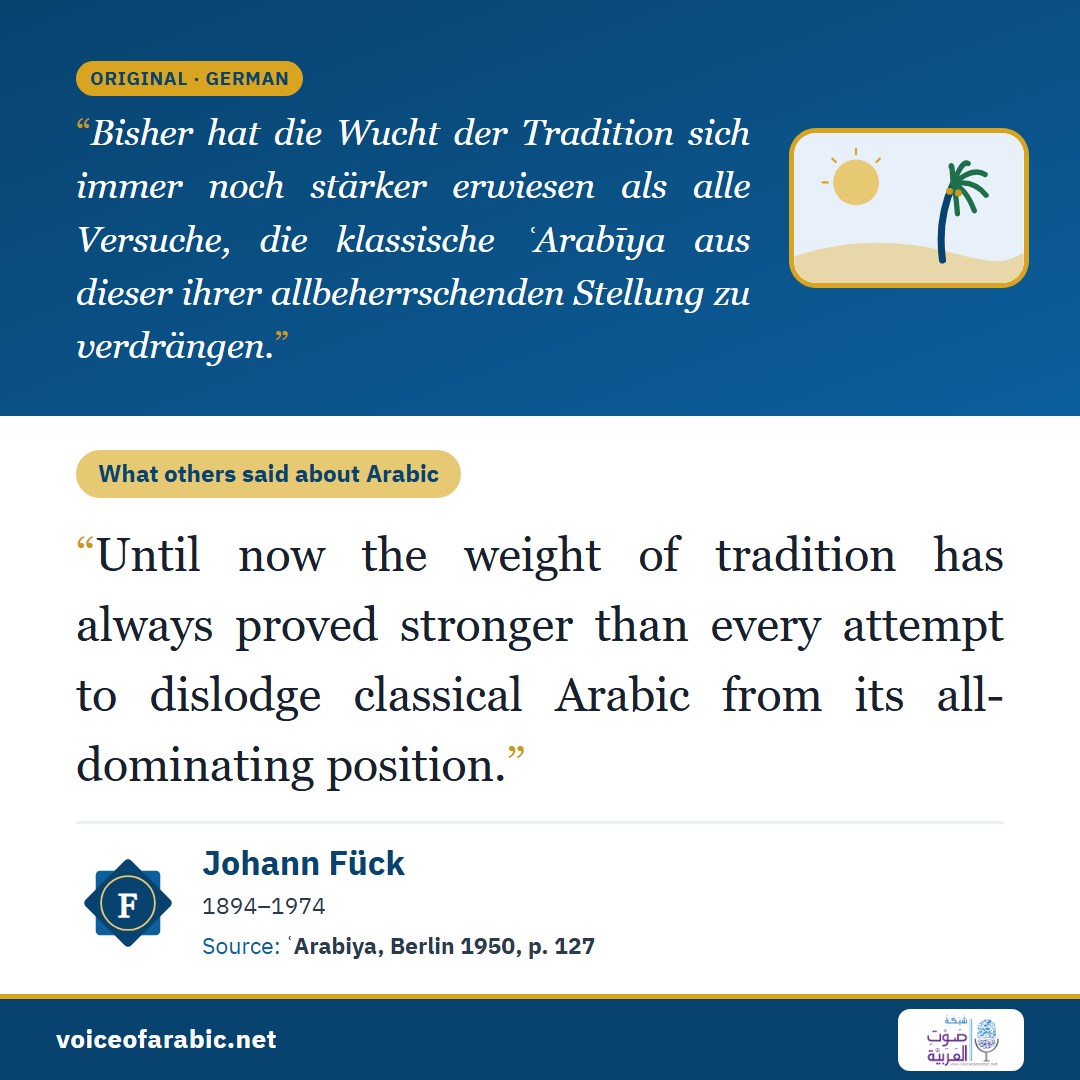
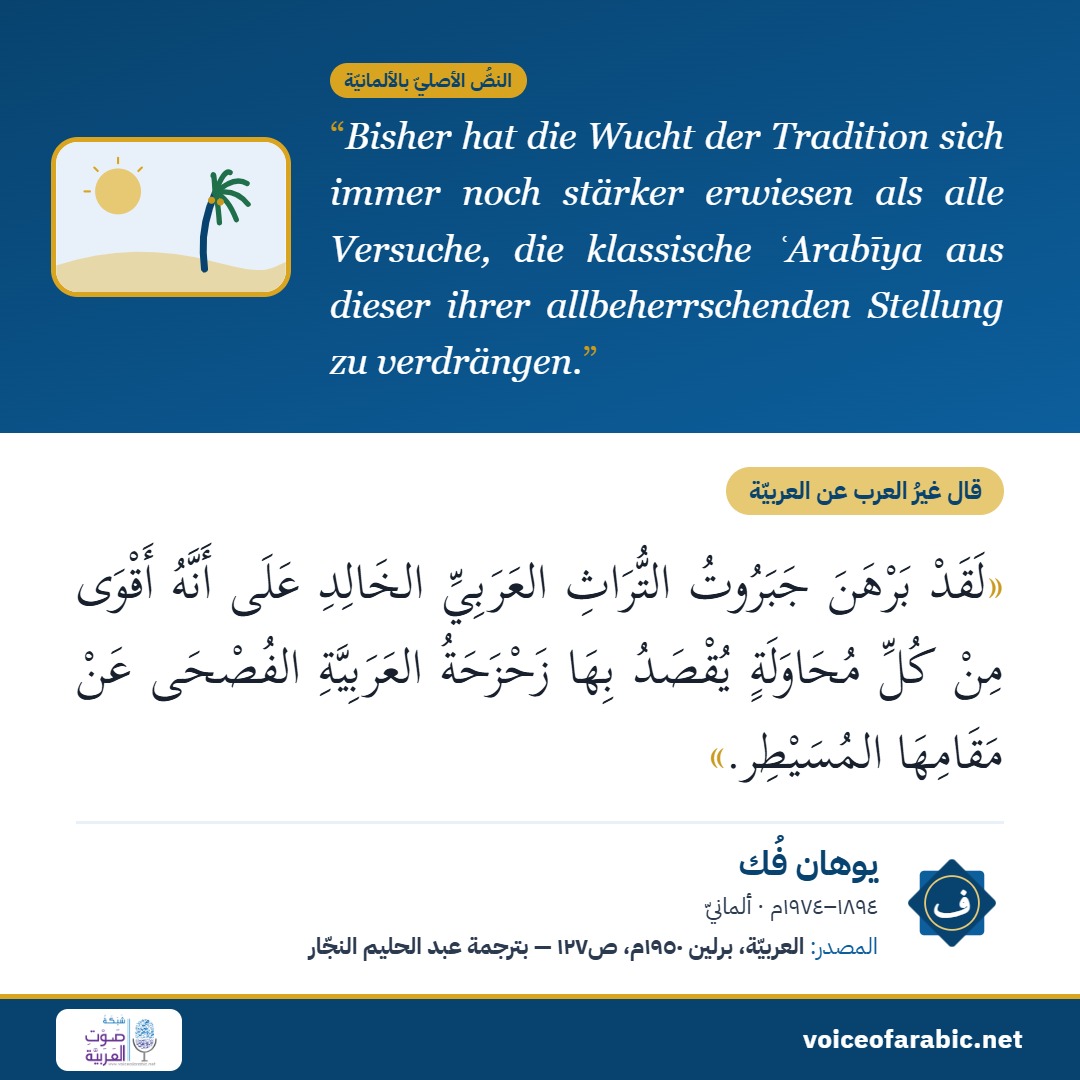
“Until now classical ʿArabīya has owed its leading position essentially to the fact that, in all Arab countries and far beyond, it served as the linguistic symbol of the cultural unity of the Islamic world. Until now the weight of tradition has always proved stronger than every attempt to dislodge classical ʿArabīya from this all-dominating position. Unless all expectations deceive, it will hold this position in the future too, as the language of Islamic culture, so long as there is an Islamic cultural unity.”
Johann Fück
1894–1974
German Arabist, professor at Halle, historian of Arabic style.
Original text — German
Bisher hat die klassische ʿArabīya ihre führende Stellung wesentlich dem Umstand verdankt, daß sie in allen arabischen Ländern und weit darüber hinaus als sprachliches Symbol der kulturellen Einheit der Islamwelt diente. Bisher hat die Wucht der Tradition sich immer noch stärker erwiesen als alle Versuche, die klassische ʿArabīya aus dieser ihrer allbeherrschenden Stellung zu verdrängen. Wenn nicht alle Erwartungen täuschen, wird sie auch in Zukunft diese Stellung als islamische Kultursprache behaupten, so lange es eine islamische Kultureinheit gibt.
In Arabic
إنّ العربيّة الفصحى لَتَدين حتّى يومنا هذا بمركزها العالميّ أساساً لهذه الحقيقة الثابتة، وهي أنّها قد قامت في جميع البلدان العربيّة والإسلاميّة رمزاً لغويّاً لوحدة عالم الإسلام في الثقافة والمدنيّة. لقد برهن جبروتُ التراث العربيّ الخالد على أنّه أقوى من كلّ محاولةٍ يُقصد بها زحزحةُ العربيّة الفصحى عن مقامها المسيطِر، وإذا صدَقت البوادرُ ولم تُخطئ الدلائلُ فستحتفظ العربيّةُ بهذا المقام العتيد من حيث هي لغةُ المدنيّة الإسلاميّة، ما بقيت هناك مدنيّةٌ إسلاميّة.
Source
ʿArabiya. Untersuchungen zur arabischen Sprach- und Stilgeschichte, Berlin: Akademie-Verlag, 1950, p. 127
The English translation is Voice of Arabic's, made from the original.
The version in circulation
…فستحتفظ العربيّة بهذا المقام العتيد من حيث هي لغة المدنيّة الإسلاميّة.
Usually cited from: أنور الجندي، الفصحى لغة القرآن، ص٣٠٢
How it differs from the original: This is al-Najjar's published translation; the circulated version drops Fück's closing condition, "so long as there is an Islamic cultural unity".
Tap a card to see it full size; each has a download button below it for sharing.