Words Arabic Took In
kanōn
القانون
qānūn
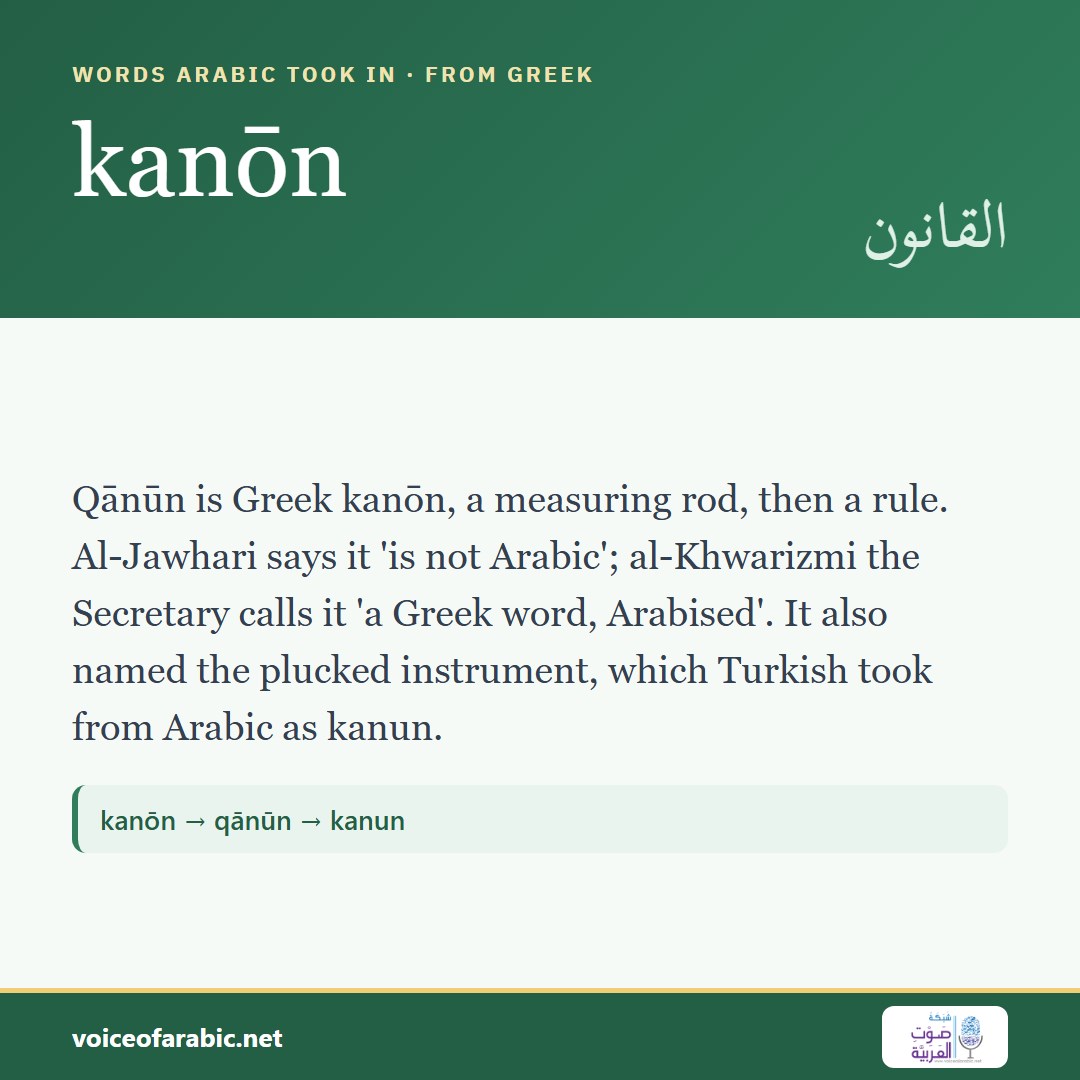
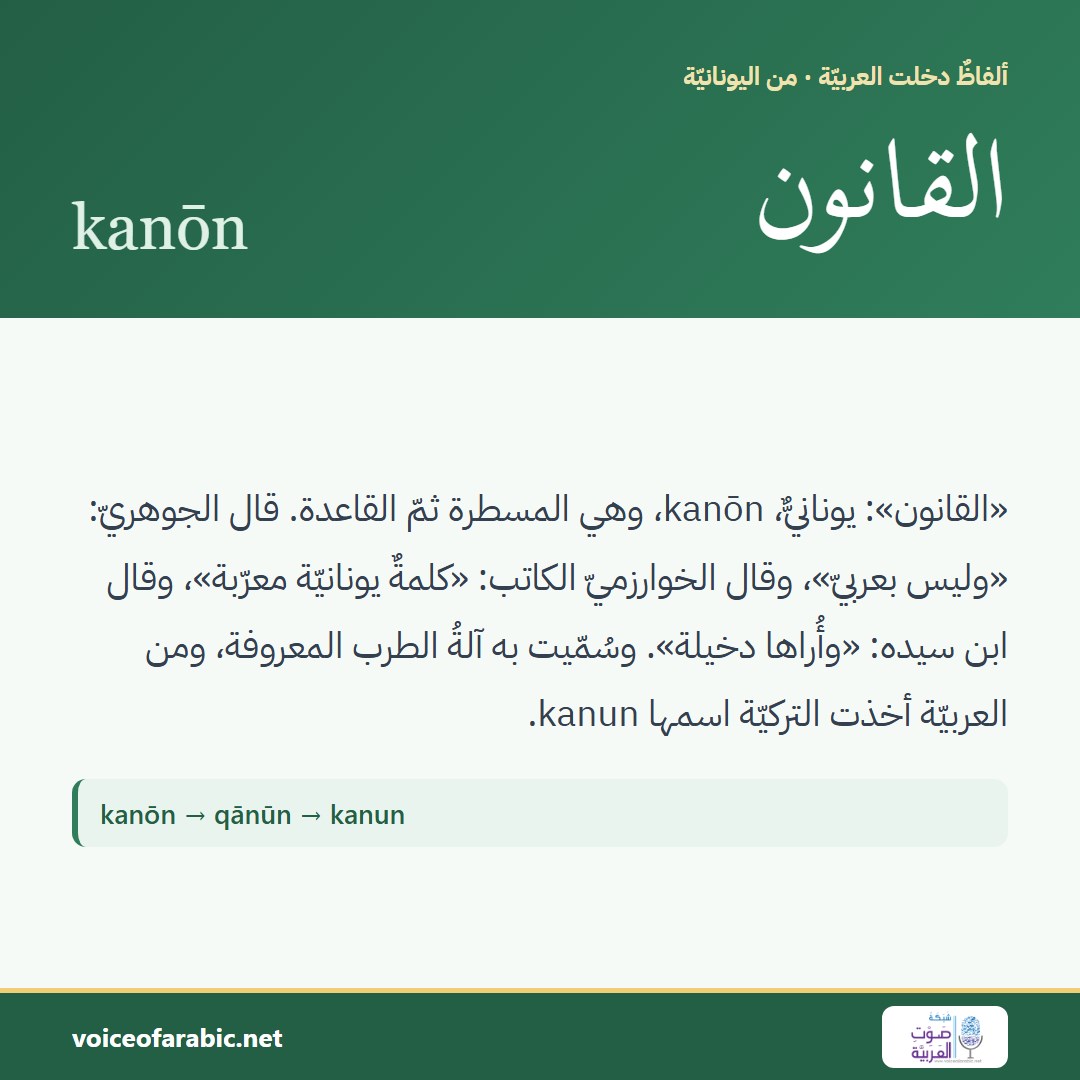
Qānūn is Greek kanōn, a measuring rod, then a rule. Al-Jawhari says it 'is not Arabic'; al-Khwarizmi the Secretary calls it 'a Greek word, Arabised'. It also named the plucked instrument, which Turkish took from Arabic as kanun.
- Came
- From Greek
- Original meaning
- measuring rod, then rule
- Meaning in Arabic
- a rule; the plucked instrument
«قانونُ الخراج أصلُه الذي يُرجع إليه وتُبنى الجبايةُ عليه، وهي كلمةٌ يونانيّة معرّبة.»
European canon is a sister of qānūn: it came from Greek through Latin, not through Arabic. The American Heritage Dictionary holds Greek kanōn itself to be of Semitic origin, from a word for 'reed'.
The earliest mention we found of the instrument is al-Shaqundi (d. 1232) on the instruments of Seville, quoted in al-Maqqari's Nafh al-Tib 3/213, then Ibn Khaldun's Muqaddima.
Al-Zabidi notes that some called it Greek and some Persian. We found no early source crediting al-Farabi with inventing the instrument.
Click a card to see it full size; each has a download button for sharing.
Sources
Spotted a mistake, or have something to add?
Your note comes to us only; it is not published here. We read it, and if it holds we correct the card.