Words Arabic Took In
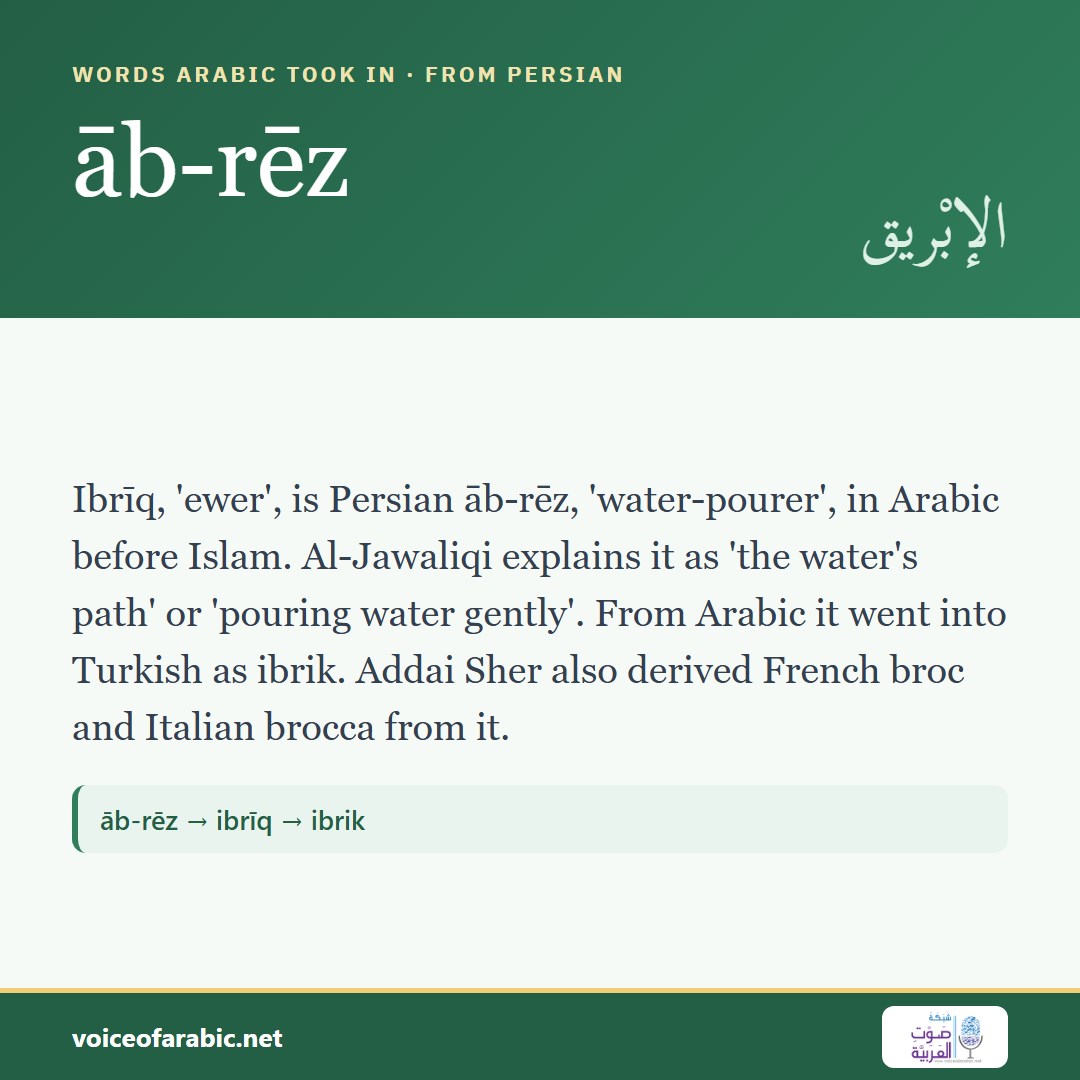
āb-rēz
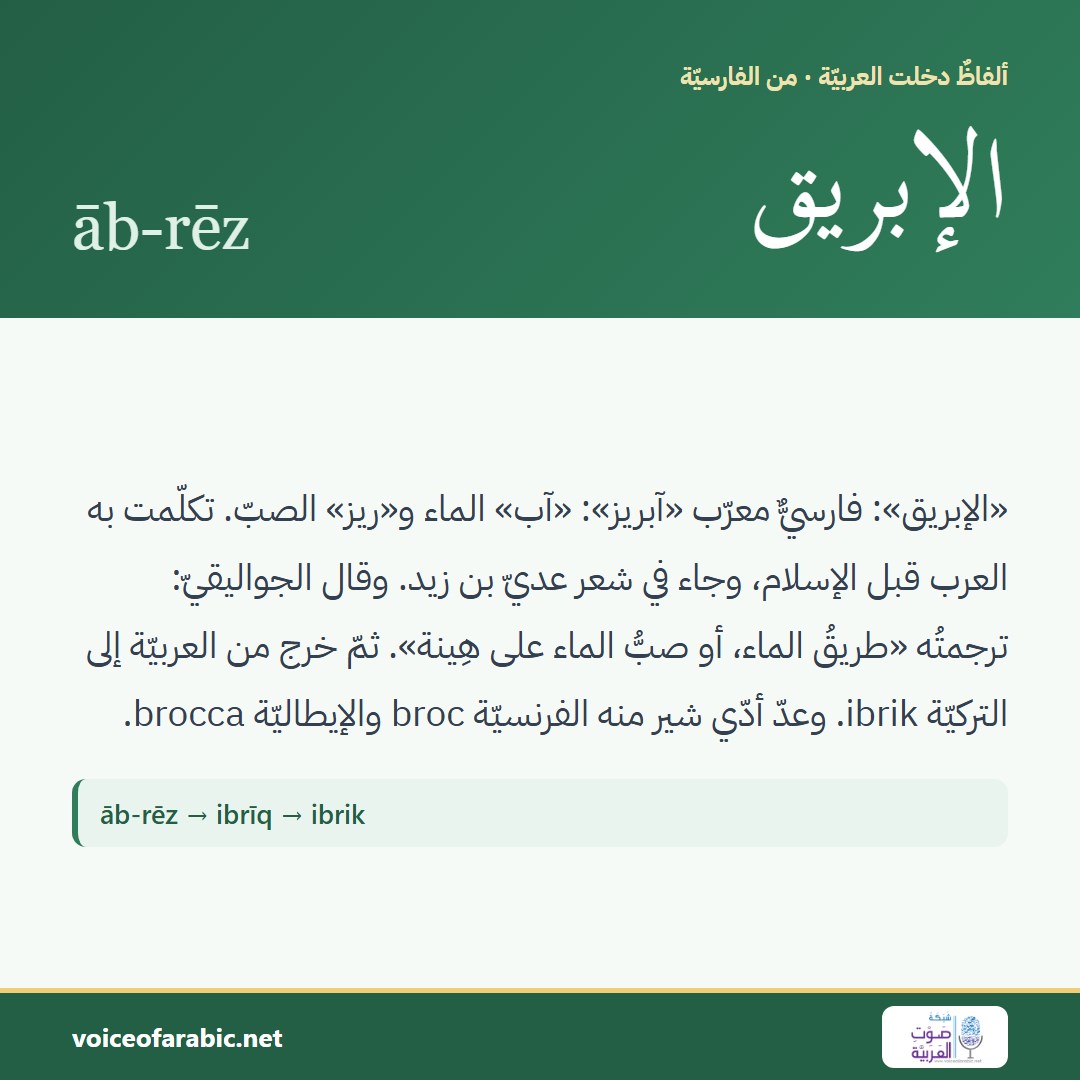
الإبْريق
ibrīq
Ibrīq, 'ewer', is Persian āb-rēz, 'water-pourer', in Arabic before Islam. Al-Jawaliqi explains it as 'the water's path' or 'pouring water gently'. From Arabic it went into Turkish as ibrik. Addai Sher also derived French broc and Italian brocca from it.
- Came
- From Persian
- Original meaning
- water-pourer
- Meaning in Arabic
- a ewer
«و«الإبريق»: فارسيٌّ معرّب، وترجمتُه من الفارسيّة أحدُ شيئين: إمّا أن يكون طريقَ الماء، أو صبَّ الماء على هِينة. وقد تكلّمت به العربُ قديمًا، قال عديُّ بن زيد العِباديّ: ودعا بالصَّبوح يومًا فجاءت … قَينةٌ في يمينها إبريقُ»
A Qur'anic word (56:18). On Qur'anic words of foreign origin there are two views; Abu 'Ubayd's reconciliation is on the firdaws page.
Larousse rejects Addai Sher's derivation: it takes broc from Old Provençal, from Greek or Latin, with no Arabic.
English ibrik, a long-spouted brass pitcher, came from Turkish; only Wiktionary records this step.
Click a card to see it full size; each has a download button for sharing.
Sources
- الجواليقيّ، المعرّب، تحقيق أحمد شاكر، ص٢٣
- ابن دريد، جمهرة اللغة ٢/١١٩٢
- ابن منظور، لسان العرب ١٠/١٧
- الثعالبيّ، فقه اللغة ص٢٠٨
- أدّي شير، كتاب الألفاظ الفارسيّة المعرّبة ص٦
- Nişanyan Sözlük: ibrik
- Larousse: broc
Spotted a mistake, or have something to add?
Your note comes to us only; it is not published here. We read it, and if it holds we correct the card.