What they said about Arabic From the author's own Arabic
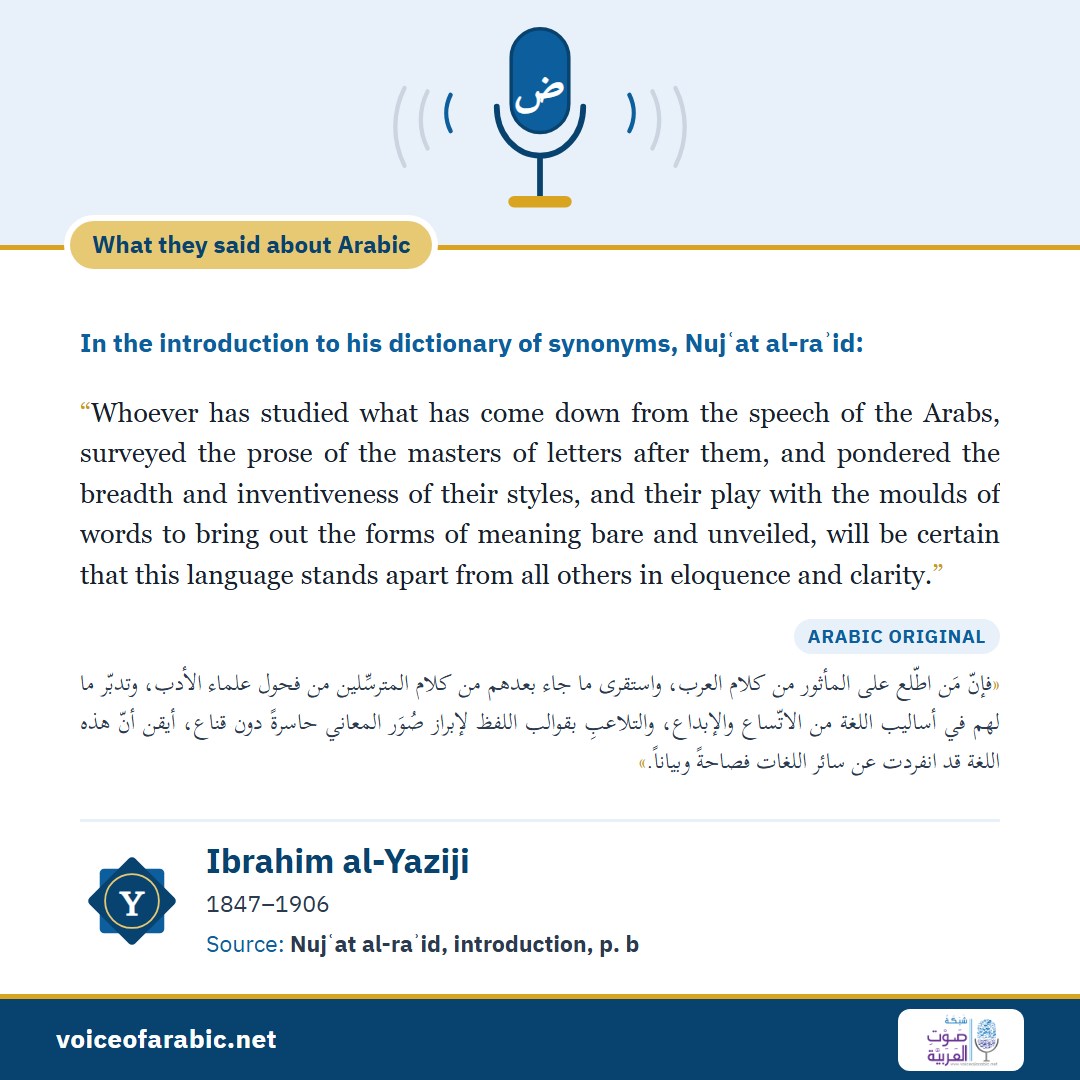
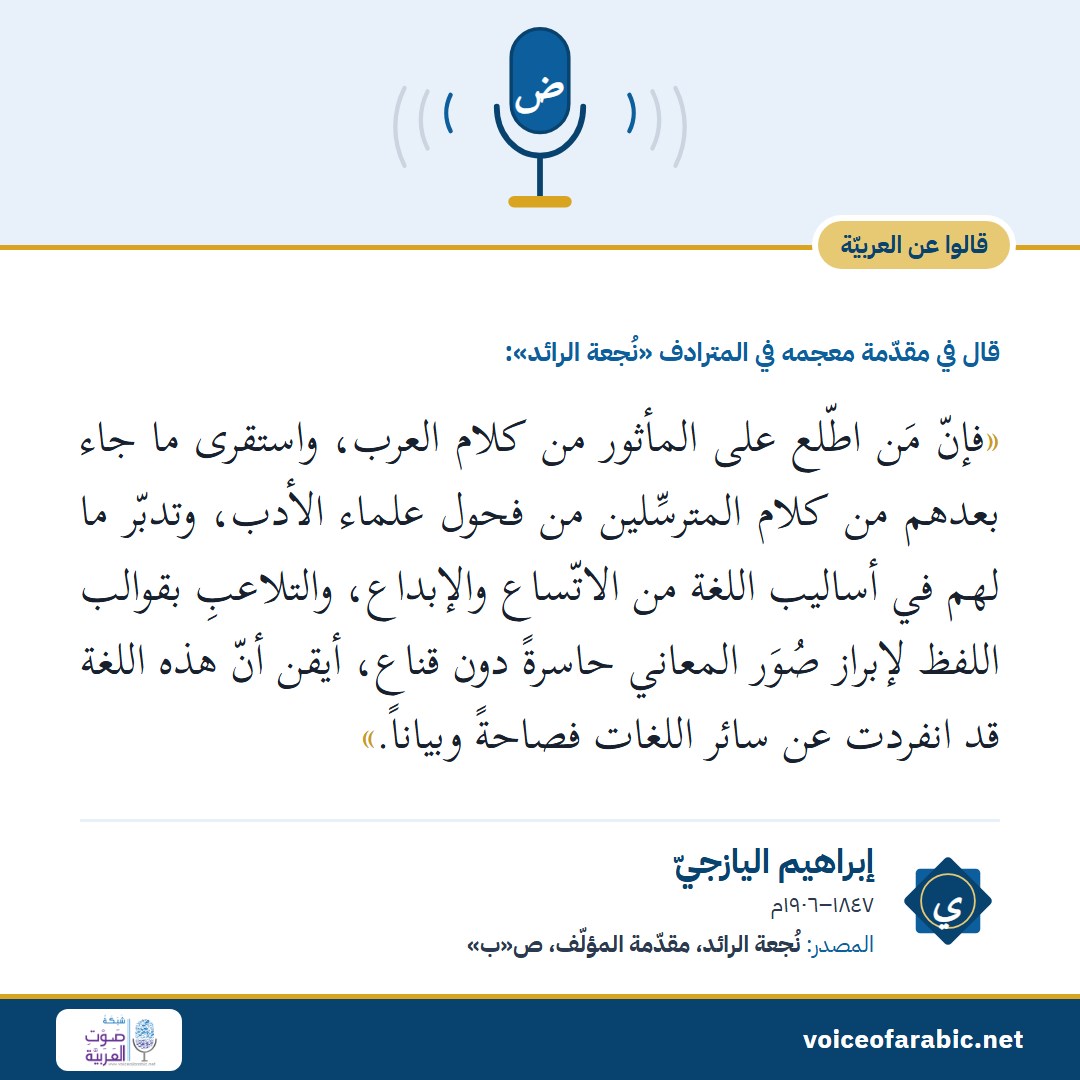
In the introduction to his dictionary of synonyms, Nujʿat al-raʾid:
“Whoever has studied what has come down from the speech of the Arabs, surveyed the prose of the masters of letters after them, and pondered the breadth and inventiveness of their styles, and their play with the moulds of words to bring out the forms of meaning bare and unveiled, will be certain that this language stands apart from all others in eloquence and clarity, just as its masters stand apart in the ways of rhetoric, in range and in variety… The merit in all this belongs to the language: it is the mould in which meanings take on their shapes, and the garment in which they find their full adornment and beauty.”
Ibrahim al-Yaziji
1847–1906
Lebanese philologist and man of letters of the Nahda, editor of al-Bayan and al-Diyaʾ, who cut the moulds of Arabic type for the presses himself.
The Arabic original
فإنّ مَن اطّلع على المأثور من كلام العرب، واستقرى ما جاء بعدهم من كلام المترسِّلين من فحول علماء الأدب، وتدبّر ما لهم في أساليب اللغة من الاتّساع والإبداع، والتلاعبِ بقوالب اللفظ لإبراز صُوَر المعاني حاسرةً دون قناع، أيقن أنّ هذه اللغة قد انفردت عن سائر اللغات فصاحةً وبياناً، كما انفرد أربابُها في مذاهب البلاغة تبسُّطاً وافتناناً… وإنّما الفضلُ في ذلك كلّه للّغة؛ إذ هي القالَبُ الذي به تَلبَس المعاني أشكالَها، واللباسُ الذي تستوفي به زينتَها وجمالَها.
Source
Ibrahim al-Yaziji, Nujʿat al-raʾid wa-shirʿat al-warid fi l-mutaradif wa-l-mutawarid, Cairo: Matbaʿat al-Maʿarif, 1905, author’s introduction, pp. b and d
The English translation is Voice of Arabic's, made from the original.
The first passage is on p. b, the second on p. d of the introduction, whose pages are lettered.
Tap a card to see it full size; each has a download button below it for sharing.
Spotted a mistake, or have something to add?
Your note comes to us only; it is not published here. We read it, and if it holds we correct the card.