What others said about Arabic Read in the original
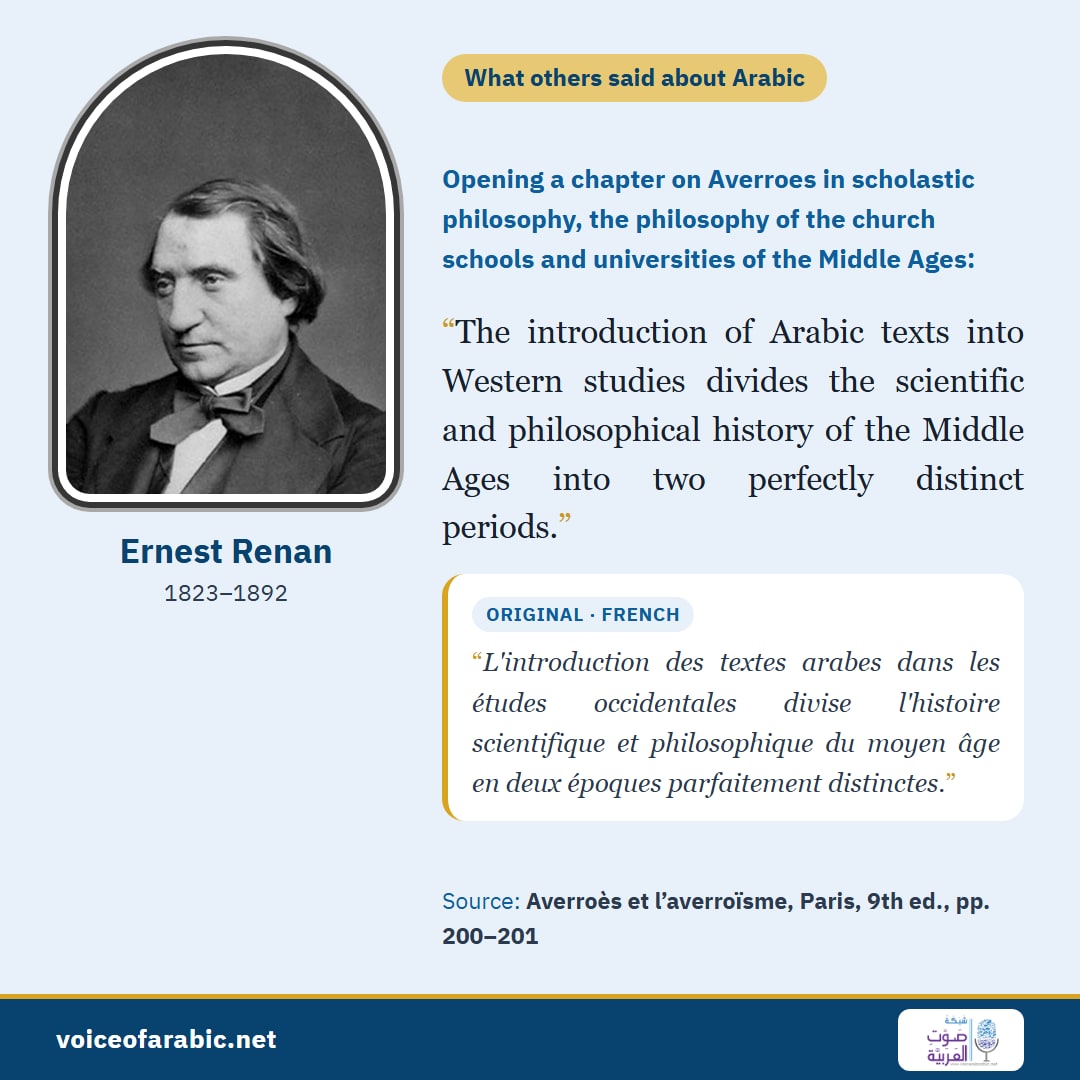
Opening a chapter on Averroes in scholastic philosophy, the philosophy of the church schools and universities of the Middle Ages:
“The introduction of Arabic texts into Western studies divides the scientific and philosophical history of the Middle Ages into two perfectly distinct periods. In the first, the human mind has, to satisfy its curiosity, only the meagre remains of the teaching of the Roman schools, heaped up in the compilations of Martianus Capella, Bede and Isidore, and in a few technical treatises that their everyday usefulness saved from oblivion. In the second, it is again ancient science that returns to the West, but more complete this time, in the Arabic commentaries or in the original works of Greek science, for which the Romans had preferred abridgements.”
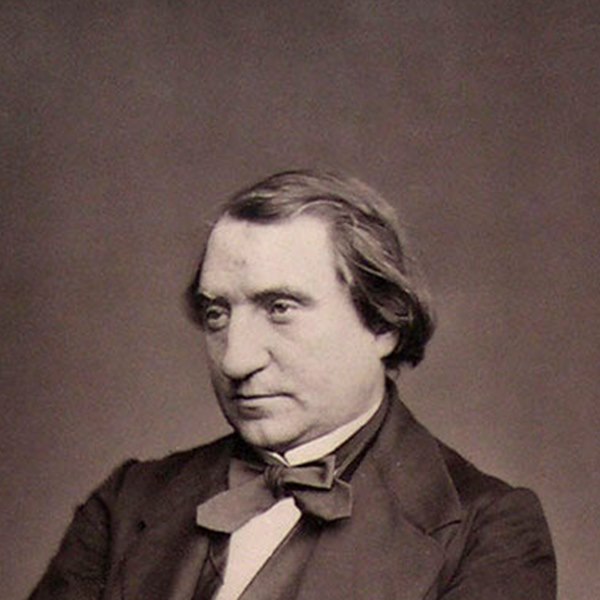
Ernest Renan
1823–1892
French philologist and historian of religion, professor of Hebrew at the Collège de France.
Original text — French
L'introduction des textes arabes dans les études occidentales divise l'histoire scientifique et philosophique du moyen âge en deux époques parfaitement distinctes. Dans la première, l'esprit humain n'a, pour satisfaire sa curiosité, que les maigres débris de l'enseignement des écoles romaines, entassés dans les compilations de Martien Capella, de Bède, d'Isidore, et dans quelques traités techniques, que leur caractère usuel sauva de l'oubli. Dans la seconde, c'est encore la science antique qui revient à l'Occident, mais plus complète cette fois, dans les commentaires arabes ou les ouvrages originaux de la science grecque, auxquels les Romains avaient préféré des abrégés.
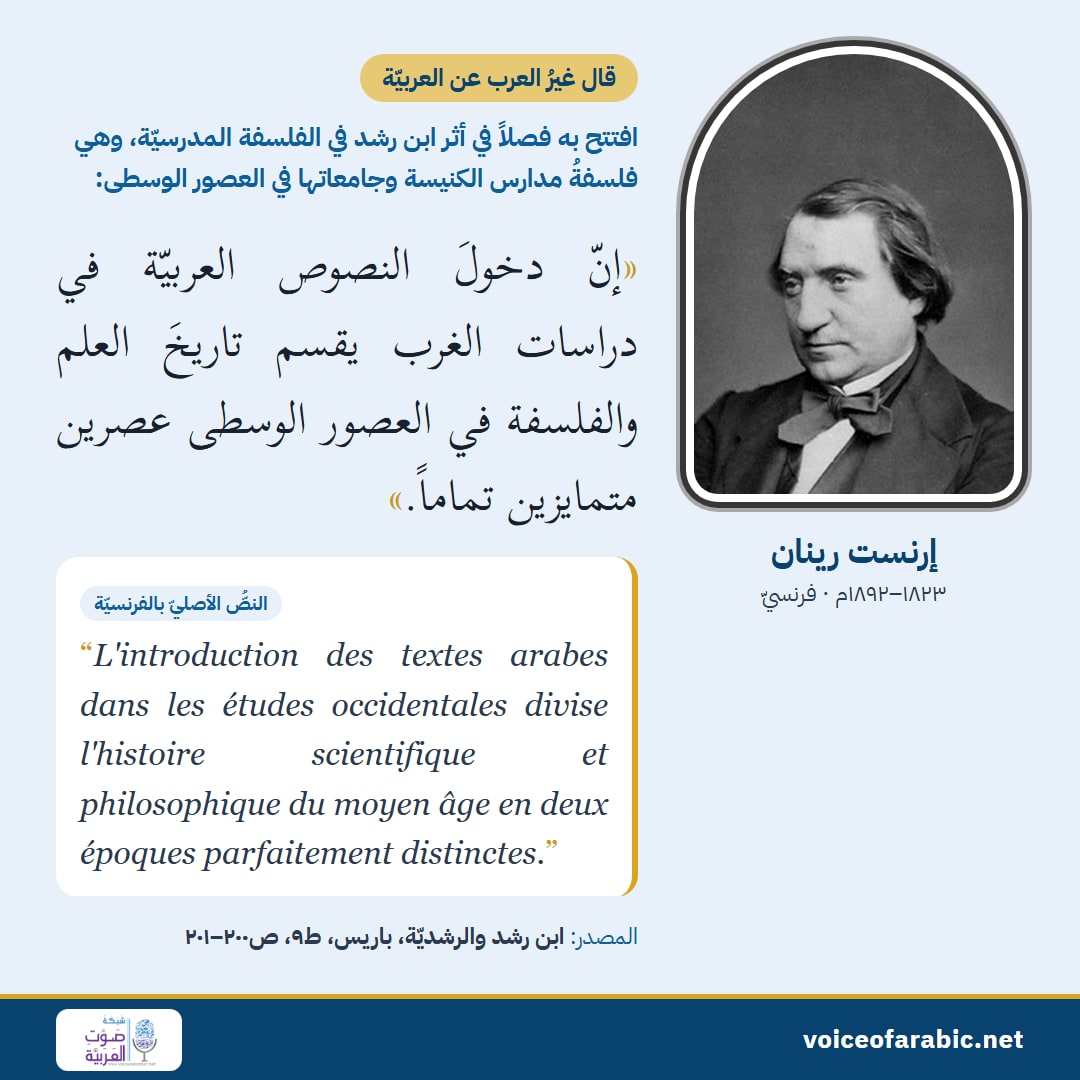
In Arabic
إنّ دخولَ النصوص العربيّة في دراسات الغرب يقسم تاريخَ العلم والفلسفة في العصور الوسطى عصرين متمايزين تماماً. ففي الأوّل لا يجد العقلُ البشريّ ما يُشبع فضولَه إلّا الفُتاتَ الهزيل من تعليم المدارس الرومانيّة، مكدَّساً في مجاميع مارتيانوس كابيلّا وبيدا وإيسيدور، وفي بعض الرسائل الفنّيّة التي أنقذتها من النسيان حاجةُ الناس إليها. وفي الثاني يعود العلمُ القديم نفسُه إلى الغرب، ولكنّه أكملُ هذه المرّة، في الشروح العربيّة أو في الكتب الأصليّة للعلم اليونانيّ، التي آثر الرومانُ عليها المختصرات.
Source
Averroès et l'averroïsme, 2e partie, ch. II «L'averroïsme dans la philosophie scolastique», Paris: Calmann-Lévy, 9e éd., pp. 200–201 (1st ed. 1852)
The English translation is Voice of Arabic's, made from the original.
Renan makes the Arabs transmitters who brought Greek science back to the West in fuller form; he claims no more than that. Martianus Capella, Bede and Isidore wrote the Latin compendia that were the staple of European teaching before the translations from Arabic.
Tap a card to see it full size; each has a download button below it for sharing.
Spotted a mistake, or have something to add?
Your note comes to us only; it is not published here. We read it, and if it holds we correct the card.