What others said about Arabic Read in the original
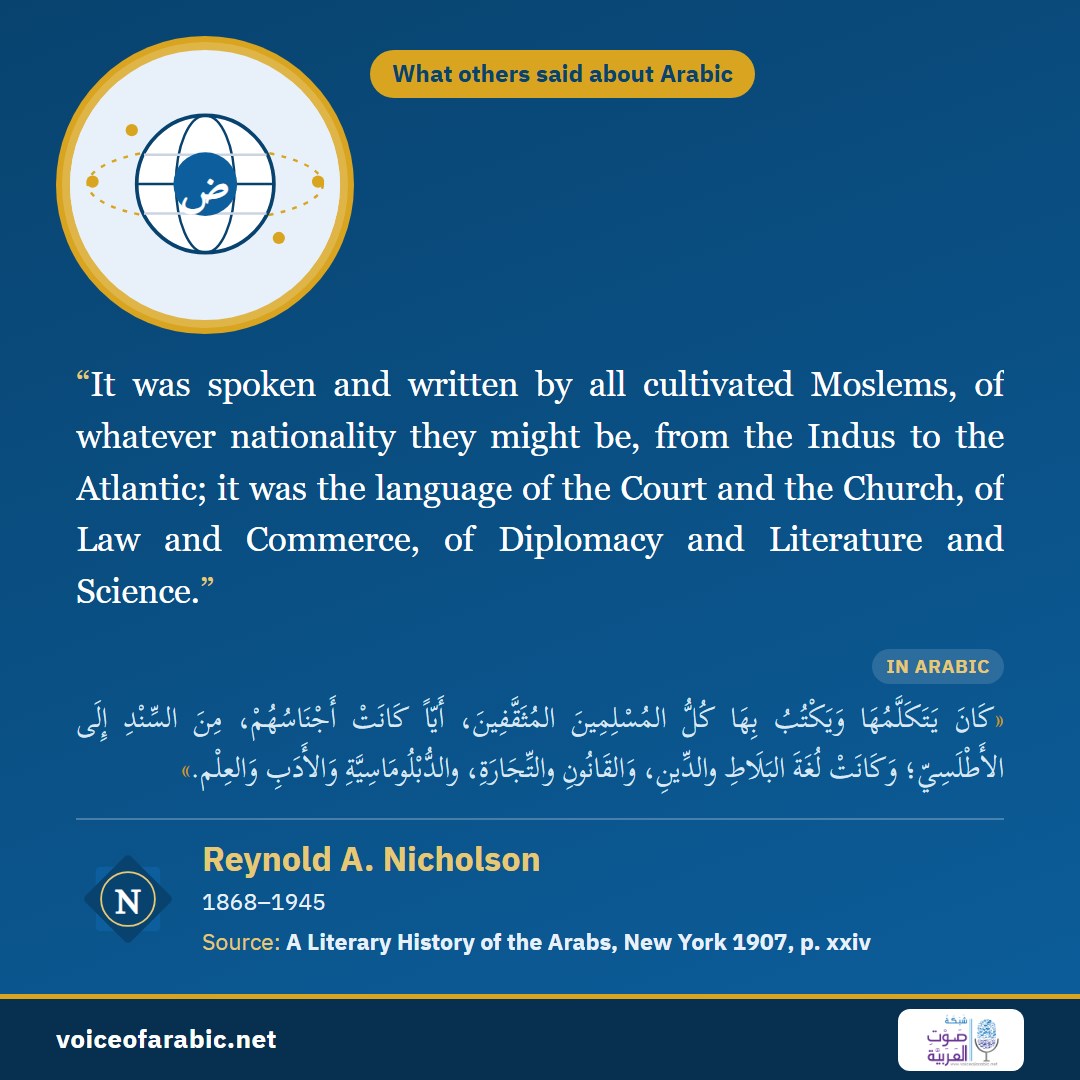
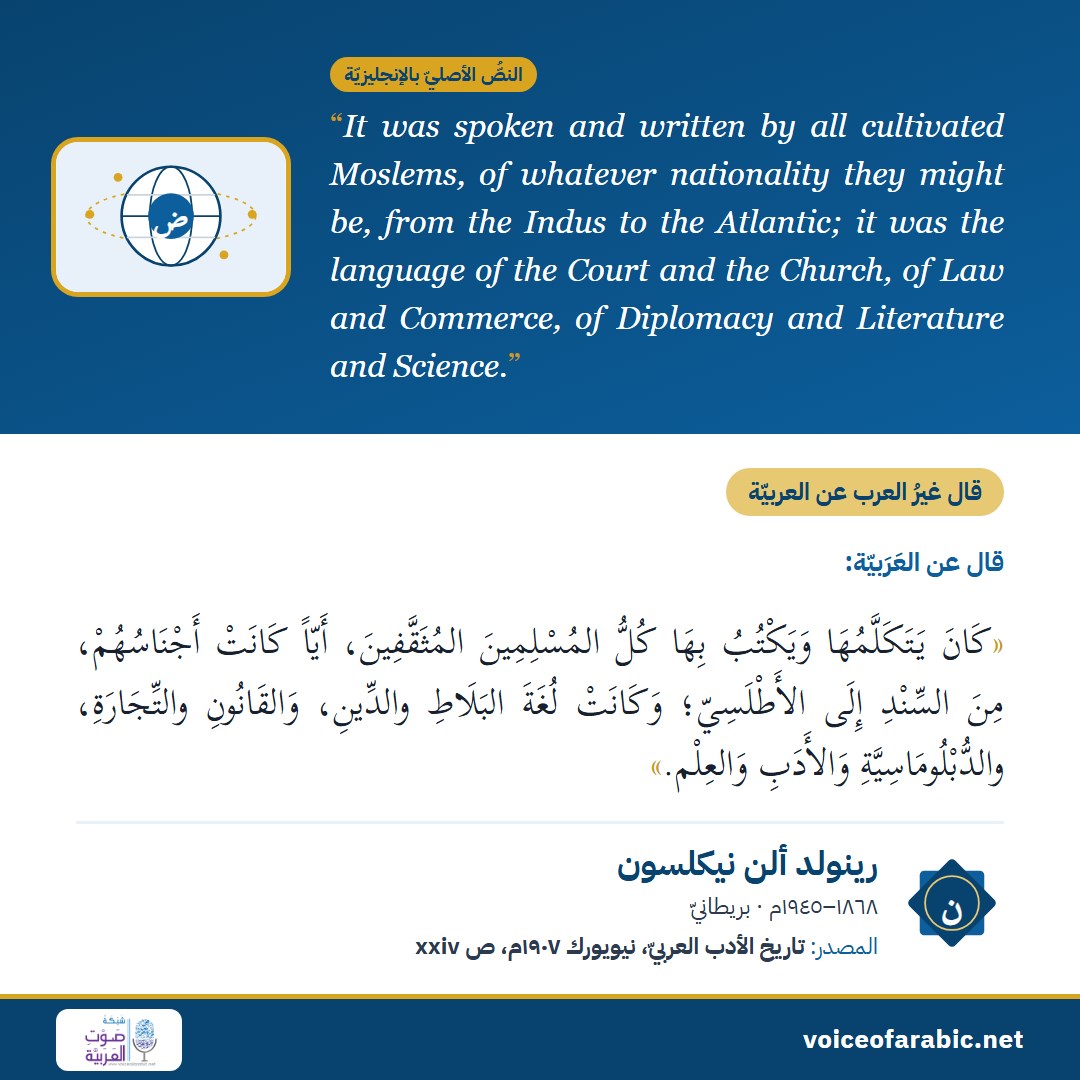
“Although the language of the pagan Bedouins did not survive intact—or survived, at any rate, only in the mouths of pedants and poets—it became, in a modified form, the universal medium of expression among the upper classes of Muhammadan society. During the early Middle Ages it was spoken and written by all cultivated Moslems, of whatever nationality they might be, from the Indus to the Atlantic; it was the language of the Court and the Church, of Law and Commerce, of Diplomacy and Literature and Science.”
Reynold A. Nicholson
1868–1945
British orientalist, professor of Arabic at Cambridge, author of «A Literary History of the Arabs».
In Arabic
ومع أنّ لغة البدو الجاهليّين لم تبقَ سليمةً كما كانت — أو لم تبقَ، على أيّ حال، إلّا على ألسنة المُتحذلِقين والشعراء — فقد صارت، في صورةٍ معدَّلة، الأداةَ العامّة للتعبير عند الطبقات العليا في المجتمع الإسلاميّ. ففي أوائل العصور الوسطى كان يتكلّمُها ويكتبُ بها كلُّ المسلمين المثقّفين، أيّاً كانت أجناسُهم، مِن السِّند إلى الأطلسيّ؛ وكانت لغةَ البلاط والدين، والقانون والتجارة، والدبلوماسيّة والأدب والعلم.
Source
A Literary History of the Arabs, Introduction, New York: Charles Scribner's Sons, 1907, p. xxiv
He is describing how the language of the pre-Islamic poets became the common language of Islamic civilisation.
Tap a card to see it full size; each has a download button below it for sharing.