What others said about Arabic Read in the original
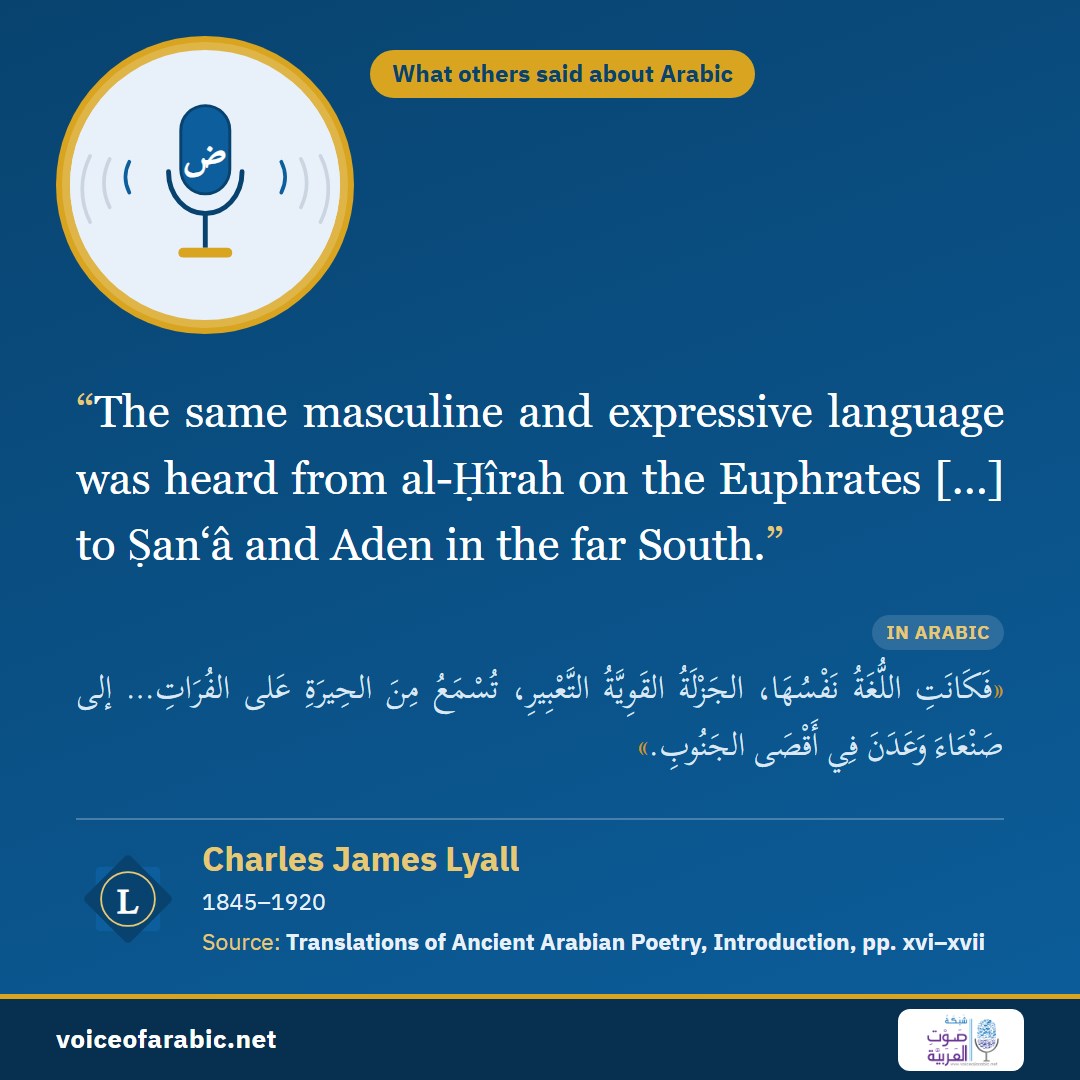
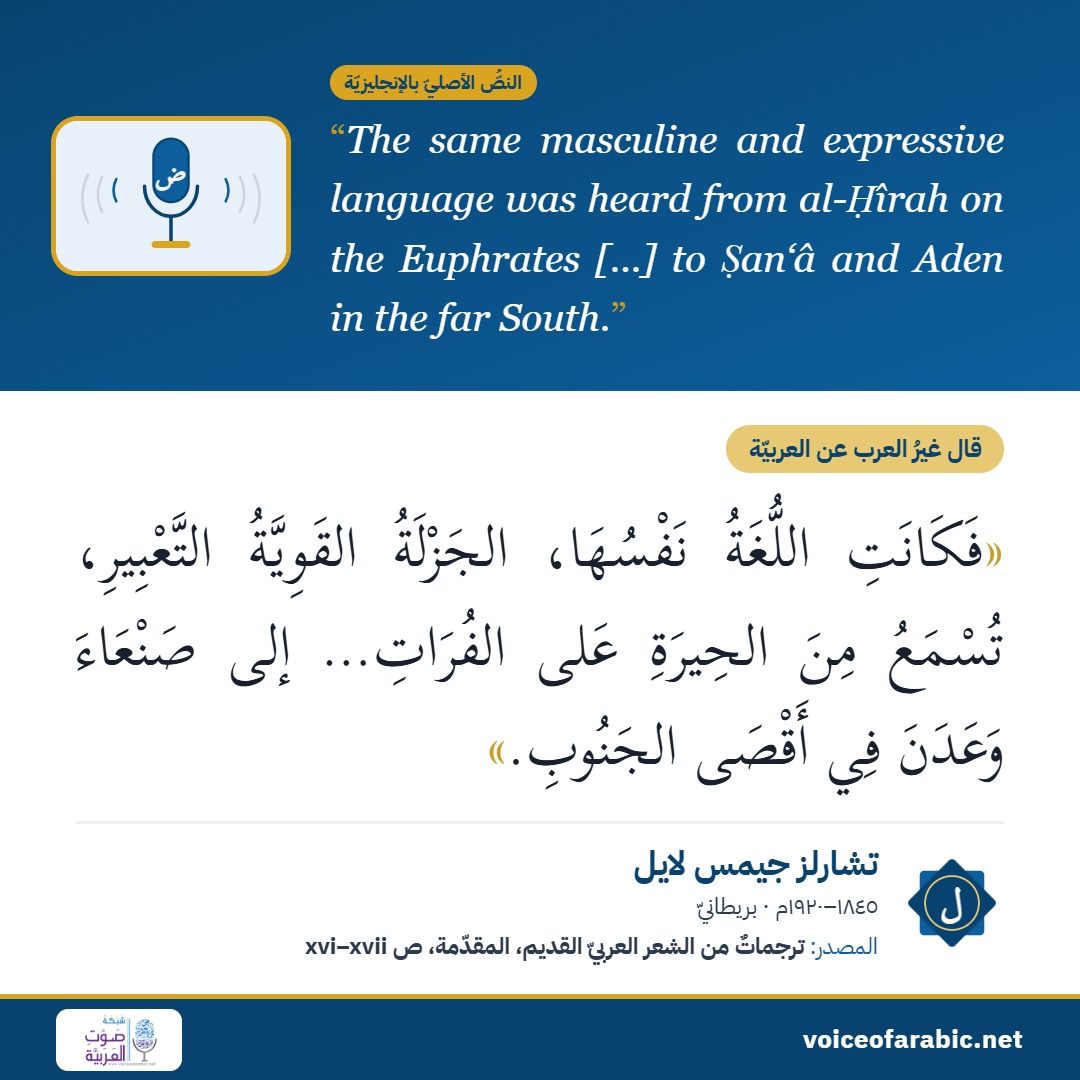
“A great uniformity of speech overspread the land, whether due, as is usually assumed, to the general observance of the Pilgrimage to Mekkah and the meeting of the tribes at ‘Ukâdh, or to some other cause. The same masculine and expressive language was heard from al-Ḥîrah on the Euphrates, under the shadow of Persia, and Ghassân in Syria, beneath the great cathedral of Damascus, to Ṣan‘â and Aden in the far South, where a Persian governor ruled in the name of the Shâhanshâh, and the profession of the poet was everywhere honoured and rewarded.”
Charles James Lyall
1845–1920
British administrator in India and Arabist, translator of pre-Islamic poetry and editor of the «Mufaddaliyyat».
In Arabic
وقد عمَّ البلادَ توحُّدٌ كبيرٌ في الكلام، سواءٌ أكان ذلك — كما يُفترض عادةً — من شيوع الحجّ إلى مكّة واجتماع القبائل في عكاظ، أم من سببٍ آخر. فكانت اللغةُ نفسُها، الجزلةُ القويّةُ التعبير، تُسمَعُ مِن الحِيرة على الفرات في ظلّ فارس، ومن غسّان في الشام تحت كاتدرائيّة دمشق الكبرى، إلى صنعاء وعدن في أقصى الجنوب حيث كان والٍ فارسيٌّ يحكم باسم الشاهنشاه؛ وكانت صناعةُ الشاعر مُكرَّمةً مُثاباً عليها في كلّ مكان.
Source
Translations of Ancient Arabian Poetry, chiefly Pre-Islamic, Introduction, London: Williams & Norgate, 1930, p. xvi–xvii
On the spread of the language of Ma‘add over the whole peninsula in the sixth century.
Tap a card to see it full size; each has a download button below it for sharing.