What others said about Arabic Read in the original
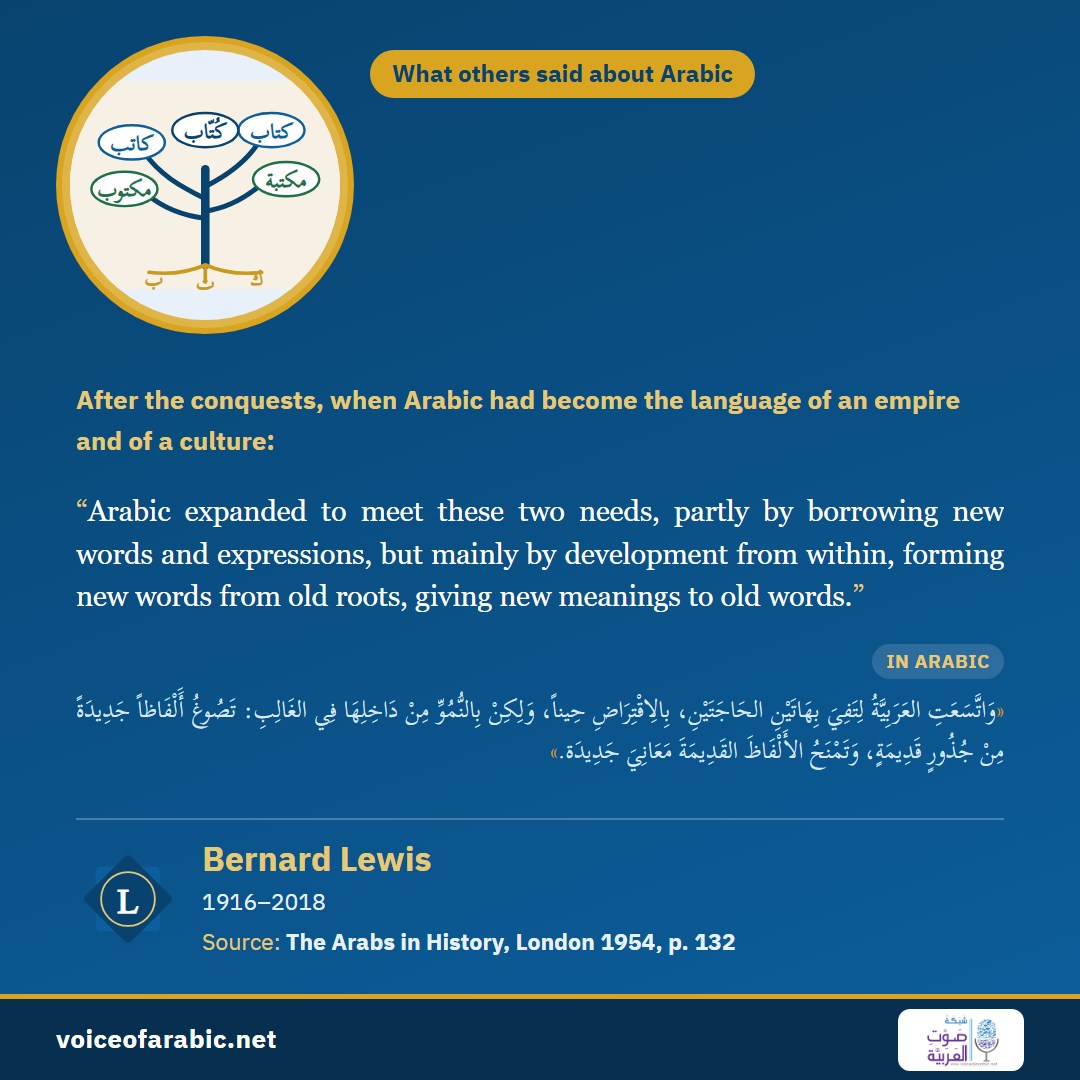
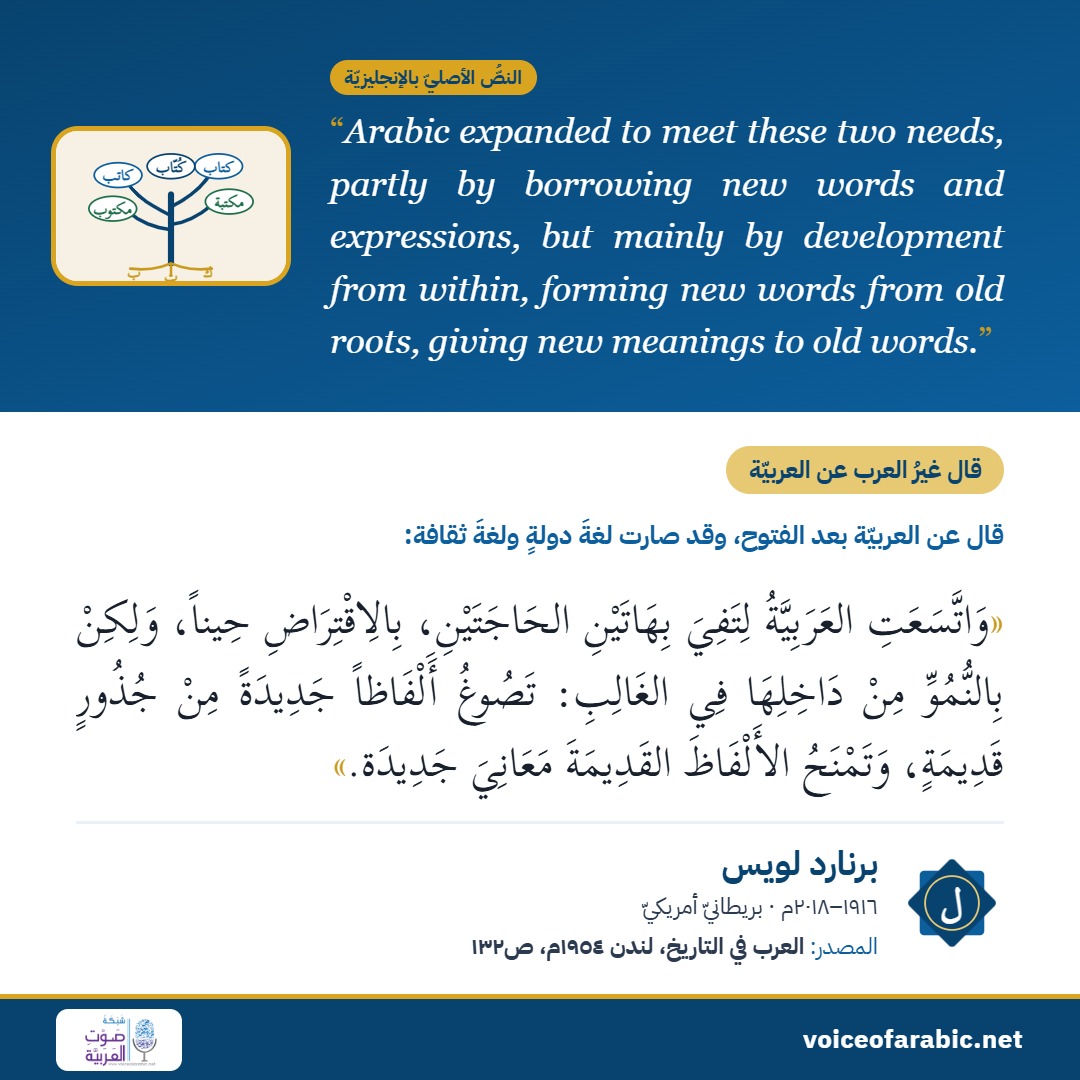
After the conquests, when Arabic had become the language of an empire and of a culture:
“The conquests made Arabic an imperial language, soon also the language of a great and diverse culture. Arabic expanded to meet these two needs, partly by borrowing new words and expressions, but mainly by development from within, forming new words from old roots, giving new meanings to old words. […] The language created in this way possessed a vivid, concrete and pictorial vocabulary, with each term having deep roots in a purely Arab past and tradition.”
Bernard Lewis
1916–2018
British-American historian of the Middle East (London, Princeton).
In Arabic
لقد جعلت الفتوحُ العربيّةَ لغةَ إمبراطوريّة، وسُرعانَ ما غدت أيضاً لغةَ ثقافةٍ عظيمةٍ متنوّعة. واتّسعت العربيّةُ لتفيَ بهاتين الحاجتين، بالاقتراض من الألفاظ والعبارات الجديدة حيناً، ولكن بالنموّ من داخلها في الغالب: تصوغ ألفاظاً جديدةً من جذورٍ قديمة، وتمنح الألفاظَ القديمة معانيَ جديدة… وكانت اللغةُ التي نشأت على هذا النحو ذاتَ معجمٍ حيٍّ محسوسٍ مصوِّر، لكلّ لفظٍ فيه جذورٌ عميقةٌ في ماضٍ وتراثٍ عربيّين خالصين.
Source
The Arabs in History, ch. VII, London: Hutchinson's University Library, 1954, p. 132
Tap a card to see it full size; each has a download button below it for sharing.