What they said about Arabic From the author's own Arabic
In al-Mathal al-saʾir he tells of a conversation in his company in Egypt, and endorses it:
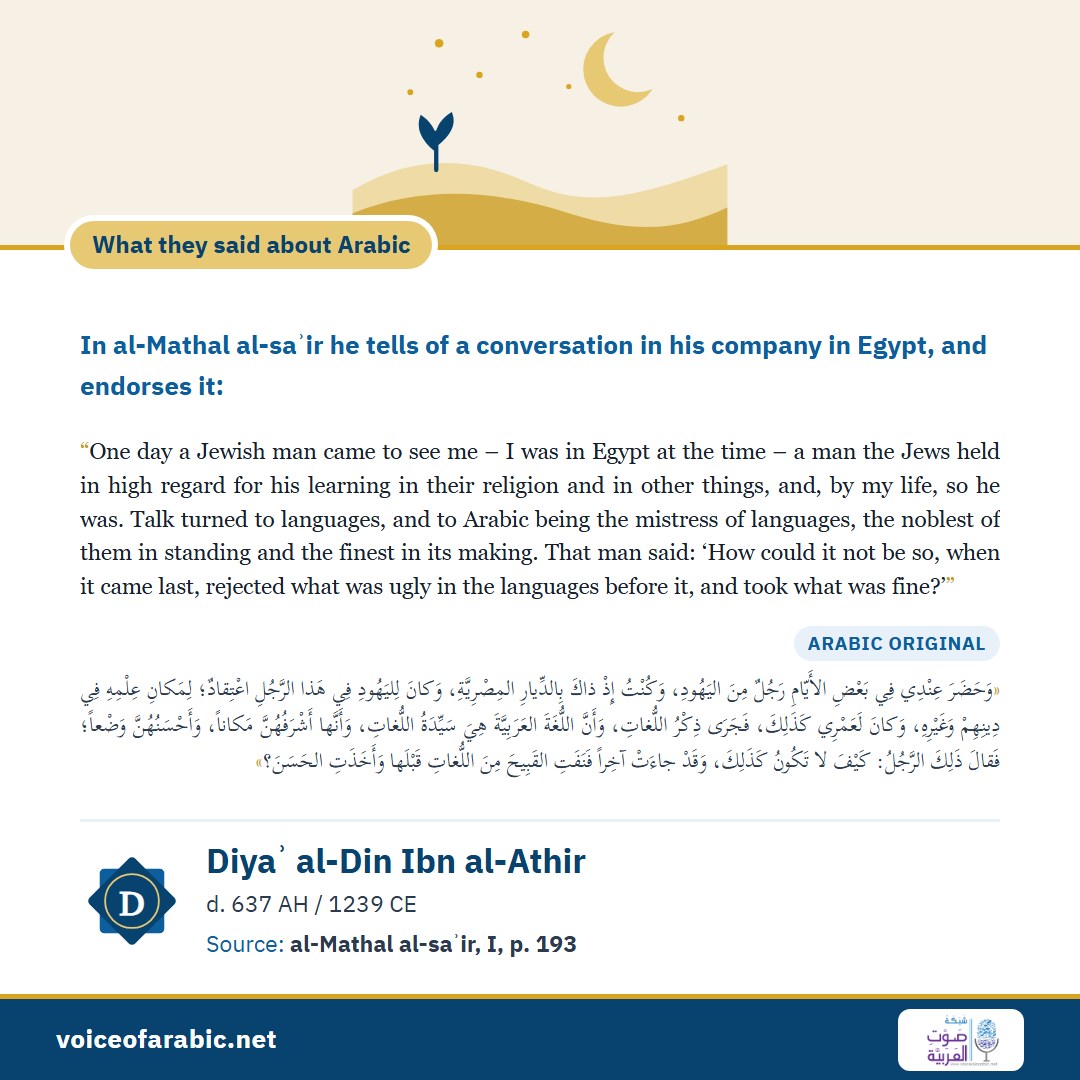
“One day a Jewish man came to see me – I was in Egypt at the time – a man the Jews held in high regard for his learning in their religion and in other things, and, by my life, so he was. Talk turned to languages, and to Arabic being the mistress of languages, the noblest of them in standing and the finest in its making. That man said: ‘How could it not be so, when it came last, rejected what was ugly in the languages before it, and took what was fine?’”
Diyaʾ al-Din Ibn al-Athir
d. 637 AH / 1239 CE
Nasr Allah ibn Muhammad, chancery writer and vizier to al-Afdal son of Saladin, author of al-Mathal al-saʾir; brother of the historian ʿIzz al-Din, author of al-Kamil.
The Arabic original
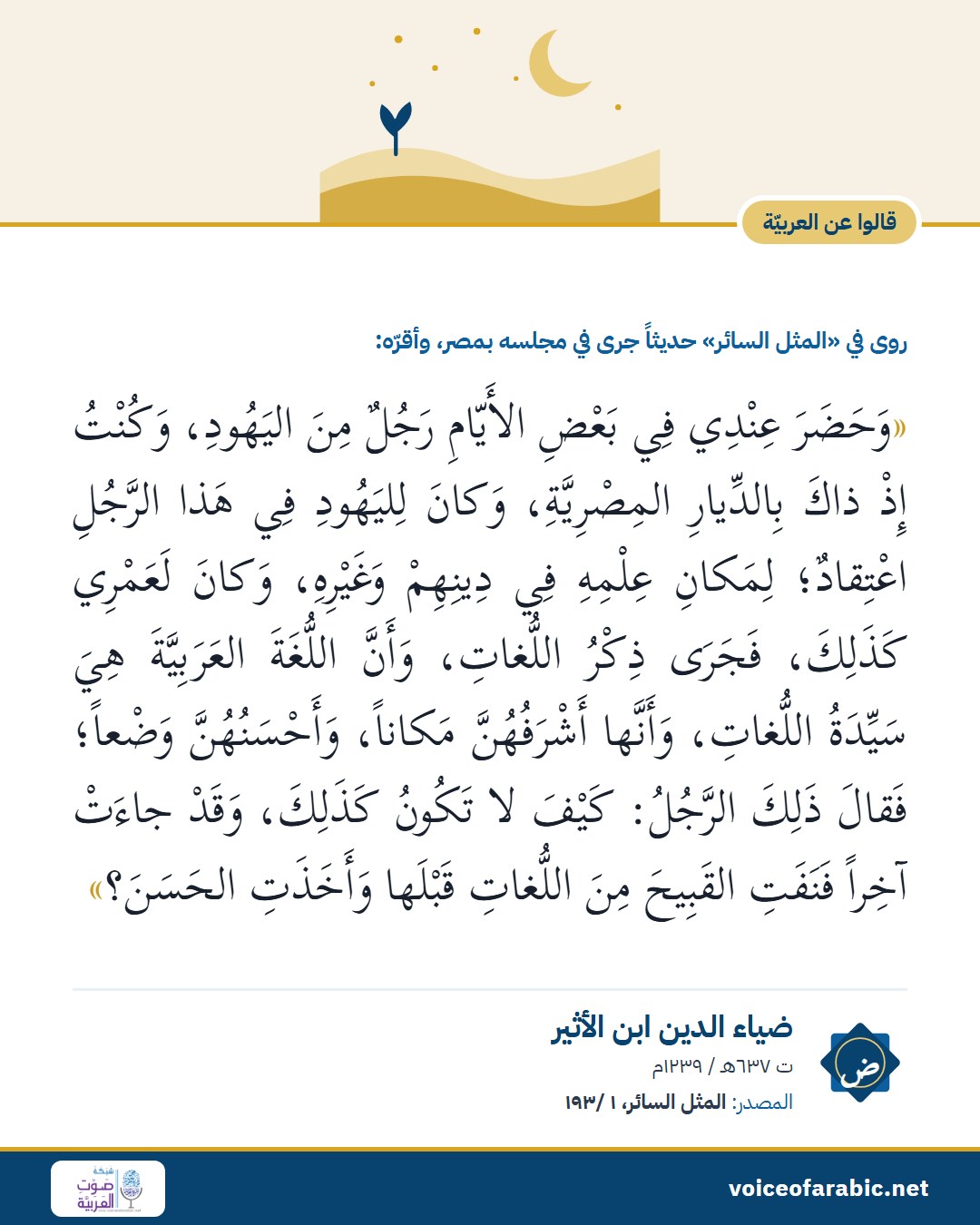
وَحَضَرَ عِنْدِي فِي بَعْضِ الأَيّامِ رَجُلٌ مِنَ اليَهُودِ، وَكُنْتُ إِذْ ذاكَ بِالدِّيارِ المِصْرِيَّةِ، وَكانَ لِليَهُودِ فِي هَذا الرَّجُلِ اعْتِقادٌ؛ لِمَكانِ عِلْمِهِ فِي دِينِهِمْ وَغَيْرِهِ، وَكانَ لَعَمْرِي كَذَلِكَ، فَجَرَى ذِكْرُ اللُّغاتِ، وَأَنَّ اللُّغَةَ العَرَبِيَّةَ هِيَ سَيِّدَةُ اللُّغاتِ، وَأَنَّها أَشْرَفُهُنَّ مَكاناً، وَأَحْسَنُهُنَّ وَضْعاً؛ فَقالَ ذَلِكَ الرَّجُلُ: كَيْفَ لا تَكُونُ كَذَلِكَ، وَقَدْ جاءَتْ آخِراً فَنَفَتِ القَبِيحَ مِنَ اللُّغاتِ قَبْلَها وَأَخَذَتِ الحَسَنَ؟
Source
Diyaʾ al-Din Ibn al-Athir, al-Mathal al-saʾir, ed. Muhammad Muhyi al-Din ʿAbd al-Hamid, Beirut: al-Maktaba al-ʿAsriyya, 1420 AH, vol. 1, p. 193
The English translation is Voice of Arabic's, made from the original.
The answer is the Jewish scholar’s; Ibn al-Athir reports it and adds, after the man’s examples, “He spoke the truth in what he said; it is the word of one who knows.” The example of the camel’s name is left out: Arabic jamal and Hebrew gāmāl are cognates, neither taken from the other.
Tap a card to see it full size; each has a download button below it for sharing.
Spotted a mistake, or have something to add?
Your note comes to us only; it is not published here. We read it, and if it holds we correct the card.