What others said about Arabic Read in the original
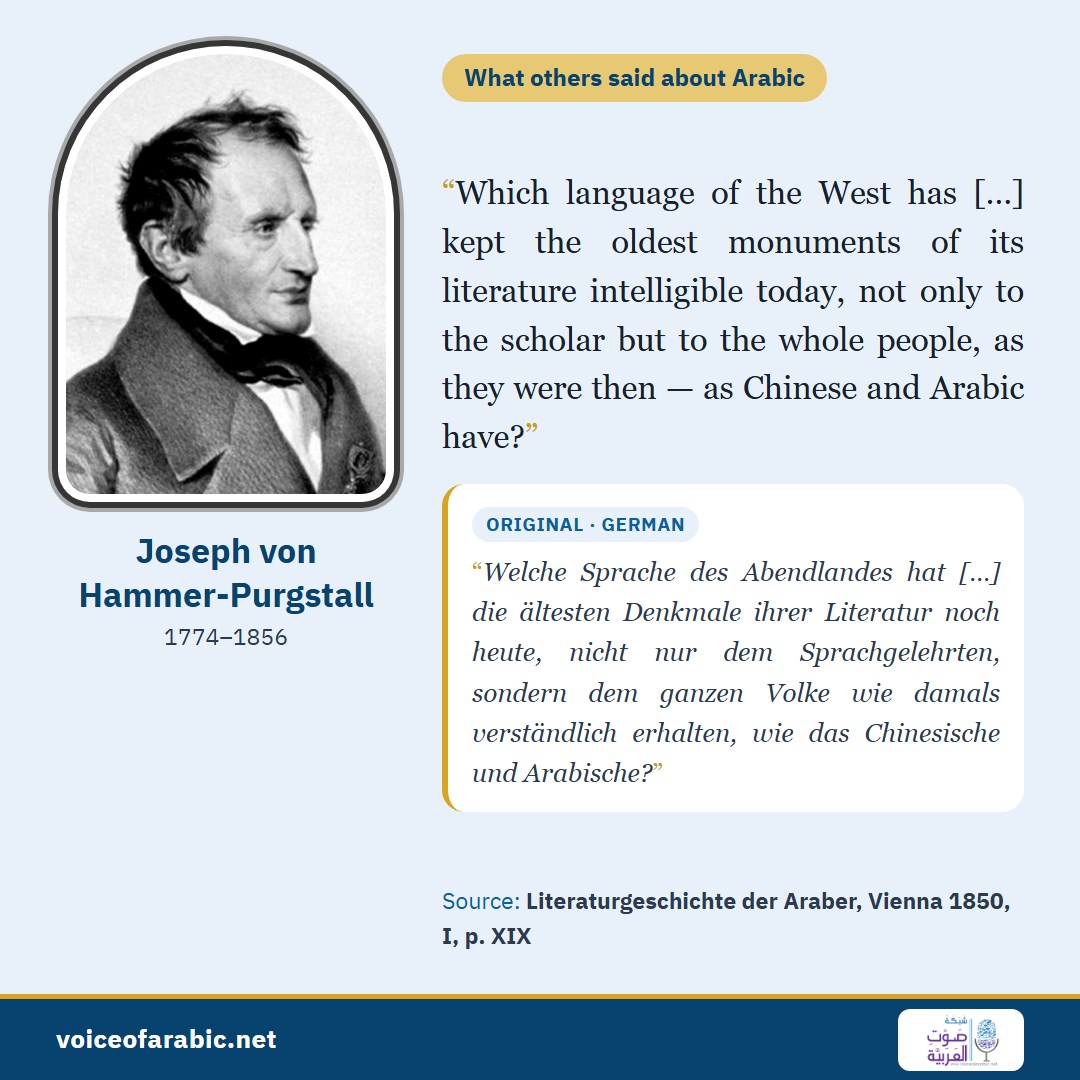
“Only two languages of the East have come down from the primeval age of history, through the Middle Ages, to our own day, preserved unchanged in books and in the mouths of the people: Chinese and Arabic. In these two alone has the unalterable constancy of a sustaining vital force proved itself victorious from the remotest age to the most recent. Which language of the West has kept the forms of its grammar unchanged for twelve hundred years, or even for half a millennium, and kept the oldest monuments of its literature intelligible today, not only to the scholar but to the whole people, as they were then — as Chinese and Arabic have?”
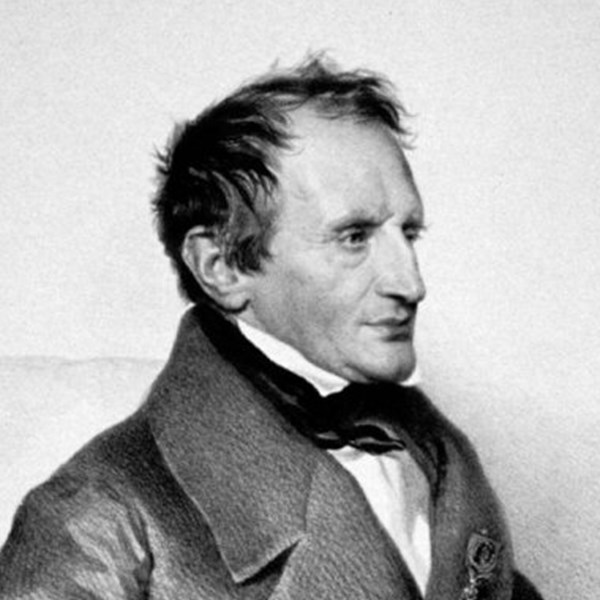
Joseph von Hammer-Purgstall
1774–1856
Austrian orientalist, diplomat and translator, first president of the Austrian Academy of Sciences.
Original text — German
Nur zwei Sprachen des Morgenlandes haben aus der Urzeit der Geschichte durch das Mittelalter herüber bis in unsere Tage sich unverändert in Büchern und im Munde des Volkes erhalten; die chinesische und die arabische, nur an diesen beiden hat sich die unwandelbare Stetigkeit erhaltender Lebenskraft von der grauesten Zeit bis in die neueste siegreich bewährt. Welche Sprache des Abendlandes hat seit zwölfhundert Jahren oder nur seit einem halben Jahrtausend die Formen ihrer Sprachlehre unverändert, die ältesten Denkmale ihrer Literatur noch heute, nicht nur dem Sprachgelehrten, sondern dem ganzen Volke wie damals verständlich erhalten, wie das Chinesische und Arabische?
In Arabic
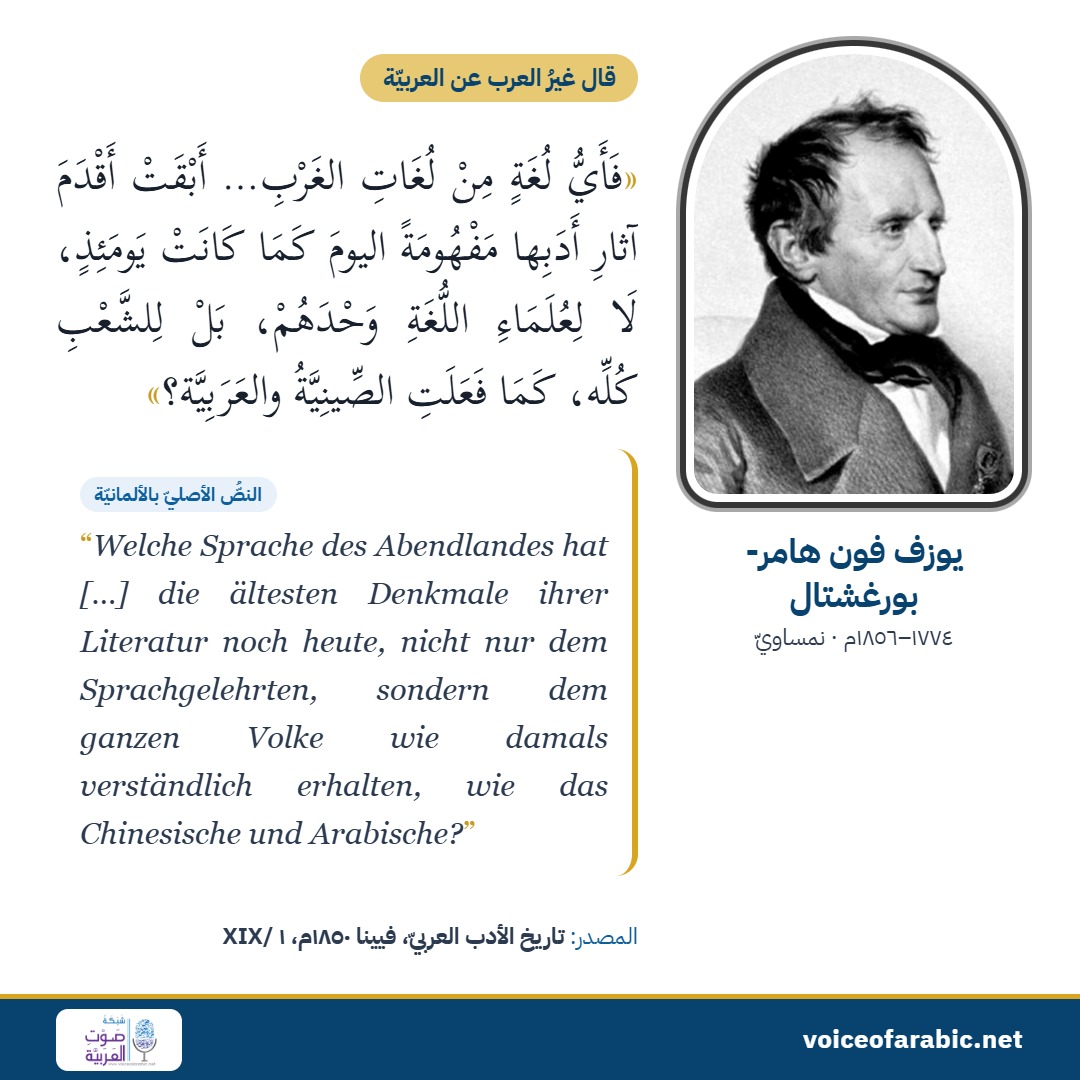
لم تبقَ مِن لغاتِ المشرق، منذ فجر التاريخ مروراً بالعصور الوسطى حتّى أيّامنا هذه، لغتان على حالهما في الكتب وعلى ألسنة الناس إلّا الصينيّةُ والعربيّة؛ فهاتان وحدهما ثبتت فيهما، ظافرتَين، ديمومةُ القوّة الحيّة الحافظة التي لا تتبدّل، من أقدم العصور إلى أحدثها. فأيُّ لغةٍ مِن لغاتِ الغرب حفظت منذ ألفٍ ومئتي سنة، بل منذ نصف ألفيّةٍ فحسب، صِيَغَ نحوِها دون تغيير، وأبقت أقدمَ آثارِ أدبِها مفهومةً اليوم كما كانت يومئذٍ، لا لعلماء اللغة وحدهم بل للشعب كلّه، كما فعلت الصينيّة والعربيّة؟
Source
Literaturgeschichte der Araber, I. Abtheilung, Bd. 1, Einleitung, Wien: K. k. Hof- und Staatsdruckerei, 1850, p. XIX
The English translation is Voice of Arabic's, made from the original.
He goes on to credit the Qur'an with fixing the language. The claim about the spoken language overstates; the closing question is the strong part. The earliest printed form we found of the comparison later circulated under Germanus's name.
Tap a card to see it full size; each has a download button below it for sharing.