What others said about Arabic Read in the original
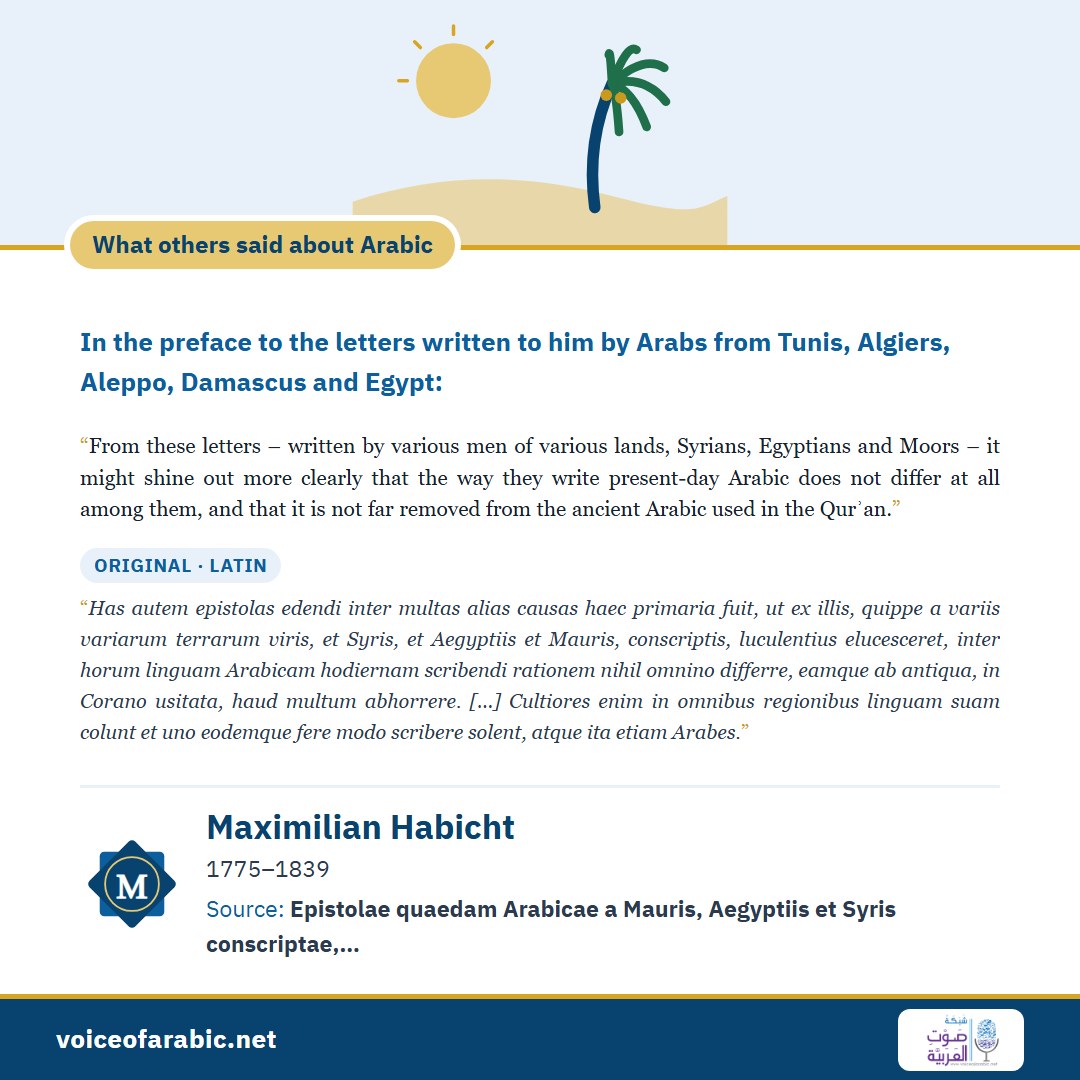
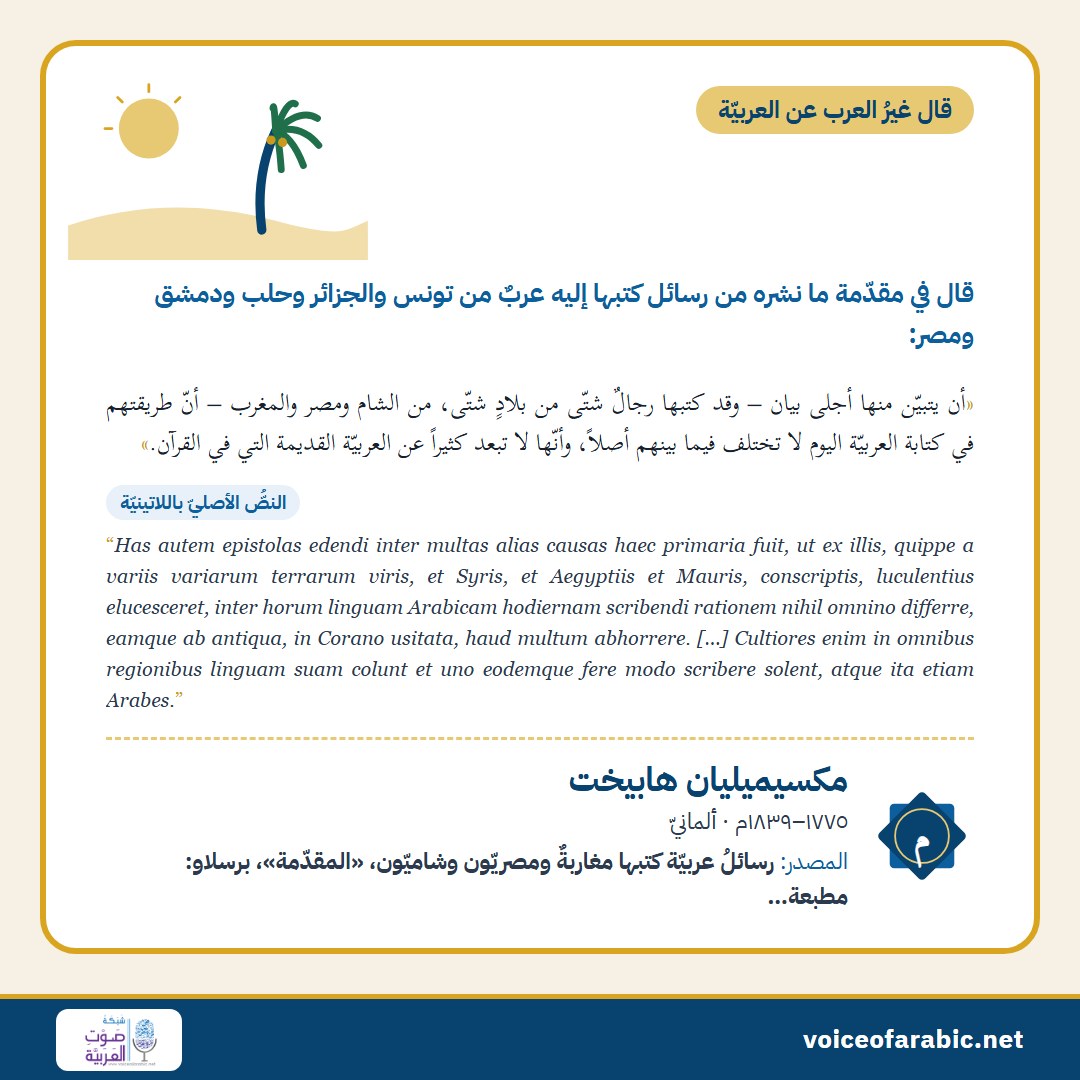
In the preface to the letters written to him by Arabs from Tunis, Algiers, Aleppo, Damascus and Egypt:
“Among many other reasons for publishing these letters, the chief was this: that from them – written as they are by various men of various lands, Syrians, Egyptians and Moors – it might shine out more clearly that the way these men write present-day Arabic does not differ at all among them, and that it is not far removed from the ancient Arabic used in the Qurʾan. […] For the more cultivated in every region cultivate their language and are wont to write it in almost one and the same way; and so too the Arabs.”
Maximilian Habicht
1775–1839
German scholar from Breslau who learned Arabic in Paris from men who had come from Egypt and Syria, published the Thousand and One Nights from a Tunisian manuscript, and collected over two hundred letters written to him by Arabs from many lands.
Original text — Latin
Has autem epistolas edendi inter multas alias causas haec primaria fuit, ut ex illis, quippe a variis variarum terrarum viris, et Syris, et Aegyptiis et Mauris, conscriptis, luculentius elucesceret, inter horum linguam Arabicam hodiernam scribendi rationem nihil omnino differre, eamque ab antiqua, in Corano usitata, haud multum abhorrere. […] Cultiores enim in omnibus regionibus linguam suam colunt et uno eodemque fere modo scribere solent, atque ita etiam Arabes.
In Arabic
وكان أوّلَ ما دعاني إلى نشر هذه الرسائل، من بين أسبابٍ كثيرة، أن يتبيّن منها أجلى بيان – وقد كتبها رجالٌ شتّى من بلادٍ شتّى، من الشام ومصر والمغرب – أنّ طريقتهم في كتابة العربيّة اليوم لا تختلف فيما بينهم أصلاً، وأنّها لا تبعد كثيراً عن العربيّة القديمة التي في القرآن. […] فإنّ المتأدّبين في كلّ بلدٍ يُعنَون بلغتهم، ويكادون يكتبونها على نحوٍ واحد، وكذلك العرب.
Source
Epistolae quaedam Arabicae a Mauris, Aegyptiis et Syris conscriptae, praefatio, Vratislaviae [Breslau]: Typis Universitatis Regiis, 1824, p. IV–V
The English translation is Voice of Arabic's, made from the original.
Checked against the page images of the archive.org scan. He adds that present-day Arabic has some words the old language lacked, and faults travellers who exaggerated the differences between dialects. Both translations are ours.
Tap a card to see it full size; each has a download button below it for sharing.
Spotted a mistake, or have something to add?
Your note comes to us only; it is not published here. We read it, and if it holds we correct the card.