What others said about Arabic Read in the original
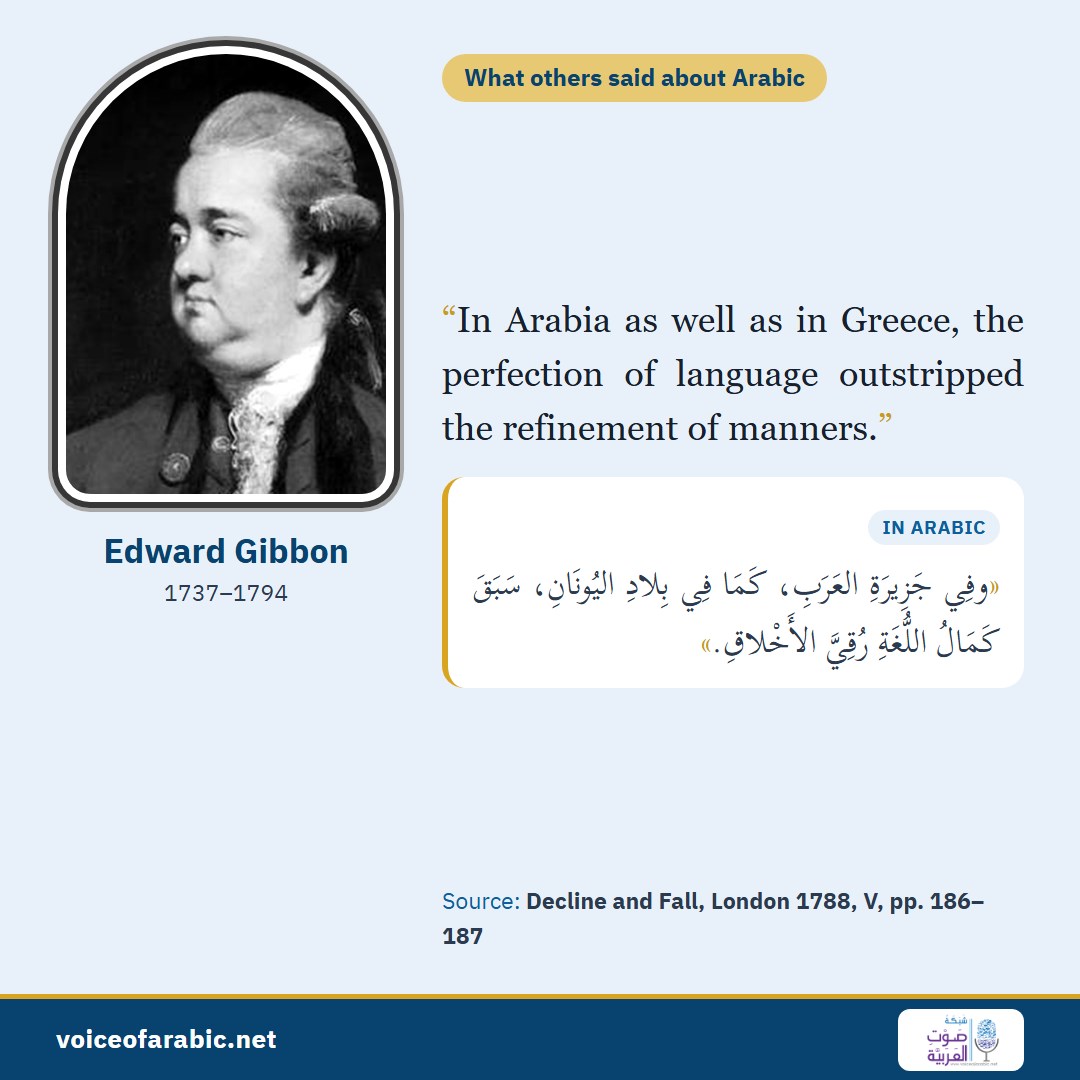
“Whatever may be the pedigree of the Arabs, their language is derived from the same original stock with the Hebrew, the Syriac, and the Chaldæan tongues; the independence of the tribes was marked by their peculiar dialects; but each, after their own, allowed a just preference to the pure and perspicuous idiom of Mecca. In Arabia as well as in Greece, the perfection of language outstripped the refinement of manners; and her speech could diversify the fourscore names of honey, the two hundred of a serpent, the five hundred of a lion, the thousand of a sword, at a time when this copious dictionary was entrusted to the memory of an illiterate people.”
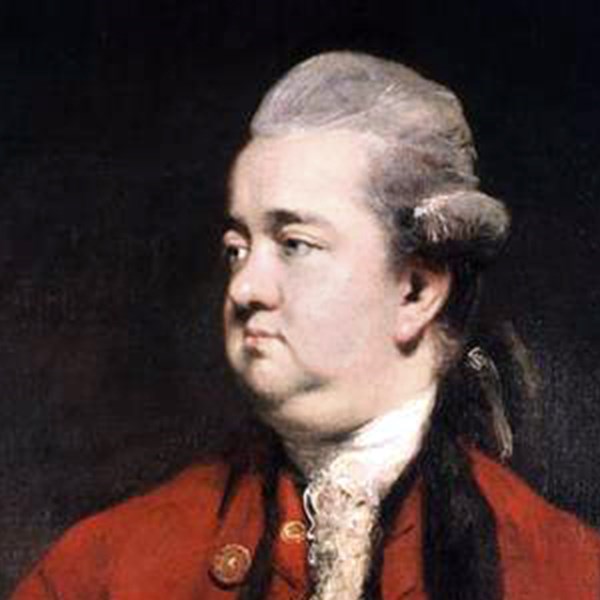
Edward Gibbon
1737–1794
English historian, author of «The History of the Decline and Fall of the Roman Empire».
In Arabic
ومهما يكُن نسَبُ العرب، فإنّ لغتهم مشتقّةٌ من الأصل الأوّل الذي اشتُقّت منه العبريّة والسريانيّة والكلدانيّة؛ وقد تميّزت القبائل باستقلالها بلهجاتٍ خاصّة، غير أنّ كلّاً منها كان يُقرّ — بعد لهجته — بفضلٍ مستحَقٍّ للهجة مكّة الخالصة البيّنة. وفي جزيرة العرب، كما في بلاد اليونان، سبقَ كمالُ اللغةِ رُقيَّ الأخلاق؛ فكان في وسع كلامهم أن ينوّع ثمانين اسماً للعسل، ومئتين للحيّة، وخمسمئةٍ للأسد، وألفاً للسيف، في زمنٍ كان هذا المعجم الغزير مُستودَعاً في ذاكرةِ شعبٍ أُمّيّ.
Source
The History of the Decline and Fall of the Roman Empire, vol. V, ch. L, London: W. Strahan and T. Cadell, 1788, p. 186–187
The counts (80 names of honey, 500 of the lion, 1000 of the sword) are traditional Arabic claims Gibbon repeats from his sources; the judgement on the card is his own.
Tap a card to see it full size; each has a download button below it for sharing.