What others said about Arabic Read in the original
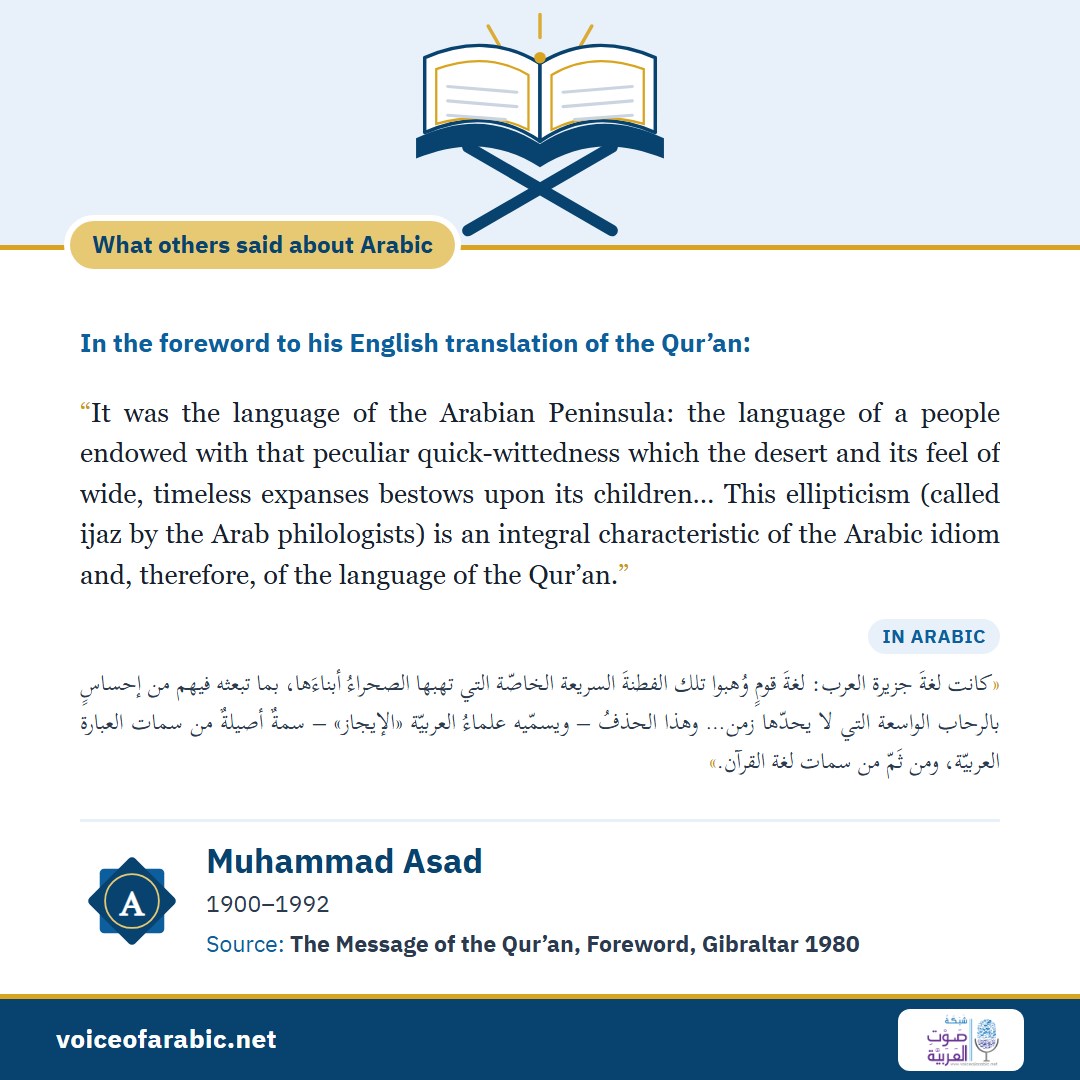
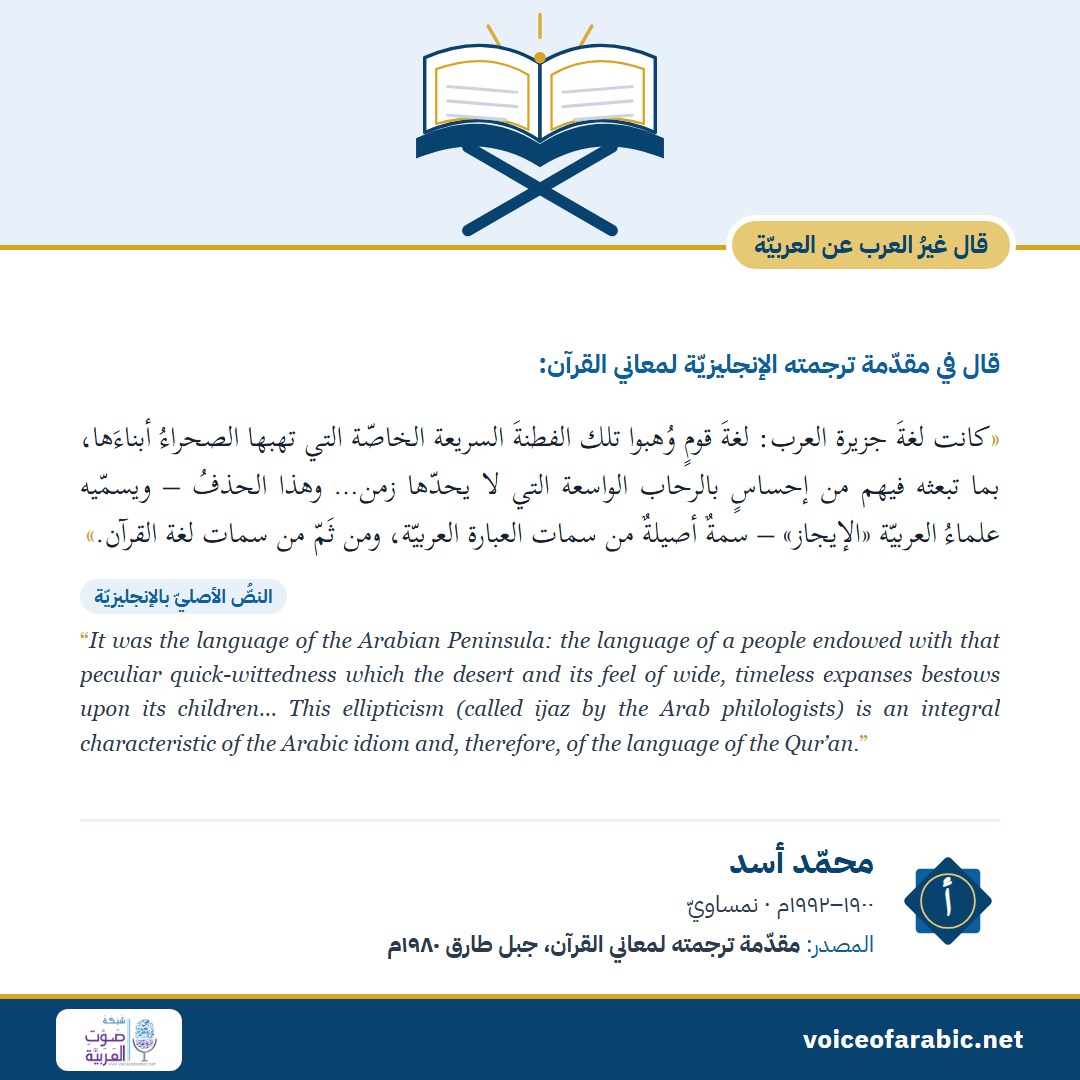
In the foreword to his English translation of the Qur’an:
“It was the language of the Arabian Peninsula: the language of a people endowed with that peculiar quick-wittedness which the desert and its feel of wide, timeless expanses bestows upon its children: the language of people whose mental images, flowing without effort from association to association, succeed one another in rapid progression and often vault elliptically over intermediate – as it were, “self-understood” – sequences of thought towards the idea which they aim, conceive or express. This ellipticism (called ijaz by the Arab philologists) is an integral characteristic of the Arabic idiom and, therefore, of the language of the Qur’an.”
Muhammad Asad
1900–1992
Born Leopold Weiss in Lviv to a Jewish family, he became a Muslim in 1926, lived for years among the Bedouin of Najd, and translated the meaning of the Qur’an into English.
In Arabic
كانت لغةَ جزيرة العرب: لغةَ قومٍ وُهبوا تلك الفطنةَ السريعة الخاصّة التي تهبها الصحراءُ أبناءَها، بما تبعثه فيهم من إحساسٍ بالرحاب الواسعة التي لا يحدّها زمن؛ لغةَ قومٍ تتوالى صورُهم الذهنيّة سِراعاً، منسابةً بلا جهدٍ من تداعٍ إلى تداع، وكثيراً ما تقفز قفزاً موجَزاً فوق حلقاتٍ من الفكر بينها – حلقاتٍ «مفهومةٍ بنفسها» إن صحّ القول – إلى الفكرة التي تقصدها أو تتصوّرها أو تعبّر عنها. وهذا الحذفُ – ويسمّيه علماءُ العربيّة «الإيجاز» – سمةٌ أصيلةٌ من سمات العبارة العربيّة، ومن ثَمّ من سمات لغة القرآن.
Source
The Message of the Qur’an, Foreword, Gibraltar: Dar al-Andalus, 1980
Read in a digital copy of the book on archive.org whose pages carry no numbers. By “ijaz” Asad means ījāz, concision, not iʿjāz.
Tap a card to see it full size; each has a download button below it for sharing.
Spotted a mistake, or have something to add?
Your note comes to us only; it is not published here. We read it, and if it holds we correct the card.