Words Arabic Took In
centenarium
القِنْطار
qinṭār
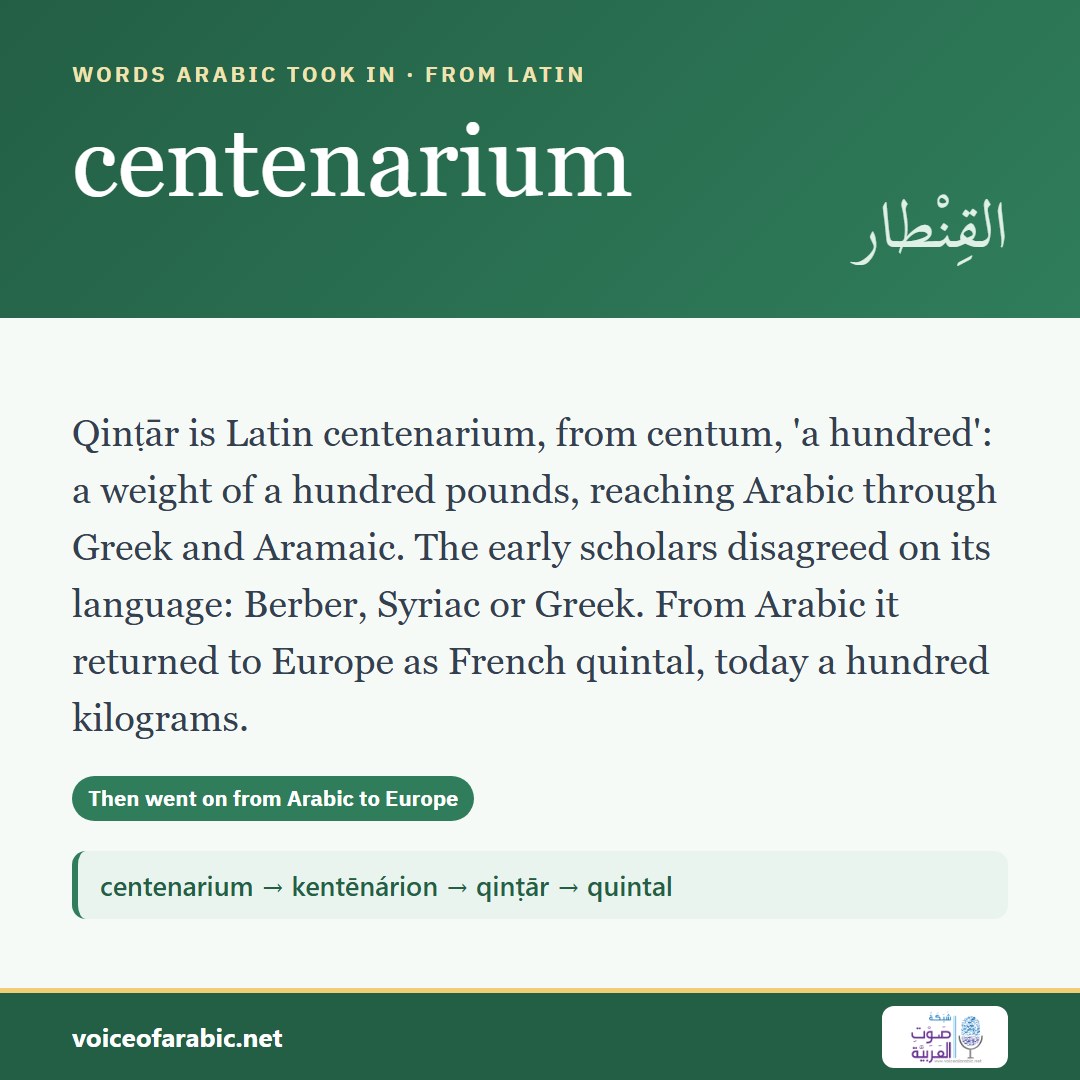
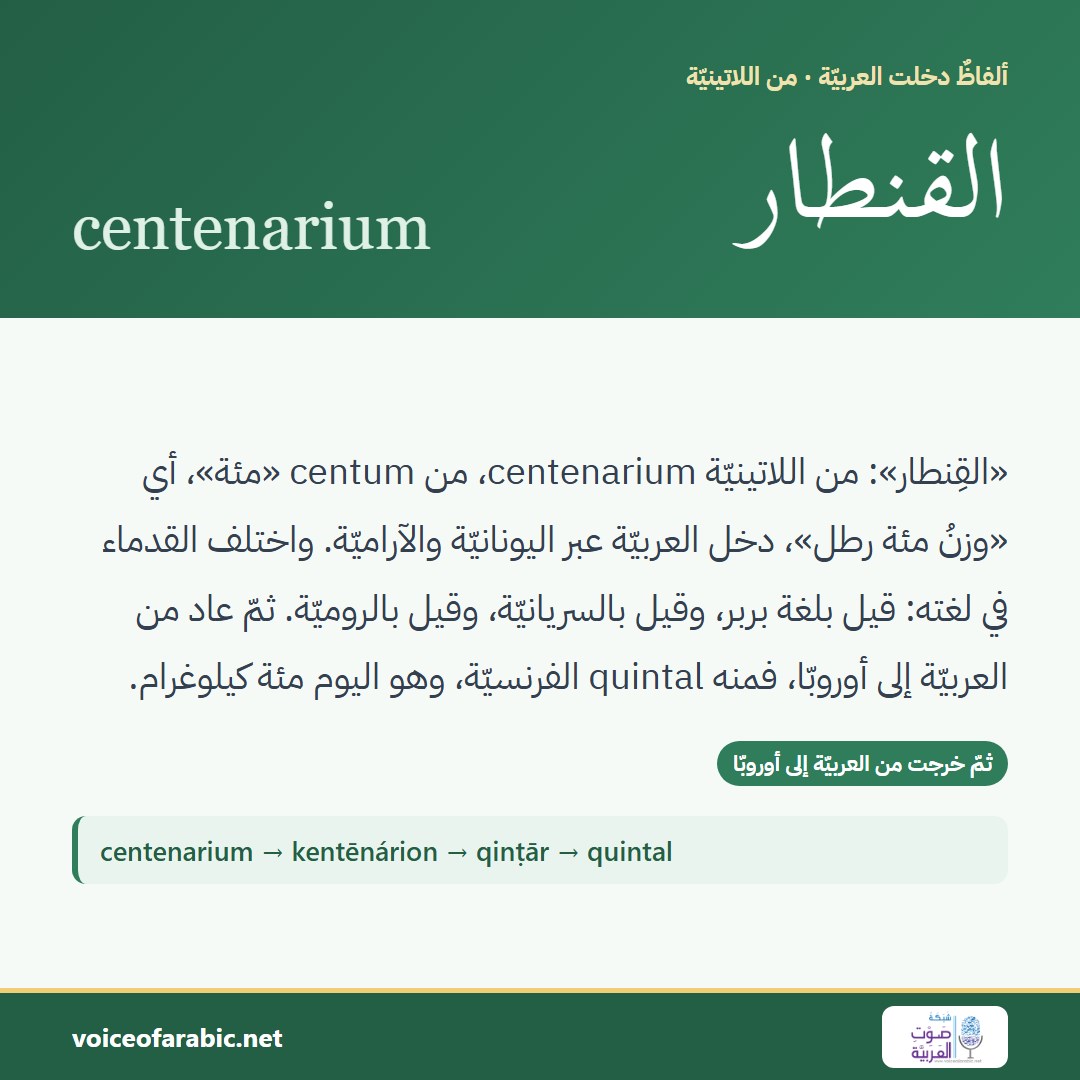
Qinṭār is Latin centenarium, from centum, 'a hundred': a weight of a hundred pounds, reaching Arabic through Greek and Aramaic. The early scholars disagreed on its language: Berber, Syriac or Greek. From Arabic it returned to Europe as French quintal, today a hundred kilograms.
- Came
- From Latin
- Original meaning
- 'of a hundred': a weight of a hundred pounds
- Meaning in Arabic
- a large weight; great wealth
«والقِنطار وزنُ أربعين أوقيّةً من ذهب… وهو بلغة بربر ألفُ مثقالٍ من ذهبٍ أو فضّة… وهو بالسُّريانيّة ملءُ مَسْكِ ثورٍ من ذهبٍ أو فضّة.»
It then went on from Arabic into European languages.
Ibn Sida, in al-Mukhassas, reports Sibawayh as saying 'qinṭār is Arabic'. Al-Zajjaj derived it from qanṭara, 'to bind firmly', whence qanṭara, a bridge. F. Abdurrahim, in his edition of al-Mu'arrab (p. 516), traces it to Latin, from centum, 'a hundred'.
Wadghiri (al-'Arabiyyat al-Mughtaribat 1/344): cantar was a weight used in Italy, parts of Spain and the East, varying from 50 kg in Greece and the Levant to 45 kg in Egypt and North Africa; the French quintal is today 100 kg. The TLFi derives French quintal from Arabic qinṭār, which took it through Aramaic from medieval Greek, from Latin centenarium.
Click a card to see it full size; each has a download button for sharing.
Sources
- ابن سيده، المحكم ٦/٦٢١
- ابن سيده، المخصّص ٣/٤٤١: «سيبويه: القنطار عربيّ»
- الجواليقيّ، المعرّب، تحقيق ف. عبد الرحيم، ص٥١٦
- عبد العلي الودغيري، العربيّات المغتربات ١/٣٤٤
- TLFi (CNRTL): quintal
Spotted a mistake, or have something to add?
Your note comes to us only; it is not published here. We read it, and if it holds we correct the card.