Arabic Beyond the Arabs
The Christians of Toledo kept their deeds in Arabic
نصارى طليطلة يكتبون عقودهم بالعربيّة
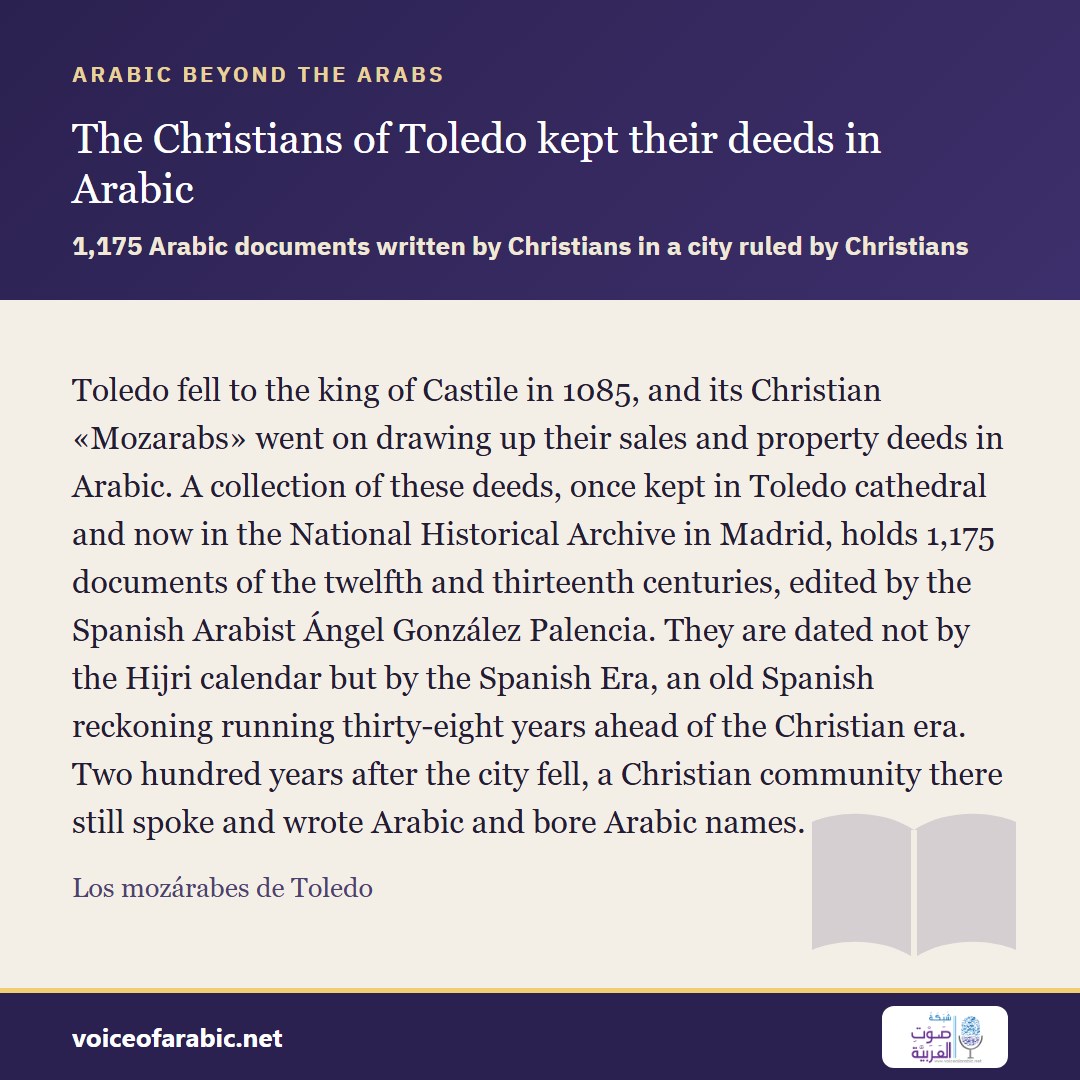
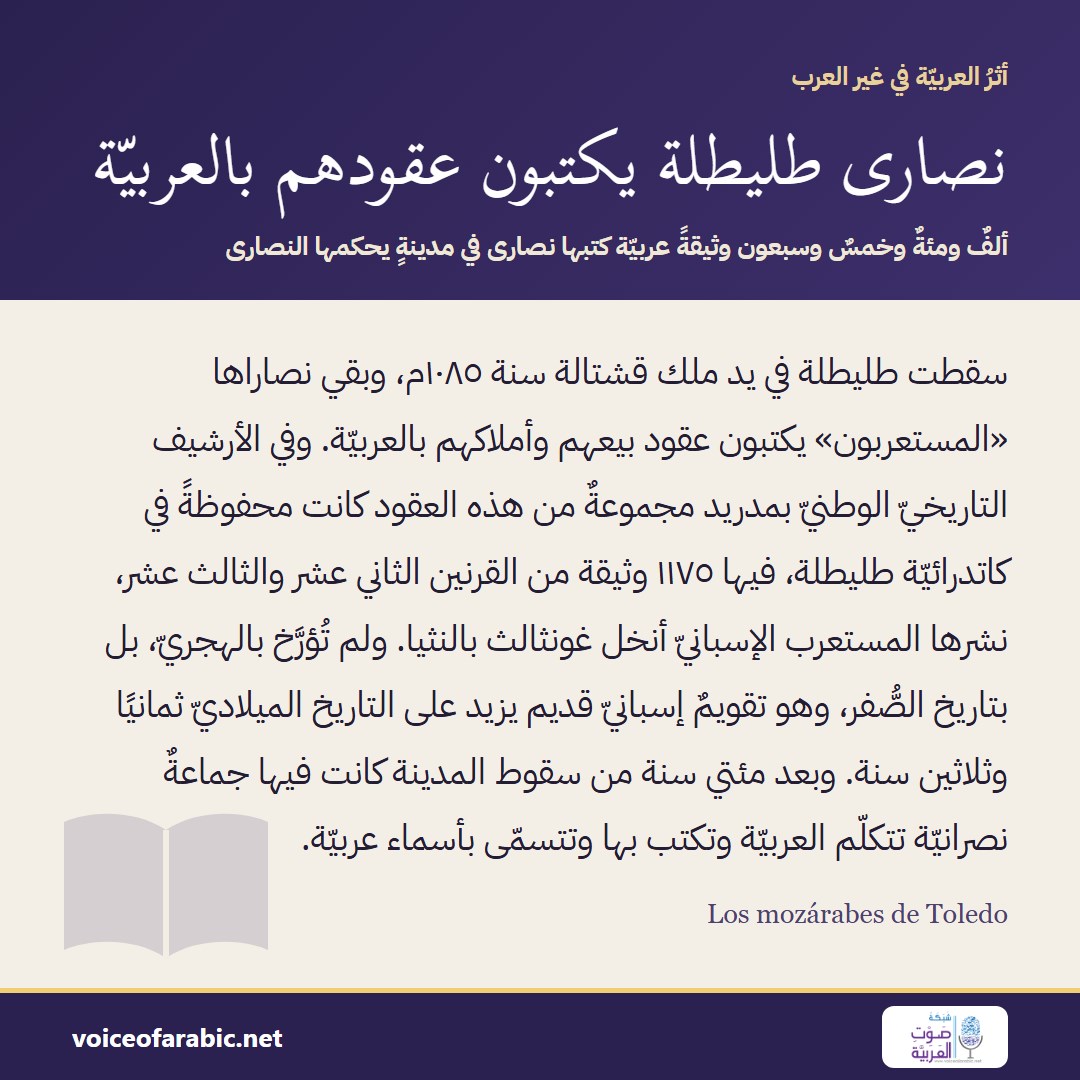
Toledo fell to the king of Castile in 1085, and its Christian «Mozarabs» went on drawing up their sales and property deeds in Arabic. A collection of these deeds, once kept in Toledo cathedral and now in the National Historical Archive in Madrid, holds 1,175 documents of the twelfth and thirteenth centuries, edited by the Spanish Arabist Ángel González Palencia. They are dated not by the Hijri calendar but by the Spanish Era, an old Spanish reckoning running thirty-eight years ahead of the Christian era. Two hundred years after the city fell, a Christian community there still spoke and wrote Arabic and bore Arabic names.
- In brief
- 1,175 Arabic documents written by Christians in a city ruled by Christians
- Outside Arabic
- Los mozárabes de Toledo
«ومهما بدا ذلك غريبًا لمن بَعُد عن تلك الحال التاريخيّة، فقد بقيت، بعد مئتي سنة من استيلاء النصارى على طليطلة، جماعةٌ نصرانيّة تتكلّم العربيّة وتكتب بها، وما زالت تتسمّى بأسماء عربيّة.»
Popular accounts say these deeds open with the basmala and are dated by the Hijri calendar; neither is established. They are dated by the Spanish Era, and modern studies place them between 1083 and 1391, most of them in the twelfth and thirteenth centuries.
Click a card to see it full size; each has a download button for sharing.
Sources
- Margarita López Gómez, «The Mozarabs: Worthy Bearers of Islamic Culture», in S. K. Jayyusi (ed.), The Legacy of Muslim Spain, Brill 1992, p. 174
- Á. González Palencia, Los mozárabes de Toledo en los siglos XII y XIII, 4 vols., Madrid 1926–1930
Spotted a mistake, or have something to add?
Your note comes to us only; it is not published here. We read it, and if it holds we correct the card.