What they said about Arabic From the author's own Arabic
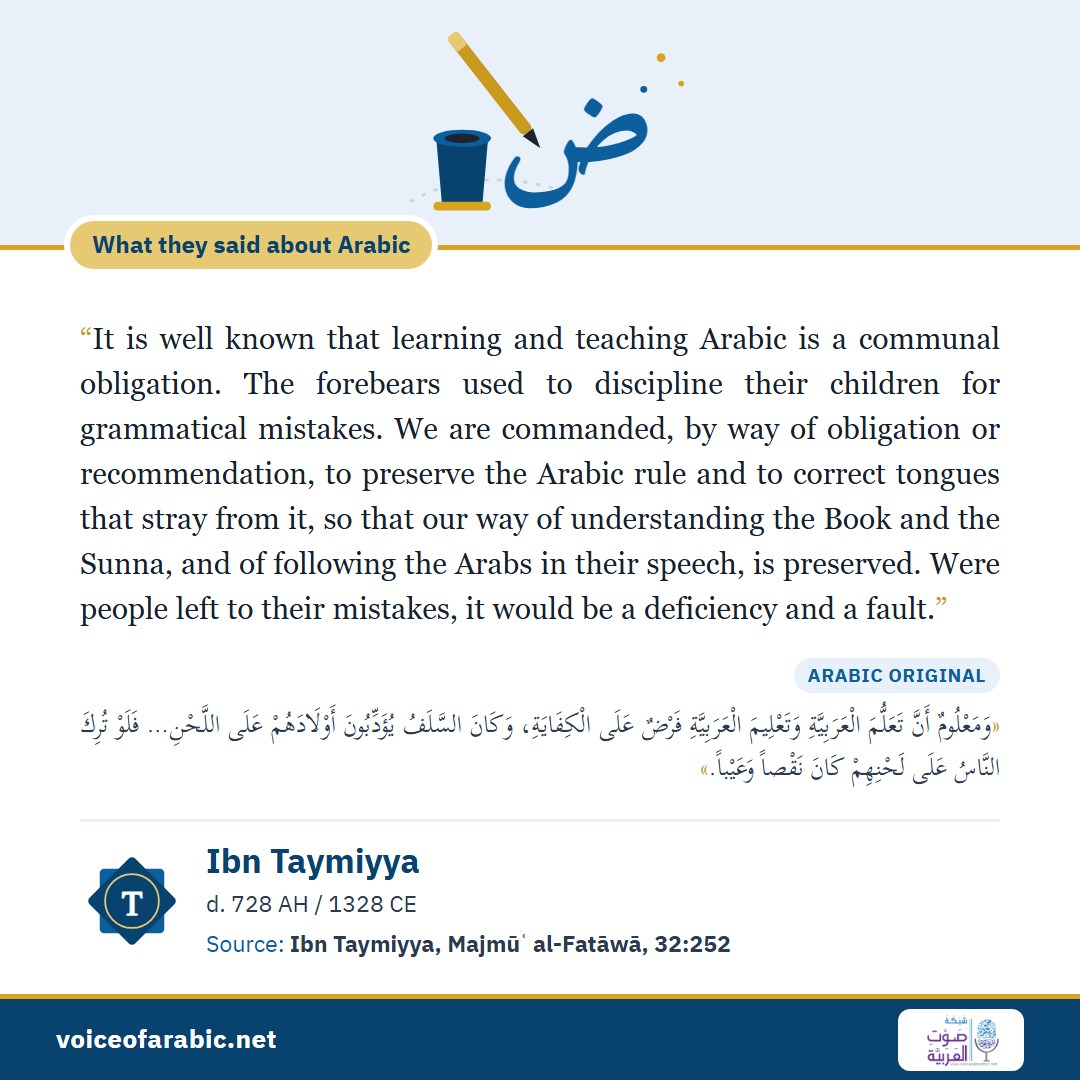
“It is well known that learning and teaching Arabic is a communal obligation. The forebears used to discipline their children for grammatical mistakes. We are commanded, by way of obligation or recommendation, to preserve the Arabic rule and to correct tongues that stray from it, so that our way of understanding the Book and the Sunna, and of following the Arabs in their speech, is preserved. Were people left to their mistakes, it would be a deficiency and a fault.”
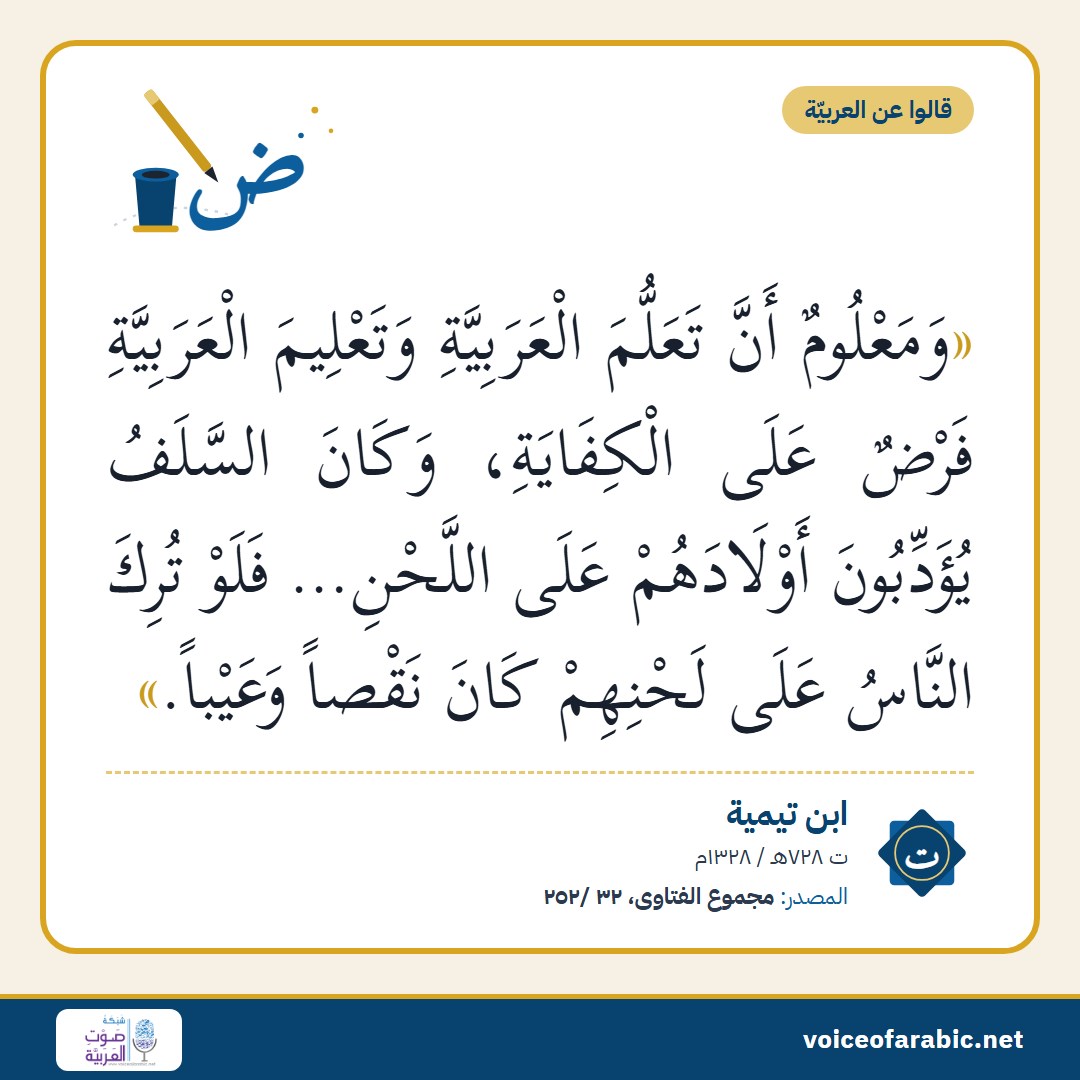
Ibn Taymiyya
d. 728 AH / 1328 CE
Taqi al-Din Ahmad ibn Taymiyya, Hanbali jurist and theologian
The Arabic original
وَمَعْلُومٌ أَنَّ تَعَلُّمَ الْعَرَبِيَّةِ وَتَعْلِيمَ الْعَرَبِيَّةِ فَرْضٌ عَلَى الْكِفَايَةِ، وَكَانَ السَّلَفُ يُؤَدِّبُونَ أَوْلَادَهُمْ عَلَى اللَّحْنِ؛ فَنَحْنُ مَأْمُورُونَ — أَمْرَ إيجَابٍ أَوْ أَمْرَ اسْتِحْبَابٍ — أَنْ نَحْفَظَ الْقَانُونَ الْعَرَبِيَّ، وَنُصْلِحَ الْأَلْسُنَ الْمَائِلَةَ عَنْهُ، فَيَحْفَظُ لَنَا طَرِيقَةَ فَهْمِ الْكِتَابِ وَالسُّنَّةِ، وَالِاقْتِدَاءِ بِالْعَرَبِ فِي خِطَابِهَا؛ فَلَوْ تُرِكَ النَّاسُ عَلَى لَحْنِهِمْ كَانَ نَقْصاً وَعَيْباً.
Source
Ibn Taymiyya, Majmu' al-Fatawa, comp. Ibn Qasim, King Fahd Complex, Medina, 2004, vol. 32, p. 252
The English translation is Voice of Arabic's, made from the original.
Tap a card to see it full size; each has a download button below it for sharing.