What others said about Arabic Read in the original
In the chapter on medicine of his book attacking the sciences:
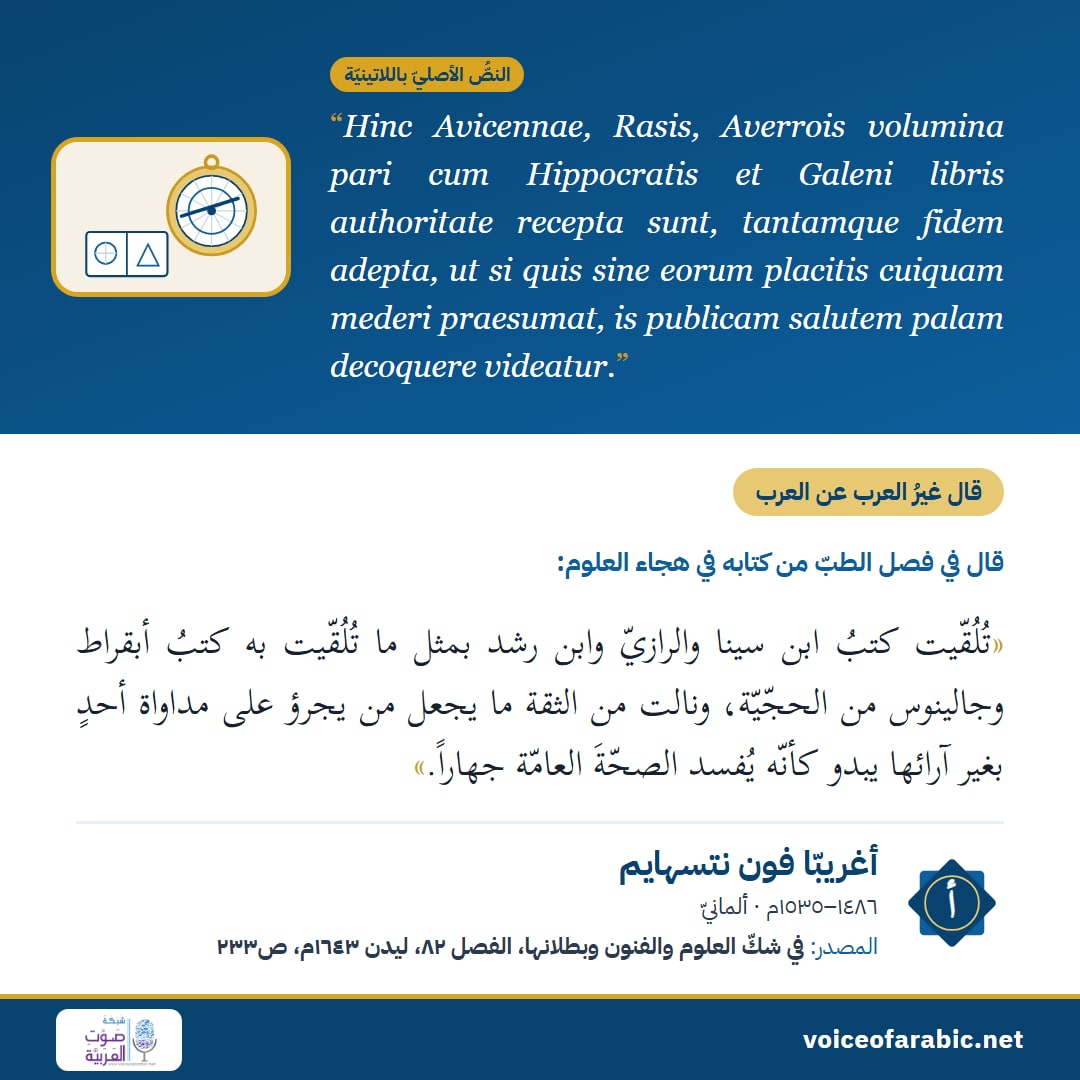
“After these, many philosophers of foreign nations wrote on it, among whom the glory of the Arabs grew so great that most people took them for the inventors of this art, and they might easily seem able to make good that claim, were it not that the original Greek and Latin names they used point to another origin of the art. Hence the volumes of Avicenna, Rhazes and Averroes were received with authority equal to the books of Hippocrates and Galen, and gained such credit that anyone who presumed to treat a patient without their teachings would seem openly to be ruining the public health.”
Heinrich Cornelius Agrippa von Nettesheim
1486–1535
Heinrich Cornelius Agrippa, German physician and philosopher of the Renaissance, from Cologne.
Original text — Latin
Post istos vero complures externarum gentium barbari philosophi de ea scripsere, inter quos adeo crevit Arabum gloria, ut huius artis inventores plurimis visi sint, facileque id se posse contendere videantur, nisi ipsa originalia Graeca et Latina nomina ab illis usurpata aliam artis originem indicarent. Hinc Avicennae, Rasis, Averrois volumina pari cum Hippocratis et Galeni libris authoritate recepta sunt, tantamque fidem adepta, ut si quis sine eorum placitis cuiquam mederi praesumat, is publicam salutem palam decoquere videatur.
In Arabic
وبعد هؤلاء كتب فيه فلاسفةٌ كثيرون من الأمم الأجنبيّة، وعظُم فيهم مجدُ العرب حتّى عدّهم أكثرُ الناس مخترعي هذا الفنّ، ولَبدا أنّهم يقدرون على دعوى ذلك بيُسر، لولا أنّ الأسماء اليونانيّة واللاتينيّة الأصليّة التي استعملوها تدلّ على أصلٍ آخر لهذا الفنّ. ومن ثَمّ تُلُقّيت كتبُ ابن سينا والرازيّ وابن رشد بمثل ما تُلُقّيت به كتبُ أبقراط وجالينوس من الحجّيّة، ونالت من الثقة ما يجعل من يجرؤ على مداواة أحدٍ بغير آرائها يبدو كأنّه يُفسد الصحّةَ العامّة جهاراً.
Source
De incertitudine et vanitate scientiarum et artium, cap. LXXXII «De medicina in genere», Leiden: Officina Commeliniana, 1643, p. 233 (first printed 1530)
The English translation is Voice of Arabic's, made from the original.
The whole book is an attack on the sciences and their practitioners, so this is testimony to the standing of the Arabic books in the medicine of his day, not praise; Agrippa himself traces medicine back to the Greeks and Latins. By “barbari” he means nations other than the Greeks and Latins. The Latin is given in modern letters (s for ſ, ae for æ).
Tap a card to see it full size; each has a download button below it for sharing.

Spotted a mistake, or have something to add?
Your note comes to us only; it is not published here. We read it, and if it holds we correct the card.