What they said about Arabic Narrated with its chain
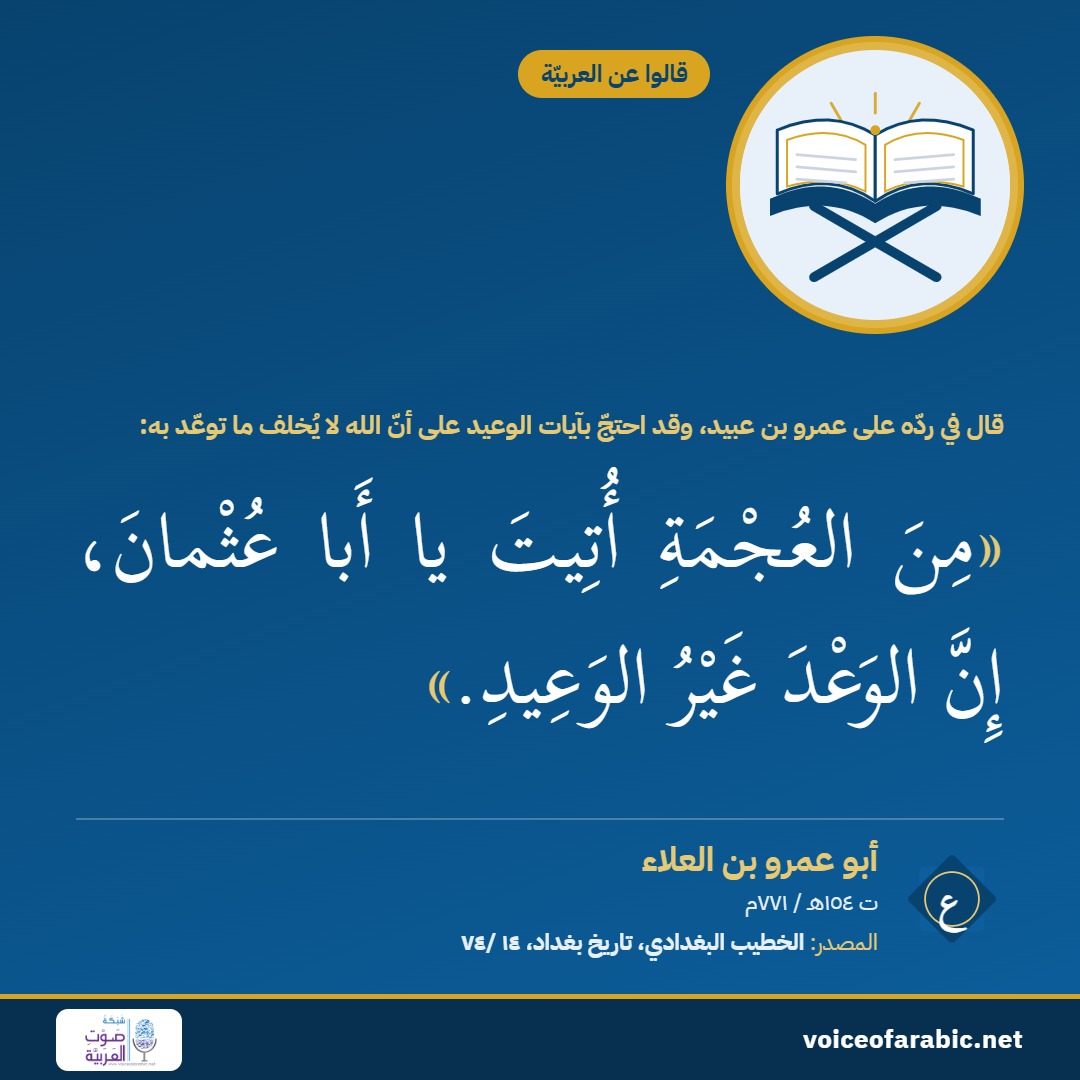
Answering ‘Amr ibn ‘Ubayd, who argued from the verses of threat that God cannot forgo a threatened punishment:
“‘Amr ibn ‘Ubayd came to Abu ‘Amr ibn al-‘Ala’ and said: Abu ‘Amr, does God break His promise? — No. — Then if God has threatened punishment for a deed, will He break His word? Abu ‘Amr ibn al-‘Ala’ said: It is foreignness of tongue that has undone you, Abu ‘Uthman! A promise (wa‘d) is not a threat (wa‘id). The Arabs count it neither a breach nor a disgrace to threaten harm and then not do it; they see that as generosity and grace. A breach is to promise good and then not do it. — Find me that in the speech of the Arabs. — Have you not heard the old poet: «… And though I threaten him or promise him, I break my threat and keep my promise.»”
Abu ‘Amr ibn al-‘Ala’
d. 154 AH / 771 CE
Leading Qur’an reader and grammarian of Basra, one of the Seven Readers.
The Arabic original
جاءَ عَمْرُو بْنُ عُبَيْدٍ إِلَى أَبِي عَمْرِو بْنِ العَلاءِ، فَقالَ: يا أَبا عَمْرٍو، يُخْلِفُ اللَّهُ وَعْدَهُ؟ قالَ: لا. قالَ: أَفَرَأَيْتَ إِنْ وَعَدَهُ اللَّهُ عَلَى عَمَلٍ عِقاباً، يُخْلِفُ وَعْدَهُ؟ فَقالَ أَبُو عَمْرِو بْنُ العَلاءِ: مِنَ العُجْمَةِ أُتِيتَ يا أَبا عُثْمانَ، إِنَّ الوَعْدَ غَيْرُ الوَعِيدِ، إِنَّ العَرَبَ لا تَعُدُّ خُلْفاً وَلا عاراً أَنْ تَعِدَ شَرّاً ثُمَّ لا تَفْعَلَهُ، تَرَى أَنَّ ذاكَ كَرَماً وَفَضْلاً، إِنَّما الخُلْفُ أَنْ تَعِدَ خَيْراً ثُمَّ لا تَفْعَلَهُ. قالَ: فَأَوْجِدْنِي هَذا فِي كَلامِ العَرَبِ. قالَ: أَما سَمِعْتَ إِلَى قَوْلِ الأَوَّلِ: «لا يَرْهَبُ ابْنُ العَمِّ ما عِشْتُ صَوْلَتِي * وَلا أَخْتَبِي مِنْ خَشْيَةِ المُتَهَدِّدِ / وَإِنِّي وَإِنْ أَوْعَدْتُهُ أَوْ وَعَدْتُهُ * لَمُخْلِفُ إِيعادِي وَمُنْجِزُ مَوْعِدِي»
Source
al-Khatib al-Baghdadi, Ta’rikh Baghdad, ed. Bashshar ‘Awwad Ma‘ruf, Beirut 2002, vol. 14, p. 74, with its chain through Sawwar ibn ‘Abd Allah from al-Asma‘i; an earlier, shorter wording in al-Tahawi, Sharh Mushkil al-Athar 10/243
The English translation is Voice of Arabic's, made from the original.
‘Amr ibn ‘Ubayd, head of the Mu‘tazila, argued from the verses of threat that God cannot forgo a threatened punishment; Abu ‘Amr answered from the language. The verses are by ‘Amir ibn al-Tufayl.
Tap a card to see it full size; each has a download button below it for sharing.