Arabic in the Languages of Muslim Peoples
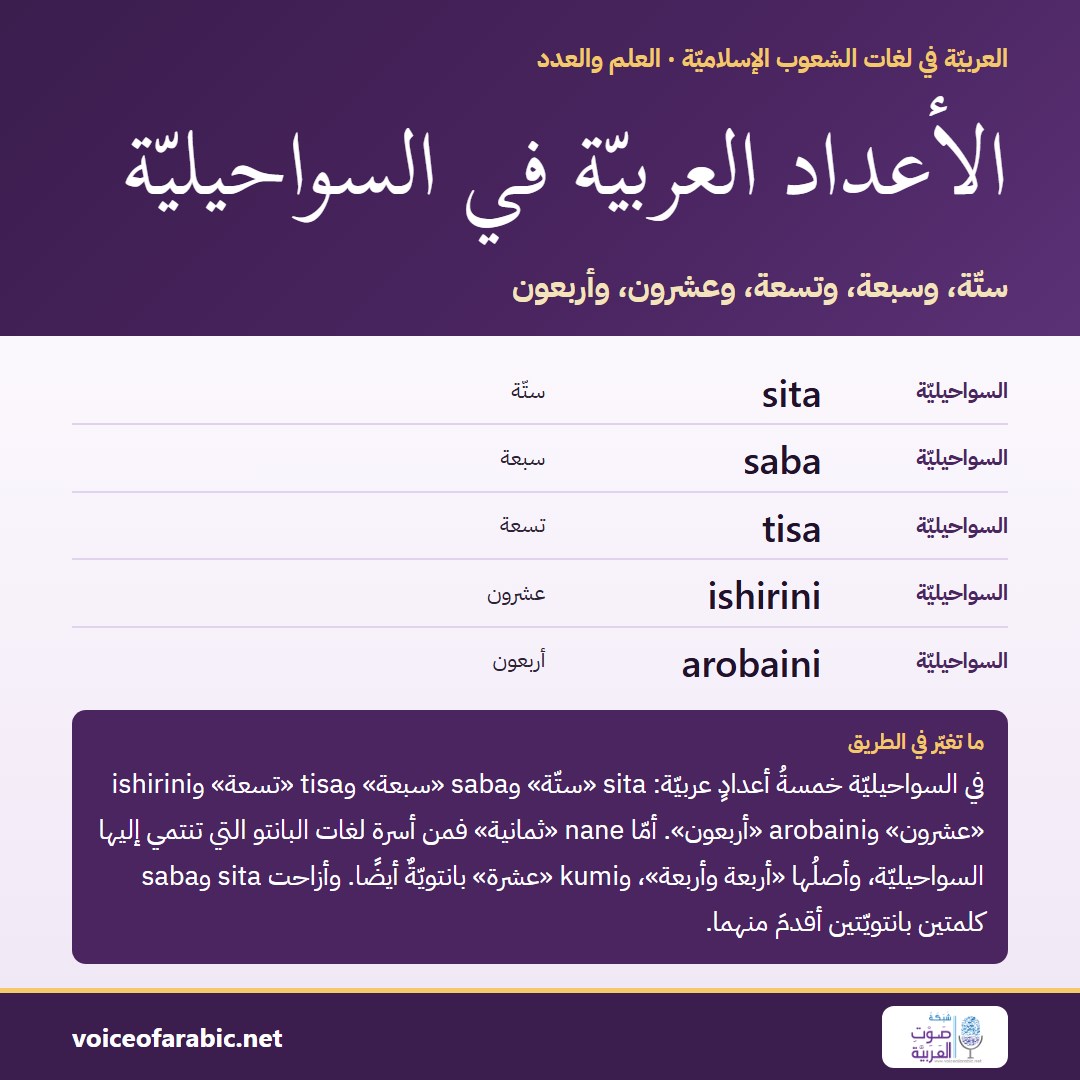
الأعداد العربيّة في السواحيليّة
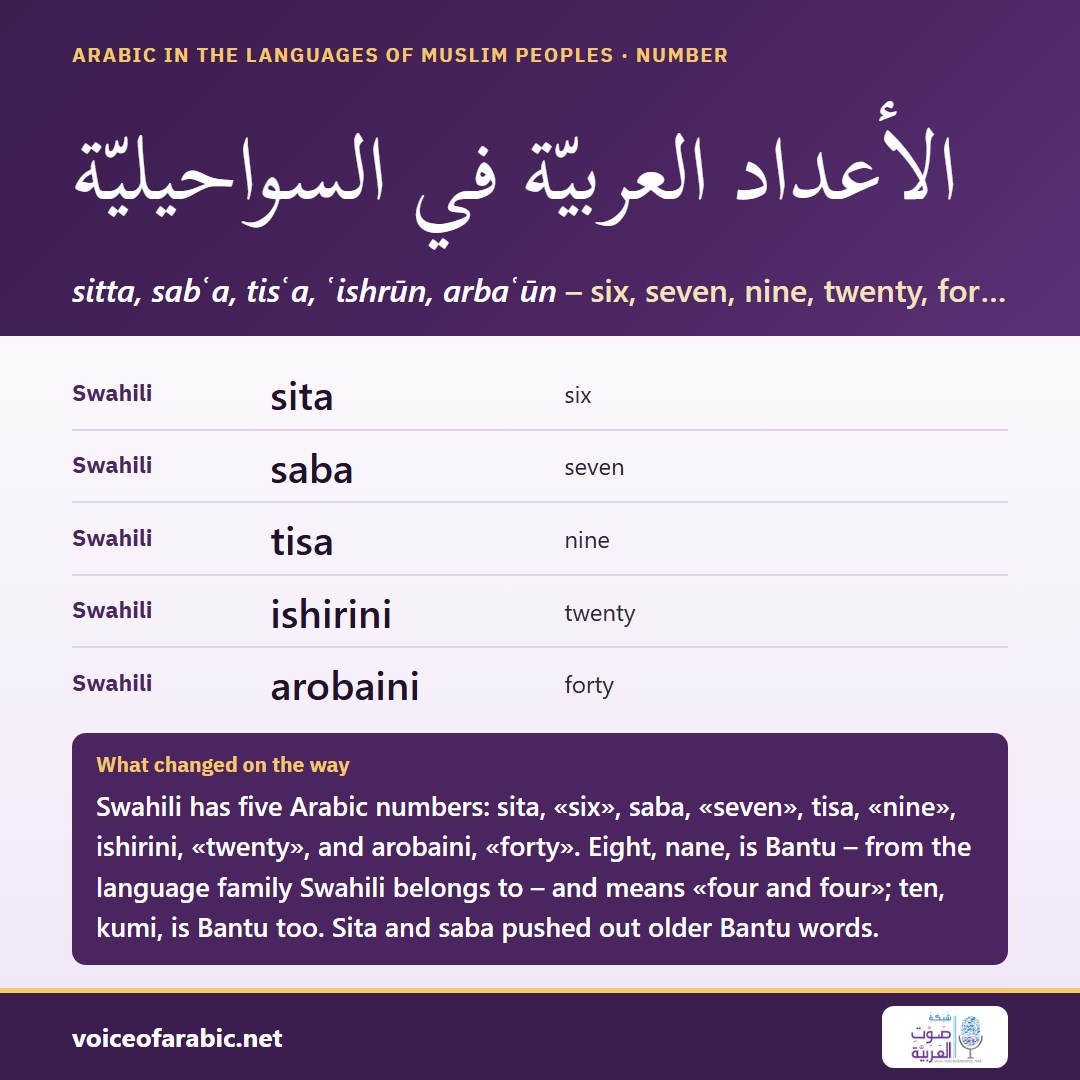
six, seven, nine, twenty, forty
sitta, sabʿa, tisʿa, ʿishrūn, arbaʿūn
- Field
- Knowledge and number
The word in other languages
Each form in its own language's script, with its sources. Anything marked "single source" has only one source we could find, so it is shown on this page only, not on the card.
-
Swahili sita on the card
six
Sources: Madan, Swahili-English Dictionary (Oxford, 1903); Rechenbach, Swahili-English Dictionary (Catholic University of America, 1967); Wiktionary (English edition)
-
Swahili saba on the card
seven
Sources: Madan, Swahili-English Dictionary (Oxford, 1903); Rechenbach, Swahili-English Dictionary (Catholic University of America, 1967)
-
Swahili tisa on the card
nine
Sources: Rechenbach, Swahili-English Dictionary (Catholic University of America, 1967); Wiktionary (English edition)
-
Swahili ishirini on the card
twenty
Sources: Rechenbach, Swahili-English Dictionary (Catholic University of America, 1967); Wiktionary (English edition)
-
Swahili arobaini on the card
forty
Sources: Rechenbach, Swahili-English Dictionary (Catholic University of America, 1967); Wiktionary (English edition)
At auctions the numbers were once said entirely in Arabic – arbata-ashara, «fourteen», khamso-ishirin, «twenty-five» – later replaced by kumi na nne, «ten and four», and ishirini na tano, «twenty and five».
Madan's dictionary (1903) gives nine as Bantu kenda, noting Arabic tissia beside it; Rechenbach's (1967) gives tisa.
Click a card to see it full size; each has a download button for sharing.
Sources
- Madan, Swahili-English Dictionary (Oxford, 1903): Sita
- Rechenbach, Swahili-English Dictionary (Catholic University of America, 1967): sita
- Wiktionary (English edition): sita (Swahili)
- Madan, Swahili-English Dictionary (Oxford, 1903): Saba
- Rechenbach, Swahili-English Dictionary (Catholic University of America, 1967): saba
- Rechenbach, Swahili-English Dictionary (Catholic University of America, 1967): tisa
- Wiktionary (English edition): tisa (Swahili)
- Rechenbach, Swahili-English Dictionary (Catholic University of America, 1967): ishirini
- Wiktionary (English edition): ishirini (Swahili)
- Rechenbach, Swahili-English Dictionary (Catholic University of America, 1967): arbaini
- Wiktionary (English edition): arobaini (Swahili)
- Encyclopedia of Arabic Language and Linguistics (Brill): art. «East Africa» (A. A. Y. Lodhi), vol. I, p. 662: Arabic numerals at auctions
- Madan, Swahili-English Dictionary (Oxford, 1903): Nane
- Rechenbach, Swahili-English Dictionary (Catholic University of America, 1967): kumi
Spotted a mistake, or have something to add?
Your note comes to us only; it is not published here. We read it, and if it holds we correct the card.